


KT Participates in Military Tactical Information and Communications System Deployment
 Published2018.01.22 17:14
Aiming to contribute to strengthening the military's integrated combat capabilities through participation in the 7th force modernization
KT announced that it participated in the military Tactical Information Communication Network (TICN) construction project and applied a wireless network design tool for mobile base stations to the military.
TICN is an information and communication system that unifies existing diversified analog military communication networks into digital ones and supports command and control and decision-making through the real-time transmission of various information.
With TICN, uninterrupted voice and data communication is possible even in wartime through mobile base stations and wireless backhauls mounted on military operational vehicles. Therefore, once the deployment of TICN is complete, our military will be able to link approximately 50 weapon systems to transmit large volumes of voice and video data in real time while on the move, and maintain military command and control and tactical communication systems even if wired and wireless networks are destroyed during wartime.
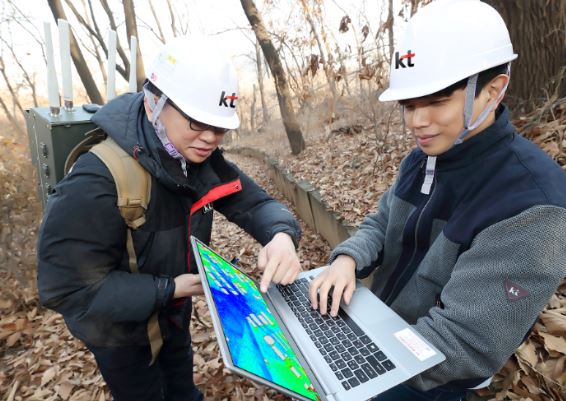
KT’s wireless network design know-how and technology were utilized because the operation of TICN requires deploying mobile base stations in optimal locations to minimize dead zones and improve wireless quality. The wireless network design tool for TICN developed by KT uses various radio wave models and detailed terrain elevation maps to predict the communication range of mobile base stations and enable the setting of optimal locations. In addition, a tactical network can be configured by automatically allocating frequencies and wireless parameters essential for mobile base station operation.
Meanwhile, the TICN construction project is a 5 trillion won under the supervision of the Agency for Defense Development, with participation from Hanwha Systems, SolidWinTech, and KT. KT won the system development contract in 2012, completed development in 2013, finished development testing in 2014 and field operation testing in 2015, and completed the first phase of deployment in 2016. In addition, KT supplied wireless network design tools for 210 mobile base stations for the second phase of deployment this year and plans to participate in a total of seven phases of deployment by 2020.
Jeon Hong-beom, Executive Vice President and Head of the Infrastructure Research Institute at KT Convergence Technology Institute, stated, “KT has demonstrated the excellence of its mobile network technology by participating in the construction of this military tactical information and communications system,” adding, “We will continue to contribute to strengthening national defense capabilities by developing differentiated technologies for future military communications.”
Comments
Related news
KT Conducts Drone Training to Help Farming in Imjado
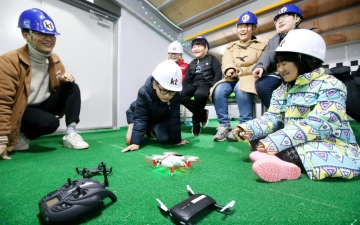
KT announced that it has opened the 'KT Giga Island Drone Education Center' on Imja Island in Sinan County, Jeollanam-do, and will provide drone training for residents of Imja Island and Sinan County. The opening ceremony, held at the 'Imjamannassne' Experience Center, a village enterprise in Imja Island, was attended by KT's Sustainability Management Division Head Lee Sun-joo, Sinan County Council member Joo Yun-deok, Sinan County Welfare Foundation Director Jeong Eon-ho, Imja-myeon Head Na Tae-joo, Imja Elementary School Principal Moon Hee-sook, Imja Senior Citizens Association President Nam Jeong-soo, Imjamannassne Chairman Jung Chang-il, and residents of Imja Island. KT and the Community Chest of Korea have been preparing an education center for drone training tailored to the real-life needs of Imja Island residents since July at their request. The drone education center, established on the rooftop of the third floor of the Imjamannassne Experience Center, is equipped with facilities including a theory learning space, hands-on training area, and simulation room.
2018.01.16by 김지혜 기자

KT Develops AI-Based Network Operations Platform 'Neuroflow'
KT announced on the 17th that it has developed 'Neuroflow,' an AI-based network operations platform. 'Neuroflow' is an 'artificial intelligence network operations' platform that collects and analyzes vast amounts of data gathered from wired and wireless network management systems, and assists in network operations decision-making through iterative deep learning. While there have been cases where artificial intelligence has been applied to specific network segments such as LTE fault prediction systems, this is the first time an artificial intelligence platform has been developed that can analyze data from any type of network including wired, wireless, and IoT.
2018.01.17by 김학준 기자
.jpg)
KT Strengthens 'KT Success Pack,' Essential Communications Product for All-in-One Business
KT announced on the 18th that it is introducing 'KT Success Pack,' a customized bundled product for small and medium-sized enterprise customers. 'KT Success Pack' is a product that allows enterprise customers to directly select and combine communication products and customized solutions necessary for their business. The complex structure has been improved and the product variety has been expanded, resulting in greater discount benefits than before.
2018.01.19by 김학준 기자
European Patent Applications Surpass 200,000 for the First Time… South Korea Maintains 5th Place, Led by Batteries and Telecommunications
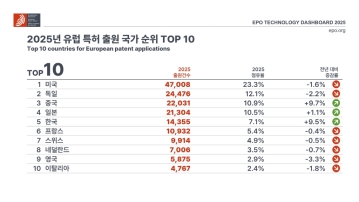
According to the European Patent Office (EPO)'s 'Technology Dashboard 2025', European patent applications last year reached 201,974, surpassing 200,000 for the first time. Korean companies and inventors filed 14,355 applications, representing a 9.5% increase from the previous year and maintaining 5th place by country. Battery, digital communication, and semiconductor technologies led the growth, with Samsung ranking as the top EPO applicant for the second consecutive year and LG reaching 3rd place. The presence of major domestic cities such as Seoul, Suwon, and Yongin was also confirmed. It was also revealed that Korea's European patent strategy is expanding beyond individual technologies to span the entire industry.
2026.03.24by 명세환 기자

SK Telecom First Applies AI-Based Network Operations at Gwanghwamun K-Pop Concert
SK Telecom announced that it applied an AI-based network operation system for the first time at a large-scale K-pop concert held in the Gwanghwamun area of Seoul on March 21st, managing communication quality throughout the event. Mobile data usage during the three hours before and after the concert reached 12.15TB, approximately doubling compared to the same time slot the previous weekend. SK Telecom monitored traffic using the AI system 'A-One' in five-minute and 50-meter units to respond to potential overload situations, while also operating temporary communication facilities and on-site personnel in parallel. This case is interpreted as confirmation of the practical applicability of AI-based autonomous network operation in an environment where demand from dense events and foreign users increases simultaneously.
2026.03.23by 명세환 기자











