


Samsung Electronics, Best Quarterly Performance in Q4 2017
 Published2018.02.01 15:17
Samsung Electronics announced its fourth quarter 2017 results with sales of KRW 65.98 trillion and operating profit of KRW 15.15 trillion on a consolidated basis. Both sales and operating profit are the highest ever in the quarter. For the entire year of 2017, it achieved sales of KRW 239.58 trillion and operating profit of KRW 53.65 trillion.
Sales in the fourth quarter increased by approximately 24% year-on-year due to the continued favorable memory market conditions and increased sales of flexible OLED panels, and operating profit also increased by KRW 5.9 trillion year-on-year due to a significant improvement in the profitability of the semiconductor business. The operating profit ratio also recorded 23%.
The components business saw increased performance due to continued strong memory prices and expanded flexible OLED supply.
The set business improved its performance year-on-year due to increased sales of premium products in the wireless segment, but smartphone sales decreased, especially in the mid- to low-priced segment. In the CE business, TV sales increased, but performance slightly decreased year-on-year due to decreased market demand, while home appliances increased their performance due to brisk sales of premium products such as FlexWash.
The fourth quarter performance showed a negative impact of about KRW 660 billion compared to the previous quarter, mainly due to the won strengthening against the dollar and other major currencies. In addition, the payment of special bonuses to semiconductor executives and employees also affected the performance.
This year, it is expected that performance growth will continue, centered on the components business, as the supply and demand for memory continues to remain strong. The set business will focus on maintaining solid performance by focusing on securing profitability through differentiation of premium products.
Meanwhile, the first quarter is expected to see a decrease in demand due to the off-season and negative economic impacts due to exchange rate fluctuations.
In the component business, memory is expected to see solid demand for DRAM for data center servers, but shipments are expected to decrease due to the conversion of some of the 11 lines that produce DRAM into image sensor lines. In addition, OLED profitability may weaken due to the possibility of decreased demand for displays due to the off-season in the smartphone market.
In the case of the wireless business, the set business is expected to see improved performance due to increased sales of premium products such as the launch of the Galaxy S9, and the CE business plans to focus on securing profitability.
In 2017, facility investment amounted to 43.4 trillion won. By business, it was 27.3 trillion won for semiconductors and 13.5 trillion won for displays.
In response to the growing demand for V-NAND, the company expanded its Pyeongtaek semiconductor line and invested in expanding its foundry 10nm process capacity. In addition, it actively invested in expanding its OLED capacity to meet the growing demand from customers for flexible OLED panels, resulting in a significant increase in its total investment last year compared to 2016. Investment plans for this year have not yet been finalized, but are expected to decline compared to last year.
In the mid- to long-term, the parts business is expected to see an increase in demand due to the expansion of new applications, and the set business is expected to see business opportunities expand centered on software and connectivity.
Samsung Electronics plans to respond to these changing industry trends through a strategy of connecting various AI/IoT-based devices and services.
In the case of semiconductors, demand for high-capacity memory for cloud and servers and chipsets for battlefields and AI is expected to increase, and the company plans to strengthen the competitiveness of semiconductor products based on advanced miniaturization processes.
OLED plans to strengthen its premium competitive edge by launching foldable products and actively pursue expansion into new applications such as IT and battlefields.
Wireless will continue to differentiate its smartphones based on cutting-edge technologies such as foldable OLED, while also pursuing new businesses related to AI and IoT based on its 5G technology.
CE plans to strengthen its TV leadership by incorporating new technologies such as 8K and Micro LED, and expand the application of Bixby in home appliances to enhance connectivity and usability between products.
Comments
Related news
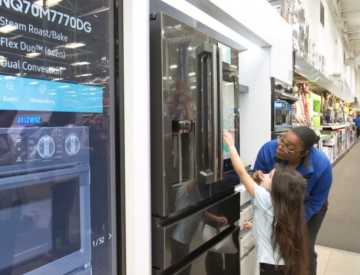
Samsung Electronics Ranks No. 1 in U.S. Home Appliance Market for Two Consecutive Years
Samsung Electronics recorded the top market share in the U.S. home appliance market by brand in the fourth quarter of 2017, achieving a 21.0% share (by revenue), up 2.3 percentage points year-over-year, according to market research firm Trackline. With this result, Samsung Electronics achieved a market share in the double digits of 20% for the first time in the U.S. home appliance market and secured the top position for seven consecutive quarters. On an annual basis, Samsung Electronics also ranked first with a 19.5% market share, demonstrating industry leadership as the top player in home appliances in the U.S. for two consecutive years.
2018.01.29by 김학준 기자
Samsung SDS Strengthens Cloud Managed Service with Spotinst Agreement
Samsung SDS has concluded a partnership agreement to strengthen its 'Cloud Managed Service (CMS)' business with Spotinst, following Amazon, Microsoft, and Vertu Stream. Spotinst is a company that provides services enabling customers to use the cloud stably without interruption by predicting cloud resource usage. Through this agreement, Samsung SDS is expected to enhance its cloud managed service level by combining Spotinst's technology with its own cloud integrated management platform (GOV: Global One View). Customers can view resource usage status such as server quantity/utilization rate and data storage capacity, as well as monthly billing amounts at a glance from the integrated management platform without needing to access various cloud services such as Amazon (AWS) and Microsoft (Azure).
2018.01.29by 김학준 기자
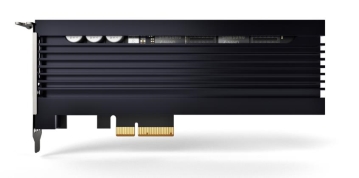
Samsung Electronics Launches SSD with 5x Faster Response Speed
Samsung Electronics has launched the '800GB Z-SSD,' which offers response speeds more than five times faster than conventional high-performance NVMe SSDs, becoming the industry's first to do so and opening a new premium market with 3D V-NAND flash technology. Having developed the Z-SSD in 2017, Samsung Electronics is now releasing the '800GB Z-SSD' product, providing the highest-efficiency solution for ultra-high-speed processing and analysis of cache data and log data in next-generation markets such as artificial intelligence, big data, and IoT. Samsung Electronics' '800GB Z-SSD' features ▲Z-NAND with read speeds more than 10 times faster than 3-bit V-NAND ▲an Ultra Low Latency controller ▲a 1.5GB-capacity ultra-high-speed ultra-low-power LPDDR4 mobile DRAM, and achieves write response speeds of 16µs, which is more than five times faster than existing 3-bit-based high-performance NVMe SSD (PM963), and random read performance of 750K IOPS, which is 1.7 times faster.
2018.01.30by 김지혜 기자
Nvidia invests $5 billion in Intel
NVIDIA and Intel, leaders in global AI computing technology, are now forging ahead in providing cutting-edge solutions through NVLink-based architecture integration. NVIDIA and Intel have officially announced a strategic partnership and stated that they will jointly develop customized data center and personal computing products to accelerate diverse applications and workloads ranging from hyperscale to enterprise and consumer markets, thereby laying the foundation for the next generation computing era.
2025.09.22by 배종인 기자
.jpg)
Applied Materials Launches Environmental Protection Campaign to Mark World Cleanup Day
Applied Materials Korea (CEO Park Kwang-seon) is carrying out environmental cleanup activities with employees and their families around the Dongtan Sinricheon area on the occasion of World Cleanup Day, evolving into a company that engages with the local community beyond technological innovation.
2025.09.22by 명세환 기자











