



Artificial intelligence evolving into semiconductors with smaller size and larger capacity
 Published2018.02.05 17:25
The slowdown in semiconductor microfabrication must be overcome through cooperation.
At SEMICON Korea 2018, Kang Ho-gyu, Vice President and Head of Samsung Electronics Semiconductor Research Center, spoke about semiconductor technology and direction for the Fourth Industrial Revolution.
The semiconductor industry is expected to continue its strong performance in 2018, fueled by a global economic recovery and increased demand for IoT and autonomous vehicles. For example, drone delivery in Dubai is about to become commercially available, and Amazon Go is eliminating lines at supermarkets. Japan's Pepper robot is already providing services in hotels. These advancements in IT are transforming our lives across various sectors.
The Relationship Between AI and Semiconductors Based on Big Data
Vice President Kang Ho-gyu stated, "Semiconductors, used across all sectors, including computing and electronics, have achieved a robust 6% annual growth rate, fueled by big data, and have grown by over 21% in 2017." He continued, "The Fourth Industrial Revolution is centered around big data-based AI. It was born to mimic the functions of the human brain. The brain stores memories, thinks, and calculates. Semiconductors play these roles in the system."
While advancements are impacting various fields, smart cities, a hot topic at CES 2018, are receiving significant attention. Pilot cities have been selected in several countries, and Busan and Sejong were selected as candidates in Korea. These cities connect urban elements via 5G and leverage big data and AI to ultimately provide a safe environment for citizens.
The relationship between AI and semiconductors based on real-world big data is as follows. Image data will likely be handled by a CMOS image sensor, location and distance information by a semiconductor-based lidar, and movement by a Digital Voltage Scaffolding (DVS). Furthermore, modems, memory, CPUs, application processors, and NPUs are expected to be utilized. Semiconductors are fundamental components that serve as the brain, eyes, ears, arms, and legs of AI.
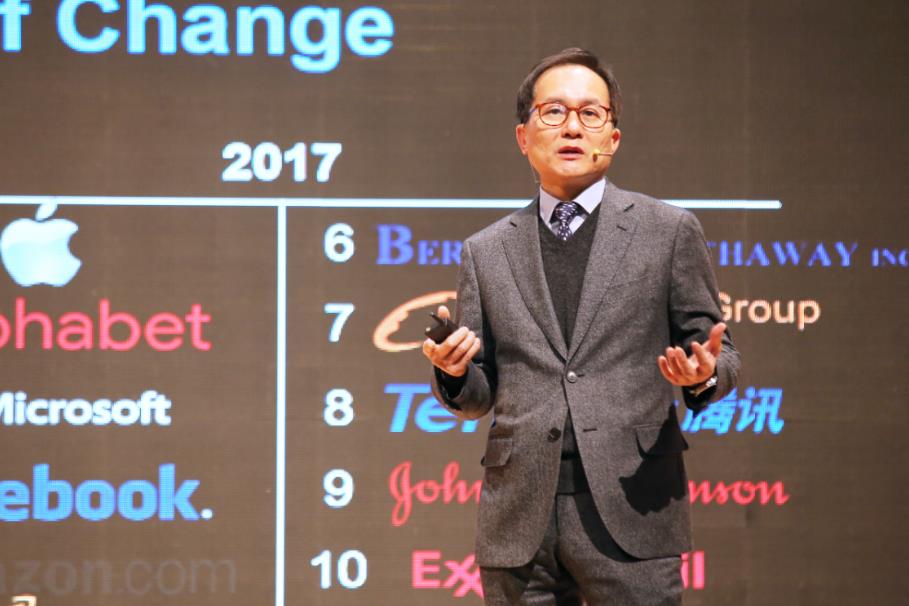
Vice President Kang Ho-gyu stated, "Semiconductors, used across all sectors, including computing and electronics, have achieved a robust 6% annual growth rate, fueled by big data, and have grown by over 21% in 2017." He continued, "AI, a key component of the Fourth Industrial Revolution's big data foundation, was born to mimic the functions of the human brain. The brain stores memories, thinks, and calculates. Semiconductors play these roles in the system."
Last year, the amount of information generated reached 32 zettabytes (ZB), and it's expected to grow to 160 ZB by 2025. Vice President Kang stated, "Data is the oil of the 21st century, and it's the oil of the 21st century." In other words, he predicted that the 21st century was driven by oil, and now it will be driven by data.
Reducing microprocess slowdowns requires solutions through materials and equipment.
Over the past 50 years, Korean semiconductor companies have reduced the number of lines and spaces by billions, increased the size of transistors, and increased the number of transistors per unit area. This has improved semiconductor performance, reduced power consumption, and, most importantly, reduced costs. As a result, Korean semiconductor companies have grown into global players and achieved technological advancements. However, the situation cannot be predicted optimistically based solely on the superficial increase in demand and development of semiconductors.
Recently, companies have been struggling to reduce the number of microprocesses, the smallest units of lines and spaces. As the pace of reduction slows, development costs are rising again. First, DRAM must address this issue by reducing capacitor area and height, while changing the transistor structure to lower the resistance of the constituent materials. Furthermore, NAND flash has undergone a dramatic transformation, evolving from 2D to 3D, while driving density. While planar structures focused on making individual transistors smaller, vertical structures require stacking transistors one above the other to accommodate more components.
To achieve this technological realization, equipment and materials suppliers must play a key role. Samsung Semiconductor has addressed this by tripling the number of collaborative projects with equipment and materials suppliers over the past five years. Vice President Kang stated, "The current advancements in semiconductors have been made possible thanks to designers and materials manufacturers. However, the challenges ahead will be even more complex and challenging. We look forward to their innovation."
Comments
Related news
NI Korea Unveils Integrated Solution to Resolve Issues in Semiconductor Testing Process
National Instruments (hereinafter NI) announced that it will participate in 'Semicon Korea 2018' to showcase semiconductor test integrated solutions and demonstrations. Korean NI plans to introduce solutions that reduce semiconductor test costs, shorten time, and provide measurement accuracy. NI's platform-based approach ensures high performance and efficiency across the entire test process from characterization to production testing, and provides scalable solutions that address various issues.
2018.01.29by 김학준 기자
Semiconductor Equipment and Materials Industry Trends at a Glance...Semicon Korea Opens
Semicon Korea 2018, where you can see equipment and materials companies leading the global semiconductor industry all in one place, opened its doors on the 31st. Running for three days from the 31st through February 2nd at COEX, Semicon covers not only semiconductors but the entire industry including printed electronics, LED, MEMS, PV, sensors, and photonics. This year features 436 companies with 1,913 exhibition booths. Cho Hyun-dae, president of Korea SEMI, stated his aspirations at the opening ceremony, saying "Under the theme of 'CONNECT, INNOVATE, COLLABORATE,' we will provide a global supply chain for the semiconductor industry and serve as a business platform."
2018.01.31by 김지혜 기자
[SEMICON Korea 2018] NI Unveils Integrated Semiconductor Test System for Mass Production
National Instruments (NI), which participated in 'Semicondukor Korea 2018' held from January 31 to February 2, showcased a Semiconductor Test System (STS). The STS is a system that can be used directly in mass production environments. The integrated test head features the PXI platform, TestStand test management software, and LabVIEW graphical programming. The tester design built into the head includes all major components of a production tester, such as system controller, DC, AC, RF instrumentation, DUT interfacing, and equipment handler/prober docking mechanisms.
2018.02.05by 김지혜 기자
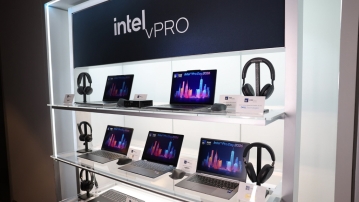
Intel Unveils Next-Generation 'Core Ultra Series 3' and vPro Platform for Enterprise PCs
Intel has officially unveiled the "Intel Core Ultra Series 3" for next-generation enterprise PCs and the latest vPro platform, addressing a wide range of demands from enterprise notebooks to high-performance workstations.
2026.03.26by 배종인 기자
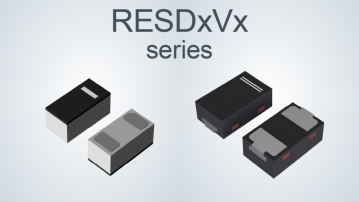
ROHM Launches ESD Protection Diode Compatible with High-Speed Interfaces of 10Gbps or Higher
Semiconductor specialist ROHM has developed the 'RESDxVx series' of ESD (electrostatic discharge) protection diodes capable of responding to next-generation high-speed data communication environments exceeding 10Gbps, simultaneously enhancing both signal quality maintenance required in high-speed interfaces and IC protection performance.
2026.03.26by 배종인 기자











