


Siemens Launches Integrated Electronic Product Development Management Solution with ALM and PLM Technologies
 Published2018.02.08 09:56
Siemens announced a new Digital Enterprise Industry Solution for the electronics industry.
Siemens' Software Engineering and Application Lifecycle Management (ALM) solutions help companies address the challenges of developing smart products, including managing security threats, privacy concerns, and product risks associated with Internet-connected sensors, amidst growing consumer demand for connected smart products. They also address the needs of quality teams who need to integrate accelerated testing processes to maintain or improve product quality while supporting rapid software development techniques such as Agile software, Scrum, and continuous delivery.
By integrating ALM software with PLM (Product Lifecycle Management) software, companies can effectively manage the traditional product development cycle and the software used to manage it. This allows software and hardware engineers to work as a single team, enabling true collaborative engineering. Additionally, you can work to improve and measure the processes of your products and software.
The new Digital Enterprise Industry solution enhances the efficiency and productivity of development teams across various disciplines. It also provides the means to track hardware and embedded software configurations across the entire product lifecycle, ultimately improving product quality and streamlining change management.
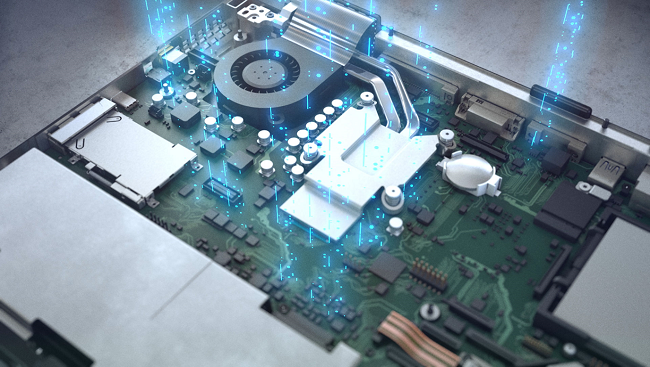
Furthermore, this solution allows engineers to enjoy the same user experience, connected in real time to an integrated workflow, while using their preferred and familiar development tools. Software components created and tested on the ALM side can be published to the Bill of Materials (BOM), creating a fully integrated BOM across mechanical, electrical, and software components. This allows companies to improve visibility across product development areas. Furthermore, real-time collaboration enables rapid identification of defects within complex systems, assessment of their impact, and resolution. Siemens is uniquely positioned as an integrated solution provider encompassing the entire spectrum of global product development, manufacturing, and support.
"To remain competitive, electronics companies must rapidly develop and innovate high-volume, feature-rich products without compromising product quality," said Ajith Krishnamurthy, director of Electronics and Semiconductor Solutions at Siemens PLM Software. "Software development plays a critical role today, and will only continue to do so in the future." “Siemens’ software engineering and ALM solutions enable companies to manage software development within their existing product development processes, increasing efficiency and enabling the development of products that meet consumer needs,” he said.
The advancement and enhanced intelligence of embedded systems have laid the foundation for the Internet of Things (IoT). As expectations for more intelligent systems grow, the amount and complexity of embedded software within these devices are also increasing. This necessitates the need for new tools that can bridge the gap between ALM and PLM.
Joe Dury, Director at Kalypso, said, "The IoT will continue to transform traditional business models by integrating software, data services, and online connectivity, enabling intelligent factories and smart products. By leveraging IoT and related analytics to integrate ALM and PLM technologies, electronics companies can analyze and mine data to gain new insights into product development, manufacturing, and supply chain management. These insights will enable smart, connected operations to efficiently manage increasingly complex environments and capture all the data to improve overall manufacturing processes."
Software quality is essential in today's rapidly growing world of connected, smart products. Meeting these quality standards requires an end-to-end approach that connects and manages all processes across the entire development cycle without compromising development schedules or quality. Tight integration between ALM and PLM provides complete traceability and transparency across all aspects of product and software engineering projects, from requirements creation to test cases and defect management. It also provides an effective way to create documentation, track changes, and communicate critical information to various stakeholders, including consumers.

Comments
Related news
Siemens to Run Open IoT Operating System on AWS
Siemens announced that it is running the latest version of MindSphere, an open IoT operating system, on Amazon Web Services (AWS) for the first time. Through collaboration with Amazon Web Services, Siemens can now enable partners to develop applications more rapidly by leveraging millions of Siemens devices already installed globally, and provide more efficient digital services through Amazon Web Services. Additionally, through the new MindSphere hosted on Amazon Web Services, Siemens plans to support customers in various industries such as aerospace, defense, energy, and utilities in developing powerful industrial IoT solutions in shorter timeframes.
2017.12.11by 김지혜 기자
Korea Instrument, KOLAS Accredited Calibration Agency First to Simultaneously Acquire ISO/IEC 27,001·27,701
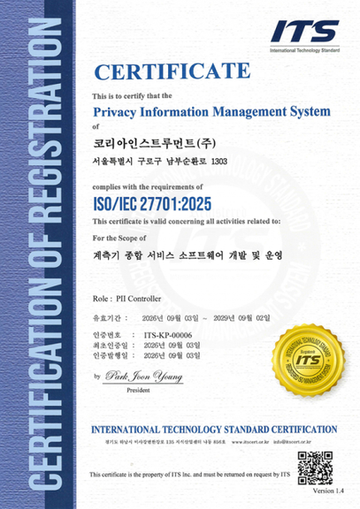
Korea Instrument has become the first among KOLAS accredited calibration agencies to simultaneously acquire ISO/IEC 27,001 and ISO/IEC 27,701 certifications. Through its proprietary platforms CWIZ Enterprise and CWIZ Partners, the company has embedded information security and personal data protection requirements across all business processes including customer information, equipment data, and calibration reports, with plans to continuously advance its management system through regular audits and security inspections.
2026.10.12by 배종인 기자
TeamViewer One, IT Incident Automation Workflow and Resolution Center Enhanced
TeamViewer has added IT incident automation capabilities and an advanced Resolution Center to its integrated digital workplace management platform 'TeamViewer ONE'. Recurrent service disruptions, configuration errors, and capacity shortages are automatically handled according to preset policies, and device status verification through script deployment can be managed in a unified interface, significantly reducing repetitive tasks for IT teams.
2026.10.12by 배종인 기자
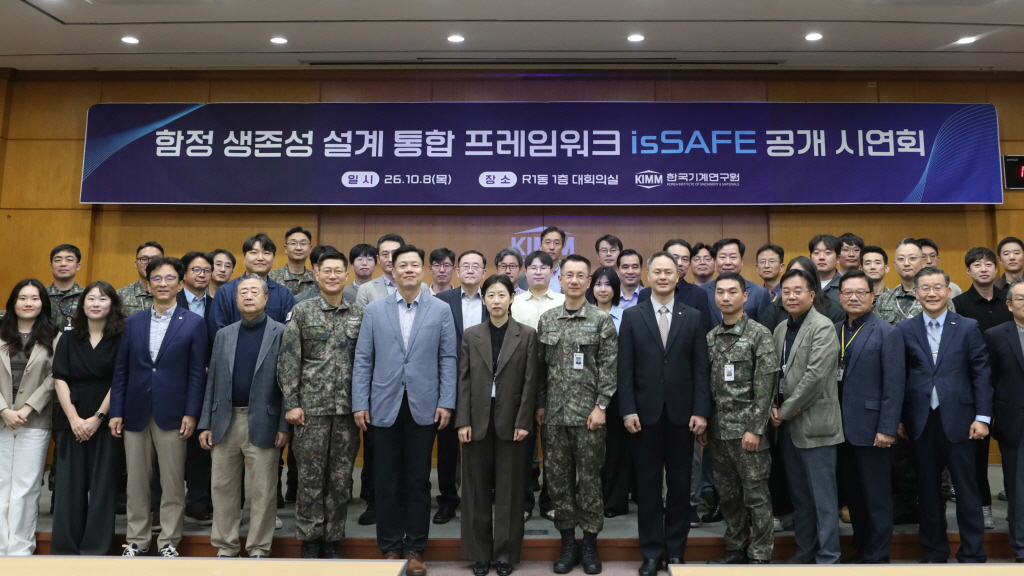
KAERI Develops Domestically-Produced SW 'isSAFE' for Integrated Warship Survivability Analysis
The Korea Institute of Machinery and Materials has developed domestically-produced software 'isSAFE' that comprehensively analyzes warship survivability. This design framework integrates the entire process—from warship modeling to hit scenario generation, vulnerability analysis, and results analysis—into a single platform, establishing an independent technology foundation in the defense technology sector that had previously relied on foreign software.
2026.10.08by 배종인 기자

ioCrops Shares AI Smart Farm Operations Case Study
About 20 cultivators from the Agricultural Cooperative's Smart Agriculture Support Centers visited ioCrops' smart farm in Jincheon, North Chungcheong Province. They directly confirmed how data collected through substrate weight sensors, drainage weight sensors, and soil moisture sensors is applied to tomato cultivation, as well as the greenhouse pest control process using the AI-based autonomous spraying robot 'HERMAI'. By sharing on-site operational case studies combining data and automation technology, the adoption of smart farms in agricultural fields is being promoted.
2026.10.07by 배종인 기자











