



Development of core technologies related to providing mobility between 5G and WiFi
 Published2018.03.14 09:30
It will be possible to provide seamless service between 5G and WiFi even when used on the move.
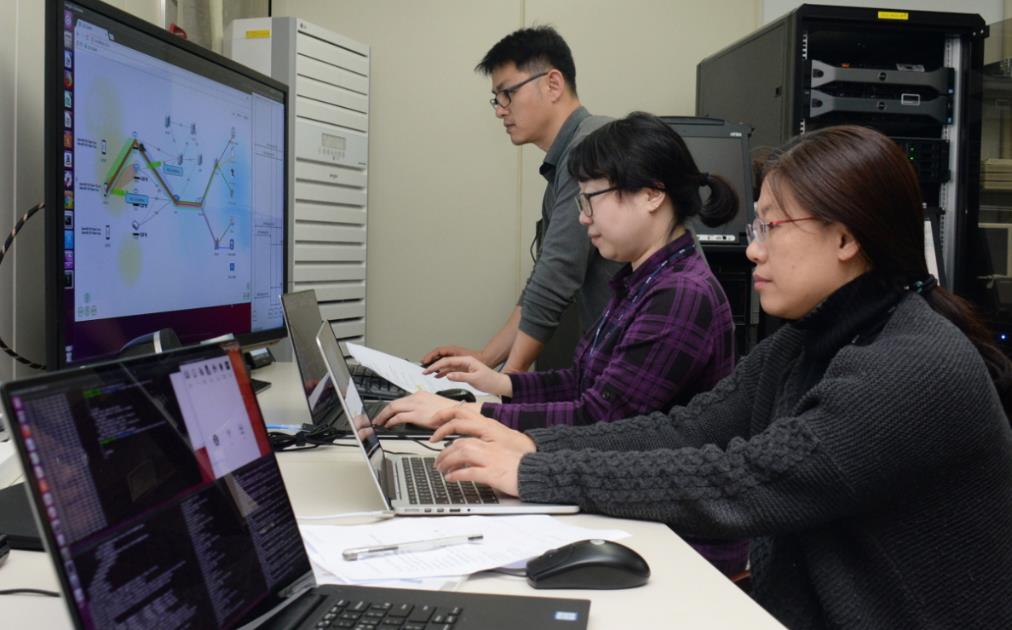
The Electronics and Telecommunications Research Institute (ETRI) announced that it has successfully developed a core technology that enables unrestricted mobile services between 5G and WiFi even when users are on the move, through research with domestic small and medium-sized enterprises such as KT, Lanbird Technology, and Snet ICT.
The existing network system operated 3G networks, 4G LTE networks, and wired networks separately, and users had to decide whether to use WiFi or 4G LTE.
Accordingly, when watching a video using data on a smartphone and then boarding the subway, the video would be interrupted or delayed because the handover to the Wi-Fi inside the train did not work properly.
Currently, 3GPP has defined and conceptually presented a set of technologies known as Access Traffic Steering, Switching, and Splitting (ATSS) to provide mobility across diverse access network conditions and select the optimal access network when generating service traffic. Standardization work on this technology will begin in earnest in June and is scheduled for completion in the first half of 2020.
Although the technology for providing mobility between 5G and WiFi has only been conceptually presented by the international standardization organization 3GPP, ETRI has succeeded in developing the original technology. This is a strategy to advance toward international standardization through preemptive technology development.
The technology developed by the research team can distribute traffic by finding the optimal access network for each service based on conditions such as subscriber (access) network traffic load and quality of service (QoS) in situations where 5G and WiFi are connected simultaneously.
Additionally, it was explained that the optimal path for each service traffic can be dynamically reconfigured according to changes in the load of each subscriber network, thereby providing optimal quality to users and dynamically controlling the load of the subscriber network.
With this technology in place, users will no longer need to choose between 5G and WiFi. The 5G network itself will automatically detect and select WiFi or 5G subscriber usage, enabling seamless service as users move.
Park No-ik, a senior researcher at ETRI's Network Research Center, stated, "This technology is essential for the 5G era. By considering various service scenarios and developing the technology ahead of standardization, we have secured an advantageous position to lead future technologies."
Additionally, KT Executive Director Lee Jong-sik said, "This has great technological significance in that it allows for continuous use of services regardless of the various wired and wireless networks, such as 5G, WiFi, and wired. We plan to strive to ensure that services can always be used with optimal quality regardless of the wired or wireless connection method on the commercial 5G network in the future."
Comments
Related news
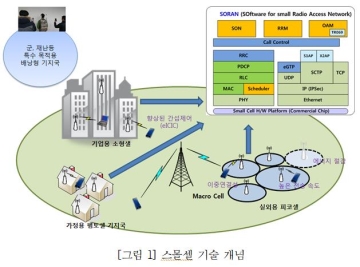
Backpack-type base station commercialization possibility opens within a radius of several hundred meters of temporary LTE network
The Electronics and Telecommunications Research Institute (ETRI) has developed advanced small cell base station software technology applicable in buildings and sports stadiums, and is preparing for commercialization. Following the successful development of LTE small cell base station software in 2016, the institute announced that it has successfully developed software technology supporting LTE-TDD technology and dual connectivity. The LTE-TDD technology developed by the research team is a technology that allows time-division usage of the ratio between uplink and downlink. In LTE, it is possible to vary the uplink/downlink link ratio in seven different ways. For example, for limited data, it is possible to adjust the uplink/downlink data speed ratio to suit the situation.
2018.02.13by 김지혜 기자
Development of 'optical synapse mimicking device' that mimics the human brain
An "optical synapse emulation device" that artificially replicates neurons and synapses has been developed. This lays the groundwork for the future development of neuromorphic optical computing technology that thinks while storing information like the human brain. The Electronics and Telecommunications Research Institute (ETRI) has successfully developed core technology for an optical synapse emulation device by combining graphene, one of two-dimensional (2D) semiconductor materials drawing significant attention as an ultra-thin nanoscale new material, with optical communication technology.
2018.03.02by 김지혜 기자
ETRI successfully demonstrates gigabit Wi-Fi transmission technology on a moving bus.
Following the provision of gigabit-class WiFi on Seoul subway lines, a successful demonstration of 5Gbps-class transmission was achieved on a moving bus. The Electronics and Telecommunications Research Institute (ETRI) announced that this technology is the result of joint fifth-generation (5G) research between Korea and the European Union (EU), and conducted demonstrations for the general public at the Gangneung ICT Promotion Center starting from the 2nd. On the 21st, ETRI announced a successful demonstration of ultra-multiview media transmission service, which enables viewing of 3D video without glasses on a moving bus by utilizing 5Gbps-class Mobile Hotspot Network (MHN)-E technology on Yulgok-ro in Gangneung.
2018.03.02by 김지혜 기자
.jpg)
ETRI and BMW Collaborate on Next-Generation Automotive Technology Development
The Korea Electronics and Telecommunications Research Institute (ETRI) has agreed to collaborate with BMW Korea R&D Center on developing key technologies for next-generation automobiles. ETRI announced that it has signed a Memorandum of Understanding (MOU) for inter-institutional technology cooperation and will collaborate with BMW on comprehensive automotive-related technologies including ▲user experience-based driver assistance technology ▲automotive communication technology ▲power technology ▲and new material technology. The automobile industry represents the Fourth Industrial Revolution, where traditional mechanical technology and cutting-edge information and communications technology (ICT) are rapidly converging. Recently, automobiles have evolved beyond mere transportation means to become intelligent information devices that integrate state-of-the-art technology most comprehensively.
2018.03.09by 김지혜 기자
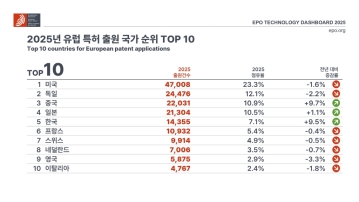
European Patent Applications Surpass 200,000 for the First Time… South Korea Maintains 5th Place, Led by Batteries and Telecommunications
According to the European Patent Office (EPO)'s 'Technology Dashboard 2025', European patent applications last year reached 201,974, surpassing 200,000 for the first time. Korean companies and inventors filed 14,355 applications, representing a 9.5% increase from the previous year and maintaining 5th place by country. Battery, digital communication, and semiconductor technologies led the growth, with Samsung ranking as the top EPO applicant for the second consecutive year and LG reaching 3rd place. The presence of major domestic cities such as Seoul, Suwon, and Yongin was also confirmed. It was also revealed that Korea's European patent strategy is expanding beyond individual technologies to span the entire industry.
2026.03.24by 명세환 기자











