



NI Showcases ADAS Testing with Virtual Environment Software and Actual Hardware Integration
 Published2018.03.20 13:05
Multiple ADAS Solution Tests Cannot All Be Performed by a Single Company
NI showcased an integrated ADAS testing environment combining virtual environment and hardware sensor integration together with Global Testing Alliance members at the Automotive Testing Expo held at KINTEX in Ilsan from March 13-15.
To implement virtual environment simulation, Inno Simulation and IPG Korea constructed a 3 km area around Sangam-dong, and this virtual environment was configured to include an actual vehicle environment where real drivers can operate. Germany-based Konrad demonstrated VRTS (Vehicle Radar Test Simulation) using NI's VST (vector signal transfer) and VDG (Vector delay generator) hardware along with an mmWave head, enabling Continental's radar sensor to work in conjunction with the simulation and detect targets as an actual radar would. This enables ADAS testing in various scenarios.
Additionally, for testing eCall, an emergency alert service being deployed in Europe and Russia, Japan-based Anritsu's eCall Function test equipment and NI's GPS system collaborated to configure the simulation such that in the event of an accident, vehicle driver information such as vehicle location and number of occupants would be transmitted via telephone call.
Kim Jong-woo, a manager at NI who oversaw the entire simulation system on this occasion, stated: "At this Automotive Testing Expo, we wanted to demonstrate the full-function ADAS system testing in collaboration with various global companies partnering with NI using actual environments and real sensors."
Particularly regarding the radar portion of NI's equipment, Manager Kim Jong-woo noted that in current autonomous vehicles, the concept of sensor fusion means multiple diverse sensors are used simultaneously in a vehicle and operated by individual ECUs, making it difficult for a single company to supply all products.
To address this, NI has formed a collaborative partner consortium with Germany's ADAS iiT (innovation in Test) group capable of accommodating diverse vehicle testing requirements. Currently, they are implementing and applying comprehensive data for camera, radar, HIL (Hardware in the Loop), and driving with related companies at German automotive company AUDI.
Neils Koch, AUDI's radar component manager, mentioned that "the combination of Konrad's software and NI's vector signal transceiver was the ultimate factor that enabled us to identify bugs by utilizing software we had not been aware of previously."
Manager Kim Jong-woo stated that "this comprehensive radar test system from NI and Konrad is being applied not only as a higher-level research platform within Korea but also for single radar-based specialized target production testing."
When asked about the achievements from this exhibition participation, Manager Kim Jong-woo responded: "From a tester's perspective, I wondered whether such an era would come so quickly, but I can confirm that sensor performance itself is rapidly improving, and the reliability of sensing data has increased significantly through dual sensing via sensor fusion." He also noted: "Through meetings with over 15 VIP customers, we confirmed that requirements necessary for autonomous driving—ranging from higher-level platform research, sensor manufacturing, ADAS validation, sensor fusion, to in-vehicle data logging—are rapidly increasing."

Comments
Related news
NI Launches Sub-6 GHz 5G NR Test Solution
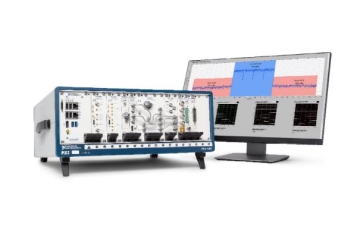
National Instruments (hereafter NI) has announced a Sub-6GHz 5G test reference solution compliant with the 3GPP Release 15 5G NR (New Radio) specification. As the feasibility of commercial 5G NR implementation below 6GHz increases, engineers are actively developing Sub-6GHz 5G RF components and devices. Using NI's newly launched Sub-6GHz 5G NR reference solution enables testing that guarantees both cost-effectiveness and high performance. This allows engineers to quickly finalize designs and seamlessly transition from the R&D phase to the production test environment. NI's latest reference test solution is suitable for testing new wideband RFICs, particularly operating models in the 3.3-4.2GHz and 4.4-5.0GHz bands. Engineers can use the PXIe-5840 vector signal transceiver (VST), a 4.5G/5G test solution that supports 1GHz instantaneous signal generation and up to 6GHz analysis bandwidth, to test devices operating at continuous signal bandwidths of 400MHz or higher. When using NI VST, improved measurement speed and EVM performance of 0.32% (-50dB) or better for 100MHz NR signals can be expected.
2018.03.07by 김학준 기자

NI Showcases Sensor Fusion Test Technology for Autonomous Vehicles at Automotive Testing Expo
National Instruments announced that it will participate in the 'Automotive Testing Expo 2018' to be held at KINTEX in Ilsan for four days from March 13 to 15, and will showcase the latest solutions and demonstrations including sensor fusion test technology for autonomous vehicle testing and vehicle simulators. At this exhibition, NI will publicly disclose a variety of solutions that can reduce the cost and time of automotive testing and secure industry-leading measurement accuracy. As vehicle systems become increasingly sophisticated, NI continuously develops technologies that meet more stringent test requirements to ensure system safety and quality. NI's platform-based approach provides flexible and future-oriented systems with timing and synchronization capabilities across the entire system, thereby meeting complex automotive test requirements such as ADAS, V2X, infotainment, powertrain, body and chassis.
2018.03.12by 김지혜 기자
NI Releases CompactRIO Controller with TSN Capability
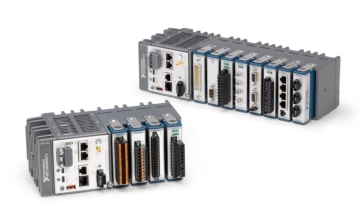
National Instruments (NI) has announced the release of a new CompactRIO controller equipped with NI-DAQmx driver and Time Sensitive Networking (TSN) functionality. This CompactRIO controller provides time-deterministic communication and synchronized measurement capabilities over standard Ethernet networks, thereby enhancing not only performance but also flexibility and productivity. With this new product launch, NI becomes the first in the industry to introduce TSN-supported industrial embedded hardware based on the next-generation IEEE 802.11 Ethernet standard. Additionally, this product represents the result of NI's continued investment in TSN. By utilizing TSN, engineers can synchronize distributed systems across the network without the need for expensive synchronization cables.
2018.03.19by 김지혜 기자

Signal-level HIL Solution for EV Power Conversion Controllers, NI ITS
EV power conversion circuits are becoming faster and more complex with SiC and GaN application and X-in-1 functional integration, and ECU verification requires the capability to simulate circuit behavior at nanosecond-level resolution in real time. This white paper organizes the position of signal-level HIL (sHIL) in the development flow and describes the hardware and software architecture, model implementation workflow, and application boundaries of NI ITS (Inverter Test System), which responds to this requirement through FPGA-based real-time simulation, based on webinar materials.
2026.10.16by 편집부
Microchip and Elektrobit Join Hands on AUTOSAR Solution
Microchip Technology and Elektrobit have unveiled a collaborative solution with pre-integrated automotive hardware and AUTOSAR software. With MCAL software based on EB tresos, the solution can reduce development effort for OEMs and Tier 1 suppliers and accelerate time-to-market. The two companies will employ an "Integration-as-Code" automation method to lower integration risk while beginning support in the Asian two-wheeler market.
2026.10.16by 배종인 기자











