


Infineon eSIM Adopted as eCall System for 'Mercedes me Connect'
 Published2018.03.26 10:34
Daimler adopted Infineon's eSIM security controller for eCall.
Mercedes-Benz's 'Mercedes me Connect' system provides not only the mandatory eCall function (Mercedes-Benz eCall) but also accident management, breakdown and maintenance management, remote vehicle diagnostics, and remote customer service. The in-vehicle telematics control unit or connectivity module controls the voice and data connections for these telematics services.
Mercedes-Benz's latest connectivity module is based on a phone module capable of connecting to 2G, 3G, and 4G mobile networks. The vehicle establishes a mobile connection to the network and can access data on the Internet (such as road traffic data or infotainment services). In this process, a SIM card is required to identify the vehicle on the mobile network, and Infineon's embedded eSIM chip has been adopted.
The European Union will make it mandatory to install life-saving eCall (emergency call) systems in all new vehicles, including light commercial vehicles, starting March 31, 2018. Therefore, it is projected that 20 million new cars will be equipped with the eCall system every year going forward.
By introducing the eCall system, the goal is to reduce the time it takes for paramedics to arrive in the event of an accident anywhere in Europe by up to 50 percent and to reduce casualties from traffic accidents by up to 10 percent.
An eSIM performs the same function as a mobile device's SIM card, but is much smaller and more robust. In addition to the eCall feature, Infineon's eSIM provides various functions designed to enhance driving safety and convenience, such as Software Over-the-Air (SOTA) updates, Vehicle-to-Infrastructure (V2I) communication, and onboard multimedia.
Infineon is currently supplying these chips to major global automotive companies. eSIM sales doubled in fiscal year 2017, and demand is expected to increase further in the current fiscal year. Infineon developed eSIM chips 10 years ago and is leading the integration of eSIM chips into vehicles. Only eSIMs can meet the specific quality requirements (AEC-Q100) of the automotive sector, offering superior robustness and durability against significant temperature fluctuations. Furthermore, once integrated into a vehicle, they can be managed remotely by the automaker. Another advantage is that neither the automaker nor the driver is tied to a specific mobile carrier.
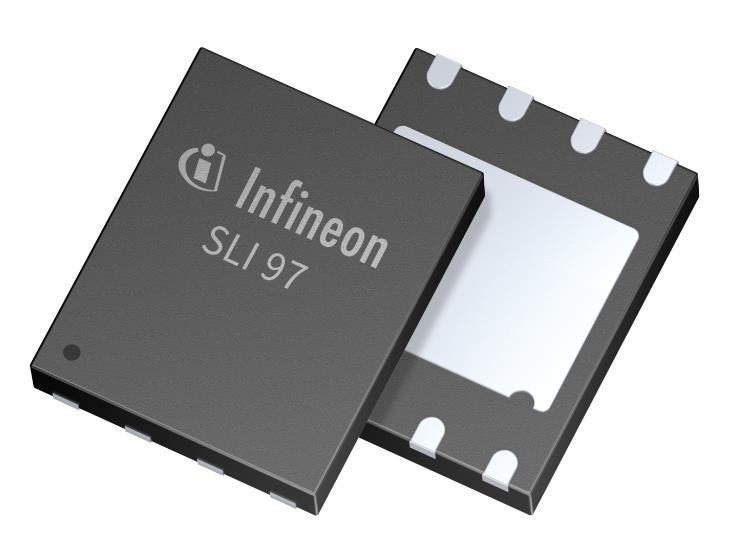
Infineon's eSIM integrates the expertise Infineon has accumulated in the security, telecommunications, and automotive sectors. The SLI 97 security controller is suitable for use in harsh environmental conditions of automotive applications and meets the high quality requirements (AEC-Q100) of the automotive industry.
Therefore, it enables new Machine-to-Machine (M2M) solutions for automotive applications. The SLI 97 security controller family operates over an extended temperature range of -40° to 105°C and includes up to 1MB of SOLID FLASH™ memory. Additionally, a hardware-based cryptographic coprocessor provides the necessary security using standard encryption mechanisms. Click here for additional information.
Comments
Related news
Infineon Supports NVIDIA Drive AI Platform for Level 5 Autonomous Driving
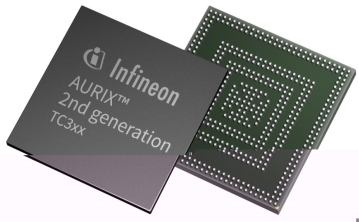
Infineon Technologies announced it is expanding its cooperation with NVIDIA to enable safe autonomous driving. Infineon's AURIX TC3xx series automotive microcontrollers are used in the NVIDIA DRIVE Pegasus AI automotive computing platform. The supercomputer for autonomous driving meets the Level 5 autonomous driving requirements defined by the SAE (Society of Automotive Engineers). Infineon supplies safety controllers, safety power supply ICs, and selected vehicle communication interface ICs for multiple NVIDIA DRIVE systems. These devices enhance autonomous driving capability levels, ranging from auto cruise functionality to auto chauffeur and fully autonomous driving.
2018.01.10by 김지혜 기자
Infineon Launches Security Solution Providing Robust Security for IoT
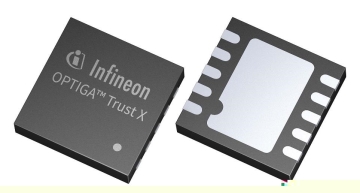
Infineon Technologies has launched the OPTIGA Trust X series, a hardware-based security solution that provides robust security across diverse IoT applications ranging from smart homes to drones. OPTIGA Trust X provides secure communication, software updates, and mutual authentication. Additionally, it can be executed on a plug-and-play basis, allowing device manufacturers to save development time and costs, and to easily develop products without specialized expertise in security.
2018.02.20by 김지혜 기자
Infineon Launches Soft Starter Module Supporting Various Current Ranges in a Single Footprint
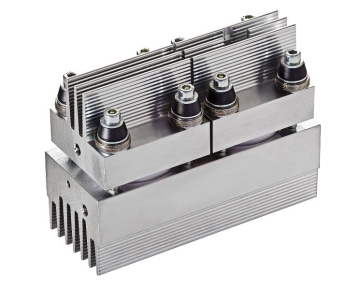
Infineon Technologies has launched Power Start modules suitable for low-voltage soft starter applications. These new products meet market demands for economical and compact semiconductor solutions. The new Power Start module design focuses on reducing complexity and the number of components. This enables customers to shorten development time and simplify manufacturing processes when developing soft starter applications. Typical low-voltage soft start applications include belt conveyors, large fans, and crushers found in pumps for water and wastewater transport and pumps for oil production.
2018.03.12by 김지혜 기자
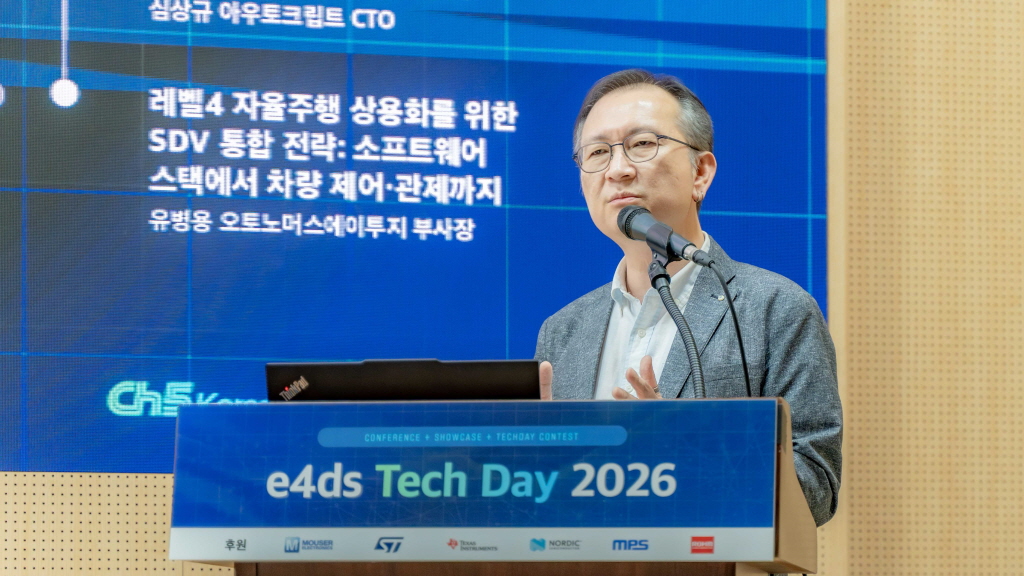
[e4ds Tech Day 2026 ⑨] Sim Sang-gyu, Autocrypt CTO: "In the Physical AI Era, Automotive Security Must Extend Beyond the Vehicle"
At e4ds Tech Day 2026, Sim Sang-gyu, CTO of Autocrypt, explained automotive cybersecurity strategies in the era of Physical AI and SDV (Software-Defined Vehicle). Automobiles are evolving as part of an ecosystem connected to AI, cloud, chargers, IoT, and robots, and he emphasized that the scope of security must expand beyond the vehicle interior to the entire connected environment. In particular, AI model tampering, adversarial attacks, OTA updates, and EV charger hacking were identified as major threats. He explained that response measures require zero trust, AI model integrity protection, intrusion detection, Security by Design and Default, and full lifecycle security management, and that proactive security system establishment beyond regulatory compliance is critical for securing future mobility competitiveness.
2026.10.12by 배종인 기자

Practical HIL Construction Strategy for Automotive and Off-Highway Controller Validation
As vehicle E/E architecture transitions to zonal structures and shifts to software-defined vehicles (SDV), the number of controllers (ECUs) requiring validation and software complexity are surging dramatically. Meanwhile, real vehicle testing cannot provide repeated verification under identical conditions and entails lead time and safety concerns. This white paper explains the principles of HIL (Hardware-in-the-Loop) validation and the structure of the NI platform composed of PXI, SLSC, and VeriStand, and through two actual implementation cases—Camera Record & Replay HIL for In-Cabin Monitoring Controller (ICMU) and Forklift Controller (VCU) HILS—describes how controller-level regression testing becomes possible. Additionally, it explicitly states application boundaries and limitations, such as lack of A2B support.
2026.10.12by 편집부











