


Smart Factories: It's Time to Focus Not Just on Automation, But on Advanced Technology
 Published2018.04.03 17:09
To advance, a policy philosophy is necessary.
Last year, the government announced the 'Smart Manufacturing Innovation Vision 2025' and pledged to establish 30,000 smart factories by 2025. Accordingly, approximately 5,000 smart factories were deployed by 2017.
A forum titled "Measures to Promote Smart Factories" was held under the auspices of Assemblyman Kim Cheol-min. Attended by representatives from small and medium-sized enterprises (SMEs) and industrial complexes nationwide, the forum discussed relevant legal regulations for smooth budget allocation and strategies to revitalize smart factories.
A survey of companies that have actually adopted smart factories revealed positive effects, including an average 30% increase in productivity, a 45% reduction in defect rates, a 16% reduction in costs, and a 35% reduction in delivery times. Nevertheless, the lack of a clear definition of a smart factory is hindering growth.
Song Byeong-hun, Director of the Smart Manufacturing Innovation Center, who gave the keynote presentation, explained, “Smart factories are currently evolving into complex forms that reflect new demands for connecting equipment and people rather than just automation systems,” adding, “Technologically, ‘connection’ is becoming an issue beyond automation.”
With the addition of digital technology to manufacturing, digital transformation is crucial. Digital transformation refers to the entire process of a digital twin, which involves visualizing the factory environment in advance. Center Director Song emphasized that the core technologies of smart manufacturing are equipment interoperability integration, value chain integration, production process integration, and human-centered production.
Director Song advised, “Smart factories must now unify the communication methods of existing equipment to create a connectable environment, connecting not only inside the factory but also to the outside. It will evolve into a form where production processes are standardized and extend to production design. Finally, it must be accompanied by a policy philosophy centered on human-centered production. This is because while dissemination and expansion are possible with technology alone, advancement requires policy support.”
Min Su-hong, CEO of Frontec, a company that implemented a smart factory through the Smart Factory Promotion Team, stated, “Most companies with smart factories in place remain at the basic stage. We are striving for advancement, but support is insufficient.” He added, “Current government policy focuses on creating a large number of smart factories, but I believe that advancement should also be reflected in the policy.”
He added, “They promote smart factories by saying that productivity increases and quality improves, but in reality, it is the quality of the workers' working environment that improves. We need to promote the fact that employees also benefit from it.”
Center Director Song stated, “The most important aspect of the factory of the future is vision. The value of good labor is crucial. Automation is not without risks,” adding, “For advancement, the system must change first. Under current regulations, fences are required to use collaborative robots, and humans are prohibited from approaching them. Introduction is difficult due to these factors.” He pointed out that "even with new technologies, it is difficult to use IoT immediately due to regulations under the Radio Waves Act."
It was also pointed out that workforce training related to smart factories is important. Seo Won-gap, a manager at the Korea Small Business Promotion Agency, stated, “Small and medium-sized enterprises (SMEs) do not immediately begin operating smart factories just because they have been introduced. This is because they lack the personnel to manage them.” He explained that they have created a training program where current employees learn through hands-on practice at the factory. However, he noted, “Realistically, the training is structured as a short-term course. It is difficult for current employees to operate it within such a short timeframe.”
Accordingly, they explained that there is a need for a plan in which the company guarantees the training period for current employees and allows them to receive the training they desire at the training site for an extended period.
Lee Tae-jin, Executive Director of Metanet Global, stated, “In Germany, the state is leading the agenda. By establishing an organization called Industry 4.0, it has created a system involving various ministries, companies, and labor unions,” adding, “We also need a system that can oversee human resources, the advancement of SMEs, and technology development.”
He added, “It is also a problem that large corporations are missing in the domestic market. The entire value chain connection between large corporations and small and medium-sized enterprises is being lost.”
Comments
Related news
Smart Factory: Where Does the Temperature Gap Between Government and the Field Come From?
On one side, they say domestic smart factory deployment is rapidly expanding, while on the other side, people ask who they should contact to build a smart factory. These are contrasting statements that frequently emerge at smart factory-related discussion forums, which have come to the forefront as the core of the so-called Fourth Industrial Revolution. Why are such reactions occurring regarding smart factories, which refer to production systems where all manufacturing stages are automated and digitalized based on IoT and CPS (cyber-physical systems), and the entire value chain operates in real-time synchronization like a single factory? This reflects a significant temperature gap between the smart factory promotion projects that the government is enthusiastically pursuing and what manufacturing sites actually experience. According to overseas research institutions, 84% of more than 1,000 global companies with revenues exceeding 1 billion dollars as of 2015 are either in the process of building or planning to build smart factories. However, the situation in Korea is somewhat different. According to a survey conducted by the Korea Trade Association in June on visitor interest in smart factory construction at the '2017 Smart Factory Expo & Conference,' 92% of respondents expressed interest but hesitated to implement due to construction costs, connectivity with existing equipment, and employee capabilities. There were even cases where employees themselves opposed implementation due to concerns that smart factory adoption would lead to job losses. What manufacturing sites experience goes further. Many are unaware of where and how to find solutions tailored to their manufacturing processes. There are instances where companies hastily purchase MES (Manufacturing Execution Systems) costing hundreds of millions of won, fail in operation, and then repurchase. Companies that can even afford such equipment are fortunate. The majority of manufacturing companies across diverse industries struggle with construction costs, operational workforce, and construction methods. The diversity of Korea's manufacturing industry serves as both an advantage and a disadvantage. This means there are many mid-sized companies. Since the majority of businesses are relatively small in scale, they are cost-sensitive and operate various systems. There is a strong voice that the government must take the lead in standardization for this reason. The argument is that benchmark standards must first be established to integrate various systems across diverse industries. While it is important to immediately promote and deploy smart factories, there are calls to increase R&D investment in how to establish standardization systems. If focus is placed solely on the number of smart factory deployments, there is a risk of overlooking reality. In the past, there were projects to promote automation centered on manufacturing, but there is no guarantee that the smart factory project will not meet the same fate. Professor Hong Seung-ho from Yonsei University, who participated in a digital transformation strategy discussion forum utilizing smart factories, stated, "Smart factories should become technology for SMEs," and added, "Smart manufacturing should not simply be the concept of automation added to smart buildings. Once standardization is applied, it will ultimately be advantageous for SMEs." However, he noted that it will take some time for such benefits to reach SMEs. The same applies to the recently emerging employment issue. Certainly, in digitalized manufacturing processes, simple labor will be replaced, but workforce efficiency must be enhanced through job reallocation of regular employees. Germany, which triggered Industry 4.0, provides a solution through statistics showing that new jobs actually increased. Ultimately, whether it is smart factories, the Fourth Industrial Revolution, or anything else, "people" remain at the center. As smart factory issues become increasingly heated recently, the temperature gap between policy and the field is becoming increasingly apparent. Ultimately, active interest among these stakeholders will significantly help narrow the gap.
2017.09.20by 신윤오 기자
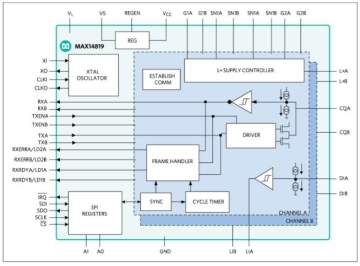
The core of smart factory implementation lies in 'IO-Link'.
Smart factories are manufacturing facilities equipped with technology that predicts and improves inefficiencies through information exchange between manufacturing equipment via the Internet of Things (IoT) and sensors. Since information exchange between end-point sensors and equipment is critical, 'connectivity' is the most important factor. Traditionally, sensors used in factories operated in a one-way direction, transmitting data in analog form. As a result, even if a single sensor malfunctioned, the failure could only be detected when an entire specific process was affected. IO-Link has gained attention as a solution to address this problem. IO-Link is an industry standard technology (IEC 61131-9) that serves as an interface solution for sensors and actuators in industrial systems and specifies how they should interoperate with controllers. The IO-Link system was developed to interoperate within the industry-standard three-wire sensor and actuator infrastructure, and consists of 'IO-Link Master' and 'IO-Link Device' products.
2017.11.28by 김지혜 기자
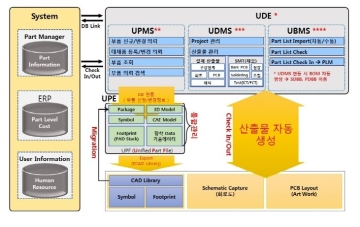
Smart Factory, Data Unity from Design to Manufacturing!
The critical aspect of a smart factory is the connectivity between R&D research institutes and manufacturing. To achieve this, technical data necessary for manufacturing must be accumulated. While the technical level of domestic smart factories has increased considerably, circuit management and CAD technology acquisition for smooth data sharing are still in an insufficient stage. According to the 'Smart Factory Level Comparison Report' released by the Korea Electronics Technology Institute (KETI), technologies such as ERP, MES, networking, and PLC have reached technical levels as high as 90%, while CAD has only reached 20%. The biggest problem slowing CAD technology advancement is the high cost involved. To unify data, intranet and network infrastructure must be established and numerous sensors installed throughout the factory, but the cost of this is difficult for small and medium-sized enterprises to bear on their own. The next problem is data distortion during conversion. As data generated during the research phase is transferred to manufacturing, circuits are converted into gerber files, drawings, papers, and other formats.
2018.02.09by 김학준 기자

Korea Instrument, KOLAS Accredited Calibration Agency First to Simultaneously Acquire ISO/IEC 27,001·27,701
Korea Instrument has become the first among KOLAS accredited calibration agencies to simultaneously acquire ISO/IEC 27,001 and ISO/IEC 27,701 certifications. Through its proprietary platforms CWIZ Enterprise and CWIZ Partners, the company has embedded information security and personal data protection requirements across all business processes including customer information, equipment data, and calibration reports, with plans to continuously advance its management system through regular audits and security inspections.
2026.10.12by 배종인 기자
TeamViewer One, IT Incident Automation Workflow and Resolution Center Enhanced
TeamViewer has added IT incident automation capabilities and an advanced Resolution Center to its integrated digital workplace management platform 'TeamViewer ONE'. Recurrent service disruptions, configuration errors, and capacity shortages are automatically handled according to preset policies, and device status verification through script deployment can be managed in a unified interface, significantly reducing repetitive tasks for IT teams.
2026.10.12by 배종인 기자











