


Samsung Electronics' Q1 earnings increase driven by the early launch of the Galaxy S9 and expansion of premium products.
 Published2018.04.26 12:06
Samsung Electronics announced its first quarter 2018 results, with sales of 60.56 trillion won and operating profit of 15.64 trillion won, its highest quarterly performance on a consolidated basis.
In the first quarter, sales increased by approximately 20% year-over-year, driven by the continued strength of the memory market and increased sales of wireless flagship smartphones. Operating profit increased by KRW 5.74 trillion, and the operating profit margin also rose by 6.2 percentage points to 25.8%.
The components business saw continued favorable market conditions, including strong server demand in the memory business, while semiconductor performance increased due to increased sales of system LSI for flagship smartphones and increased demand for cryptocurrency mining chips in the foundry business. However, the display business saw a decline in performance due to a decrease in demand from flexible OLED customers and intensified competition in LCDs.
The set business saw significant performance improvement, driven by the early launch of the Galaxy S9 and robust sales of existing products, including the Galaxy S8. The CE division saw increased sales of premium TV products, but performance declined due to restructuring efforts, including a reduction in the mid- to low-priced TV lineup, and declining profitability in home appliances.
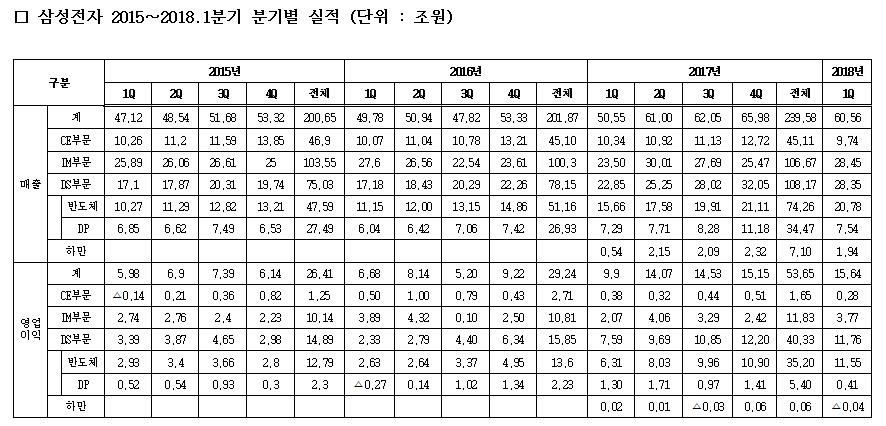
Meanwhile, the strengthening of the Korean won against the dollar resulted in a negative impact of approximately KRW 0.6 trillion compared to the previous quarter, mainly in the parts business. In the second quarter, while memory performance will remain strong, it is expected that performance improvement compared to the first quarter will be difficult due to continued weakness in displays and declining profitability in the wireless business.
In the components business, while semiconductor demand for memory remains robust, system LSI and foundry businesses are likely to see quarter-on-quarter performance declines due to slowing demand for smartphone components. Furthermore, in the display business, OLED will focus on securing profits, while LCD will focus on cost reduction.
The set business is expected to see profitability decline due to slowing flagship sales and increased marketing expenses stemming from stagnant demand for high-priced wireless products. The CE division is expected to see improved performance, driven by increased sales of new models, particularly QLED TVs, and the peak season for air conditioners.
Performance in the second half of this year is expected to grow compared to the first half, driven by the components business, driven by increased OLED panel supply and continued robust DRAM demand. The set business faces performance risks, including stagnant demand for premium products (high-end) and intensifying competition, but the company plans to focus on maintaining profitability by expanding sales of premium products.
Meanwhile, in the mid- to long-term, changes in the IT industry, such as AI, battlefields, and 5G, are expected to create new demand for the components business and expand set business opportunities through connectivity between various devices.
Samsung Electronics plans to continue its differentiated technological leadership and strengthen its business capabilities in areas such as AI and 5G.
Comments
Related news
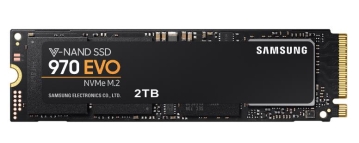
Samsung Electronics Launches Consumer SSD '970 PRO·970 EVO' Globally
Samsung Electronics is simultaneously launching the consumer NVMe SSD '970 PRO·EVO' series in approximately 50 countries worldwide including South Korea, the United States, China, and Germany. Following the launch of the '960 PRO·EVO', which was highly praised as a top-tier consumer NVMe SSD, the '970 PRO·EVO' offers approximately 30% improved sequential write speed and industry-leading reliability, which is expected to satisfy consumers' increasingly high expectations. NVMe is a PCIe interface-based protocol that can deliver speeds up to 6 times greater than SATA interface, making it suitable for ultra-high-speed, large-capacity data processing.
2018.04.24by 김지혜 기자

Samsung Electronics Launches Gaming-Specific Laptop 'Odyssey Z' with Heat Control System
Samsung Electronics is launching the 'Samsung Notebook Odyssey Z' in Korea this month, featuring an innovative thermal control system combined with premium metal design to deliver the ultimate gaming experience. The 'Samsung Notebook Odyssey Z' combines the distinctive qualities of metal material with a unique ice wave pattern to achieve a premium design. Despite its high-performance specifications, it boasts a slim 17.9mm thickness, making it convenient for not only gaming enthusiasts but also general users. In particular, the 'Samsung Notebook Odyssey Z' is equipped with the 'Z Air Cooling System,' an innovative thermal control system that enables users to enjoy high-end games for extended periods.
2018.04.25by 김지혜 기자
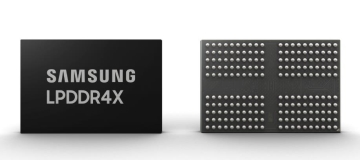
Samsung Electronics Mass-produces Automotive '16Gb DRAM' Capable of Withstanding Up to 125℃
Samsung Electronics has announced that it will begin full-scale mass production of an automotive-grade "10nm-class 16Gb LPDDR4X DRAM" that simultaneously achieves the highest level of high-temperature reliability and ultra-fast/ultra-low power characteristics. Samsung Electronics' new product satisfies Autograde 1 (-40℃ ~ +125℃), which offers a 20-degree (℃) higher temperature range in the high-temperature region compared to the existing "Autograde 2" of automotive-grade 20nm-class DRAM, making it the industry's only manufacturer to mass-produce Autograde 1-compliant products in the 10nm-class DRAM category. Additionally, the DRAM product satisfies all temperature cycling evaluations in the range of -40℃ to 125℃ in a system-mounted state as required by major global automotive manufacturers, and with industry-leading reliability levels, its application scope in the next-generation automotive market has further expanded.
2018.04.25by 김지혜 기자
Nvidia invests $5 billion in Intel
NVIDIA and Intel, leaders in global AI computing technology, are now forging ahead in providing cutting-edge solutions through NVLink-based architecture integration. NVIDIA and Intel have officially announced a strategic partnership and stated that they will jointly develop customized data center and personal computing products to accelerate diverse applications and workloads ranging from hyperscale to enterprise and consumer markets, thereby laying the foundation for the next generation computing era.
2025.09.22by 배종인 기자
.jpg)
Applied Materials Launches Environmental Protection Campaign to Mark World Cleanup Day
Applied Materials Korea (CEO Park Kwang-seon) is carrying out environmental cleanup activities with employees and their families around the Dongtan Sinricheon area on the occasion of World Cleanup Day, evolving into a company that engages with the local community beyond technological innovation.
2025.09.22by 명세환 기자











