



Meeting Held for Cooperation on International Standards for Electric Autonomous Vehicles
 Published2018.05.04 11:42
We plan to form 10 international autonomous driving standard response committees.
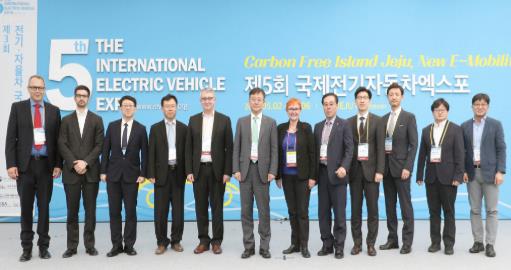
The 'International Standards Forum for Electric and Autonomous Vehicles' was held at the International Convention Center on May 3 to disseminate standardization trends in the electric and autonomous vehicle industry to the industry, discuss standardization-related issues, and announce standardization strategies.
Approximately 250 experts from industry, academia, research institutes, and government, including Kang Byung-gu, Director General of Standards Policy at the Korean Agency for Technology and Standards; Gabriela Ehrlich, Head of Global Communications at the International Electrotechnical Commission (IEC); representatives from Japan's Ministry of Economy, Trade and Industry; Hyundai Motor Company; Volkswagen; Renault; the Korea Automotive Parts Research Institute; and the Korean Society of Automotive Engineers, attended the forum.
At this forum, the Korean Agency for Technology and Standards (KATS) announced the 'Standardization Strategy for Electric and Autonomous Vehicles' to support the strengthening of technological competitiveness and the widespread adoption of electric and autonomous vehicles, which are key drivers of the Fourth Industrial Revolution.
In order to secure international standards, Korea decided to propose five international standards for electric vehicles and autonomous vehicles this year, including autonomous vehicle simulation test methods and interoperability of electric vehicle wireless charging, in which Korea has a technological advantage, and to strengthen international standardization activities by forming 10 committees to respond to international standards for autonomous vehicles.
Performance evaluation of autonomous vehicles has relied on actual driving tests, but with the possibility of virtual driving tests through simulations proposed by Korea as an international standard, the cost and time for testing autonomous vehicles are expected to decrease significantly in the future.
In addition, it lays the foundation to promote the adoption of electric vehicles by drastically reducing charging times through measures such as the standardization of 400kW-class ultra-fast charging systems.I plan to do it.
Global electric and autonomous vehicle manufacturers, including Hyundai Motor, Volkswagen, and Renault, participated in the forum to share industry technology development trends and the current status of standardization responses, and to discuss standardization issues currently under development.
Volkswagen announced the current status of connector technology and standards capable of 400kW charging, Renault announced smart charging standards, which are communication, service, and charging methods between vehicles and charging infrastructure, and Hyundai Motor announced the current status of international standards for autonomous vehicles.
Japan's Ministry of Economy, Trade and Industry presented strategies for international standardization activities for autonomous vehicles and the promotion of the linkage between standards and technical regulations, while 3M introduced the current status and plans for legal and institutional support and infrastructure development to promote autonomous driving in the United States.
In addition, the Korea Battery Industry Association and the Korea Electrotechnology Research Institute explained research and development and standardization trends regarding electric vehicle batteries, motors, and charging, while the Korea Automotive Parts Research Institute and Kookmin University discussed the development of standards for autonomous driving in low-speed sections and measures to promote the commercialization of autonomous driving utilizing vehicle-to-vehicle communication.
Through this forum, the Korean Agency for Technology and Standards (KATS) decided to share technology development and international standardization trends for electric and autonomous vehicles with domestic and international experts, and to strengthen standardization cooperation in the electric and autonomous vehicle sectors with major countries such as the United States, Japan, and Germany by actively participating in the international standardization activities of the International Electrotechnical Commission (IEC) and the International Organization for Standardization (ISO).
Comments
Related news
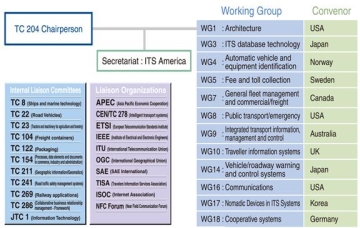
An international standardization conference on intelligent transportation systems for autonomous vehicles was held.
The 51st International Standardization Conference in the field of Intelligent Transportation Systems (ISO TC 204), hosted by the Ministry of Trade, Industry and Energy and the National Institute of Standards and Technology, was held. At this conference, experts from 28 countries worldwide and approximately 200 domestic and international professionals participated to discuss international standard development and promotion strategies in the intelligent transportation systems field. Korea plans to advance 16 types of international standards in the Intelligent Transportation Systems (ITS) field at this conference, and through these efforts, aims to secure international standard leadership in autonomous cooperative driving and road information technology (IT) infrastructure.
2018.04.23by 김지혜 기자
Nvidia invests $5 billion in Intel
NVIDIA and Intel, leaders in global AI computing technology, are now forging ahead in providing cutting-edge solutions through NVLink-based architecture integration. NVIDIA and Intel have officially announced a strategic partnership and stated that they will jointly develop customized data center and personal computing products to accelerate diverse applications and workloads ranging from hyperscale to enterprise and consumer markets, thereby laying the foundation for the next generation computing era.
2025.09.22by 배종인 기자
.jpg)
Applied Materials Launches Environmental Protection Campaign to Mark World Cleanup Day
Applied Materials Korea (CEO Park Kwang-seon) is carrying out environmental cleanup activities with employees and their families around the Dongtan Sinricheon area on the occasion of World Cleanup Day, evolving into a company that engages with the local community beyond technological innovation.
2025.09.22by 명세환 기자
.jpg)
The combination of electrical and electronic technologies like AI, semiconductors, and electric vehicles with renewable energy will determine industrial competitiveness.
Professor Lim Chun-taek from Gwangju Institute of Science and Technology (GIST) stated in his keynote speech at the '2025 e4ds Tech Day' on the 9th, "Global energy investment is already shifting from fossil fuels to renewable energy, and the trend of electrification combined with electrical and electronic technologies is changing the industrial landscape."
2025.09.12by 배종인 기자
.jpg)
"Data Center Power Demand Surges: Distributed Energy is the Solution"
The power demand of data centers is surging rapidly alongside the accelerating growth of artificial intelligence (AI), cloud, and electric vehicle industries. In particular, the global power supply and demand structure centered on the United States is undertaking a massive infrastructure reorganization to adapt to this change, and Korea is no exception in this trend. As an alternative to overcome the limitations of the existing centralized power system, distributed energy systems and smart grid technologies are gaining attention.
2025.09.02by 배종인 기자











