



Infineon Invests 1.6 Billion Euros in New 300mm Chip Factory
 Published2018.05.23 15:54
Infineon is building an automated chip factory in Villach, Austria, to produce 300mm thin-film wafers. The company will invest a total of approximately 1.6 billion euros (about 2.0436 trillion won) over six years, and the efficient new factory is expected to create about 400 new jobs. Construction of the new factory is expected to begin in the first half of 2019, with production starting in early 2021. When the production facilities are fully operational, the additional potential revenue is estimated at approximately 1.8 billion euros per year.
Dr. Reinhard Ploss, CEO of Infineon Technologies, stated, “Global demand for power semiconductors is surging, and Infineon is growing more robustly than the market, particularly as a company sought after by customers.” He added, “This growth is underpinned by global megatrends such as climate change, demographic shifts, and increasing digitalization. Electric vehicles, connected and battery-powered devices, data centers, and power generation using renewable energy sources require efficient and reliable power semiconductors. The new factory in Pilach will enable us to meet this growing demand and continue driving Infineon’s growth.”
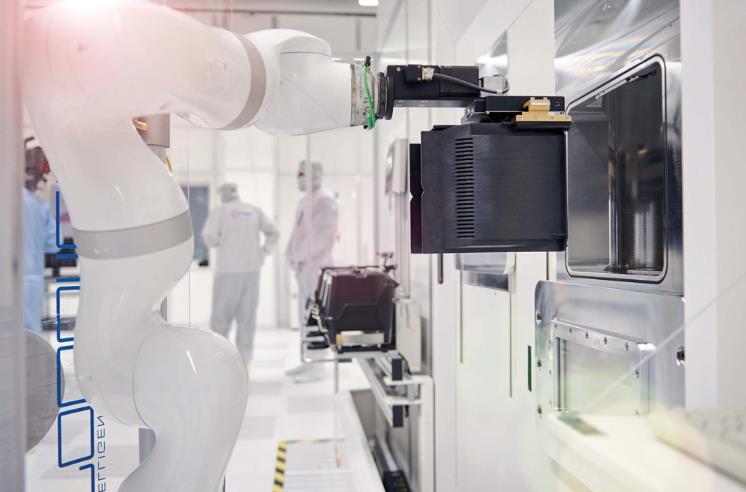
Pilach is Infineon's core competency center for power semiconductors and the location where 300mm thin-film wafer production was developed. Large-diameter wafers significantly increase productivity and reduce working capital. Infineon plans to apply factory automation and digitalization concepts to the new Pilach plant. It is expected that 300mm production capacity will be fully operational in 2021.
According to market research by IHS Markit, Infineon is the world's largest power semiconductor supplier, holding an 18.5 percent market share. Power semiconductors control the flow of electricity in applications such as electric vehicles, trains, wind and solar power generation, and power supplies for mobile phones, laptops, and data centers.
Comments
Related news
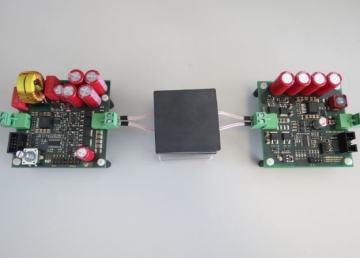
Infineon and Wurth Elektronik to Offer 200-Watt Development System
Würth Elektronik eiSos and Infineon Technologies announced the supply of a 200-watt development system 760308EMP-WPT-200W for wireless power transmission (WPT). The distinguishing feature of this development kit is that it can transmit not only power but also data through the link between the transmitter and receiver coils. The 760308EMP-WPT-200W development kit, composed of a power supply unit, transmitter unit, and receiver unit, is an innovative solution applying products from Würth Elektronik and Infineon. The transmitter side consists of a resonant circuit composed of a resonant capacitor connected in series with the WPT coil and a full bridge circuit. Due to the phase shift between voltage and current in the resonant circuit, this system operates in zero voltage switching (ZVS) mode. Thereby, the overall system achieves high efficiency.
2018.04.02by 김학준 기자
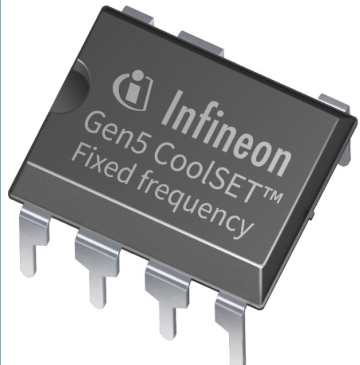
Infineon Launches CoolSET, Integrating a Fixed-Frequency PWM Controller and Power IC
Infineon has launched the fifth-generation fixed frequency 700V/800V CoolSET product family. This solution integrates a PWM controller IC and the latest 700V and 800V CoolMOS P7 MOSFETs in a single package. The single platform supports both isolated and non-isolated flyback topologies. The 700V/800V CoolSET uses a cascode configuration with an internal current regulator and high-voltage superjunction MOSFET. This combination enables fast startup and implements brown-in protection (protective operation against input voltage drop). The integrated 800V MOSFET and optimized blanking time support high AC line input up to 350VAC. Switching losses are reduced through eco mode, which features low switching frequency under medium-load and light-load conditions.
2018.04.12by 김학준 기자
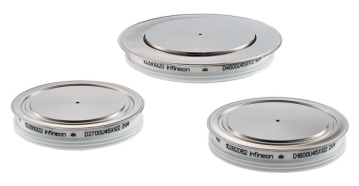
Infineon Launches Family of Low-Loss IGBT Freewheeling Diodes
Infineon Technologies has launched Infineon Prime Soft, a new diode product family designed for the latest IGBT applications. This diode product family is characterized by an increased turn-off capability of 5kA/µs. Prime Soft was developed based on the IGCT freewheeling diode product family, which is based on a monolithic silicon design. Suitable applications include HVDC (High Voltage Direct Current) / FACTS (Flexible AC Transmission System) and medium voltage drives using voltage source converters. These applications have stringent requirements for power loss reduction.
2018.04.24by 김지혜 기자

Intel Unveils Next-Generation 'Core Ultra Series 3' and vPro Platform for Enterprise PCs
Intel has officially unveiled the "Intel Core Ultra Series 3" for next-generation enterprise PCs and the latest vPro platform, addressing a wide range of demands from enterprise notebooks to high-performance workstations.
2026.03.26by 배종인 기자

ROHM Launches ESD Protection Diode Compatible with High-Speed Interfaces of 10Gbps or Higher
Semiconductor specialist ROHM has developed the 'RESDxVx series' of ESD (electrostatic discharge) protection diodes capable of responding to next-generation high-speed data communication environments exceeding 10Gbps, simultaneously enhancing both signal quality maintenance required in high-speed interfaces and IC protection performance.
2026.03.26by 배종인 기자











