


Samsung Electronics Announces Q2 2018 Earnings with Semiconductor Success
 Published2018.07.31 08:57
Samsung Electronics recorded consolidated sales of 58.48 trillion won and an operating profit of 14.87 trillion won in the second quarter of 2018.
Q2 Composite
In the second quarter, although memory continued to perform well, sales of smartphones and displays declined, resulting in a 4% decrease in revenue and an increase of 0.8 trillion won in operating profit compared to the same period last year. Compared to the previous quarter, revenue decreased by 3% and operating profit decreased by 0.8 trillion won.
Looking at the breakdown by segment, the semiconductor division recorded sales of 21.99 trillion won and an operating profit of 11.61 trillion won. Achieving solid performance driven by increased demand for products for data centers and high-capacity storage, the company solidified its product competitiveness by focusing on the sales of high-capacity, high-value products, such as 1X nanometer-based server DRAM of 64GB or more.
The display division recorded sales of 5.67 trillion won and an operating profit of 0.14 trillion won. Performance declined due to slowing demand for flexible OLED panels and decreased sales of LCD TV panels.
The IM division recorded sales of 24 trillion won and an operating profit of 2.67 trillion won. Although performance declined due to decreased sales of the Galaxy S9 amid stagnant demand in the high-end smartphone market, results in the network sector improved thanks to increased LTE expansion investments by major overseas clients.
The CE division recorded sales of 10.4 trillion won and an operating profit of 0.51 trillion won. While TV profits improved due to strong sales of high-value products such as QLED TVs amidst a boom in global sports events, performance in home appliances declined due to a slowdown in demand for air conditioners.
Meanwhile, in the second quarter, the won weakened against the dollar but showed partial strength against other currencies such as the euro and real, resulting in a negative exchange rate impact of approximately 400 billion won compared to the previous quarter, centered on the set business.
Capital investment in the second quarter amounted to 8.0 trillion won, with 6.1 trillion won in semiconductors and 1.1 trillion won in displays by business sector. Cumulatively for the first half of the year, a total of 16.6 trillion won was executed, including 13.3 trillion won in semiconductors and 1.9 trillion won in displays.
Second Half Forecast and Plan
In the second half of the year, performance is expected to improve compared to the first half, driven primarily by the components business, as robust memory market conditions persist and the supply of flexible OLED panels expands.
In the semiconductor sector, memory is expected to continue delivering solid performance due to sustained robust demand from servers and PCs, as well as strong demand driven by the launch of new mobile products. In particular, we plan to focus on strengthening our technological leadership by actively responding to increasing customer demand for differentiated products, such as high-capacity memory for servers, expanding the proportion of 10nm-class products, and launching full-scale mass production of 5th generation V-NAND.
Solid performance is expected in System LSI and Foundry due to strong demand for APs and image sensors driven by the entry into the peak smartphone season.
In the case of displays, performance is expected to improve due to the expansion of flexible OLED panel supply; however, despite growing demand, LCD performance is projected to remain weak due to increased supply in the industry.
The IM division anticipates that a challenging market environment will persist due to the launch of new models and intensifying price competition within the industry; therefore, it plans to drive sales expansion by launching the new Galaxy Note early while simultaneously strengthening the competitiveness of its mid-range and budget models.
The CE division is expected to see improved performance compared to the first half of the year, driven by TVs, in anticipation of the year-end peak season. For TVs, earnings growth is projected to continue due to increased sales of products such as QLED and 8K TVs, while the home appliance division plans to focus on securing profitability by expanding its premium product lineup.
In the mid-to-long term, new demand is expected to be generated in the components business due to changes in the IT industry such as IoT, AI, and 5G, and opportunities in the set business are also projected to expand through inter-device connectivity.
Samsung Electronics plans to continue its growth by actively responding to new demand for automotive and AI based on its advanced semiconductor and display technologies, and by securing a lead in 5G technology through form factor innovations such as foldable smartphones.
Comments
Related news
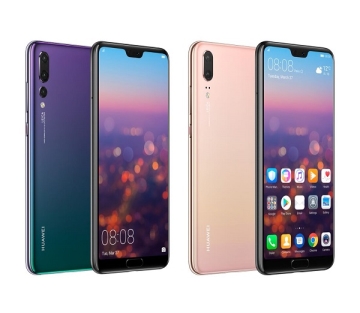
Will Samsung Be Caught by Huawei? P20 Series Growing 316% Across Europe
Huawei's China online mall launch achieved 100 million yuan in sales in just 10 seconds, with a 17-fold increase compared to previous operations in Central and Eastern Europe and Northern Europe, and a 316% increase in Western Europe.
2018.06.28by 명세환 기자
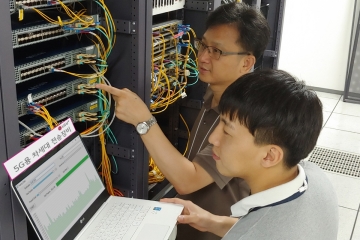
LG Uplus to introduce 5G equipment 10 times faster than LTE.
LG Uplus has implemented a "100G switch" for data traffic transmission between 5G wireless base stations and mobile backhaul using domestic equipment manufacturers Dasan Network Solutions and Ubiquitous equipment.
2018.07.25by 이수민 기자
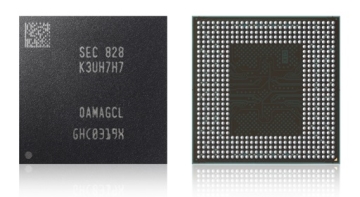
Samsung Electronics' 10nm Mobile DRAM to Enable Smaller and Thinner Mobile Devices
Samsung Electronics has begun mass production of mobile DRAM applying a second-generation 10-nanometer-class process for the first time in the industry.
2018.07.26by 이수민 기자
ESP32 Development Environment Selection and GPS Application Implementation
The ESP32 is a microcontroller that integrates Wi-Fi, Bluetooth, 12-bit ADC, capacitive touch, PWM, DAC, and UART in a single SoC. However, the abundance of features does not by itself solve the designer's problems. The real challenges lie in selecting the appropriate development environment, determining which pins can be used and which must be avoided, and converting raw data from modules into usable information. This document addresses ESP32 peripheral constraints (ADC2 and Wi-Fi coexistence limitation, UART1 occupancy, ADC non-linear regions), the trade-offs between Arduino IDE and ESP-IDF, and the process from connecting NEO-6M/NEO-M8N GPS modules to UART2, parsing NMEA sentences, and visualizing routes in Google Earth, all organized based on documented references.
2026.10.12by 편집부
MIPI CSI-2, DSI-2, C-PHY, D-PHY Test Solution Technical White Paper
The MIPI interface adopts a burst mode that transitions between low-power (LP) and high-speed (HS) states for low-power consumption, and in return, strict timing rules are imposed on state transitions. Additionally, the high-speed section operates as a packet-based protocol with headers, ECC, and CRC, so verification engineers must handle waveforms and protocols simultaneously. Traditional configurations combining general-purpose oscilloscopes and AWGs reveal limitations in setup complexity, measurement uncertainty, and lack of reproducibility when faced with these requirements. This white paper, based on webinar materials, organizes the structure of this problem and describes how the SV5C-DPTXCPTX generator for receiver testing and SV5C-DPRXCPRX analyzer for transmitter testing integrate state transition testing, stressed eye testing, and protocol analysis into a single bench, along with their application boundaries.
2026.10.12by 편집부











