


PTC Releases Enterprise AR-IIoT Innovation State of the Art Report
 Published2018.08.30 07:00
AR, an important tool for reorganizing the competitive landscape, etc.
Manufacturing Evolves to Be Agile and Respond to Change with IIoT
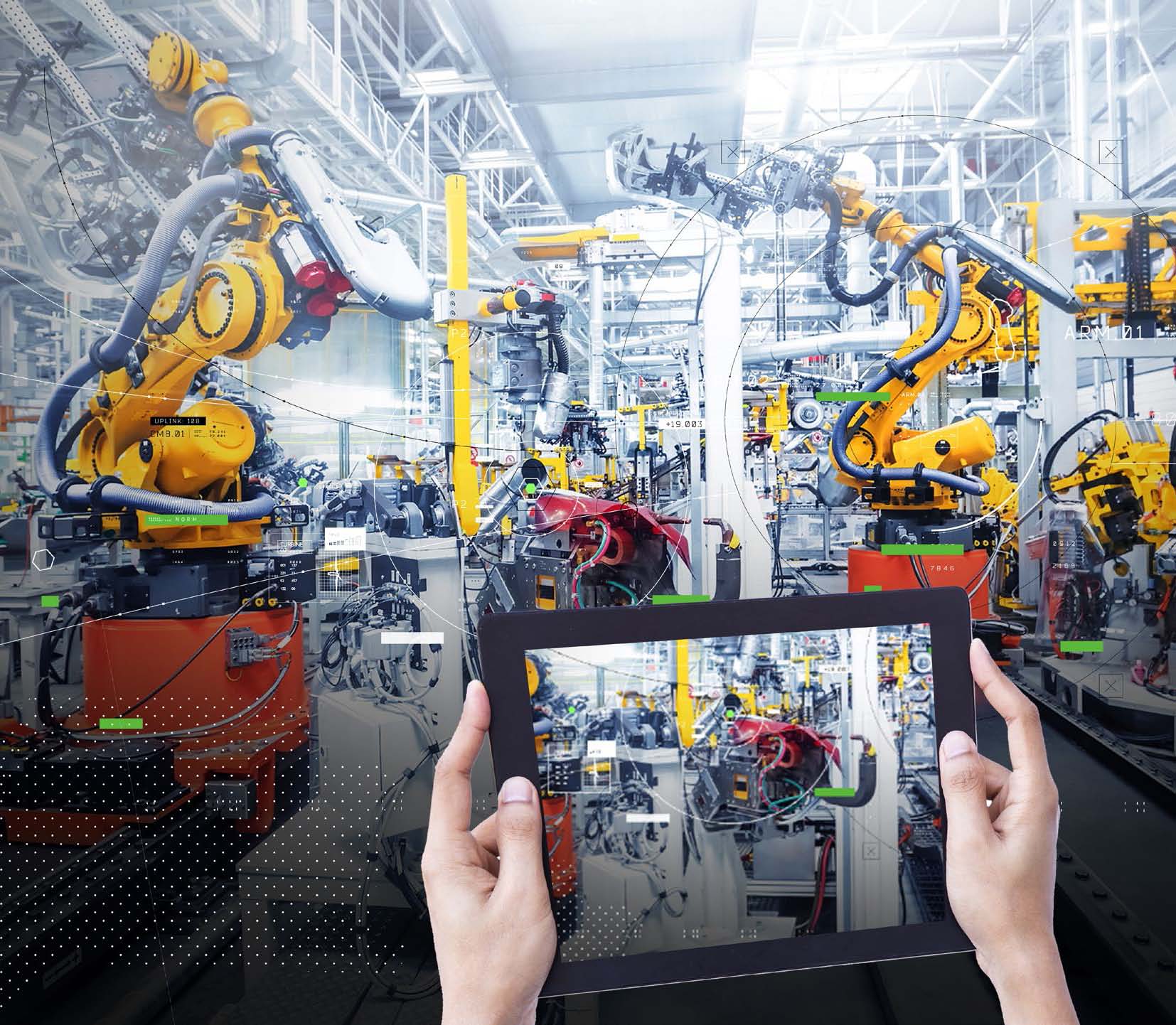
On the 27th, PTC released the 'State of Industrial Innovation' report, which covers innovative companies that are actively applying the latest technologies, such as building the Industrial Internet of Things (IIoT) and providing augmented reality (AR) experiences to end customers.
According to the report, there is a significant market opportunity for companies looking to build IIoT capabilities into physical products or deliver IIoT solutions to end customers in the form of new products, in-product interfaces or service models.
Companies in the industrial market are showing great interest in improving customer experience, discovering new revenue models, and reorganizing the competitive landscape, and are making efforts to differentiate their products and services by introducing augmented reality technology to achieve this.
AR technology is spreading rapidly
As adoption of AR technology grows, companies at the crossroads of digital transformation are in a position where they cannot afford to hesitate. This is because AR has the potential to restructure and impact the economy, both in terms of the products, services and solutions provided to end customers, as well as in terms of improving operational efficiency within businesses.
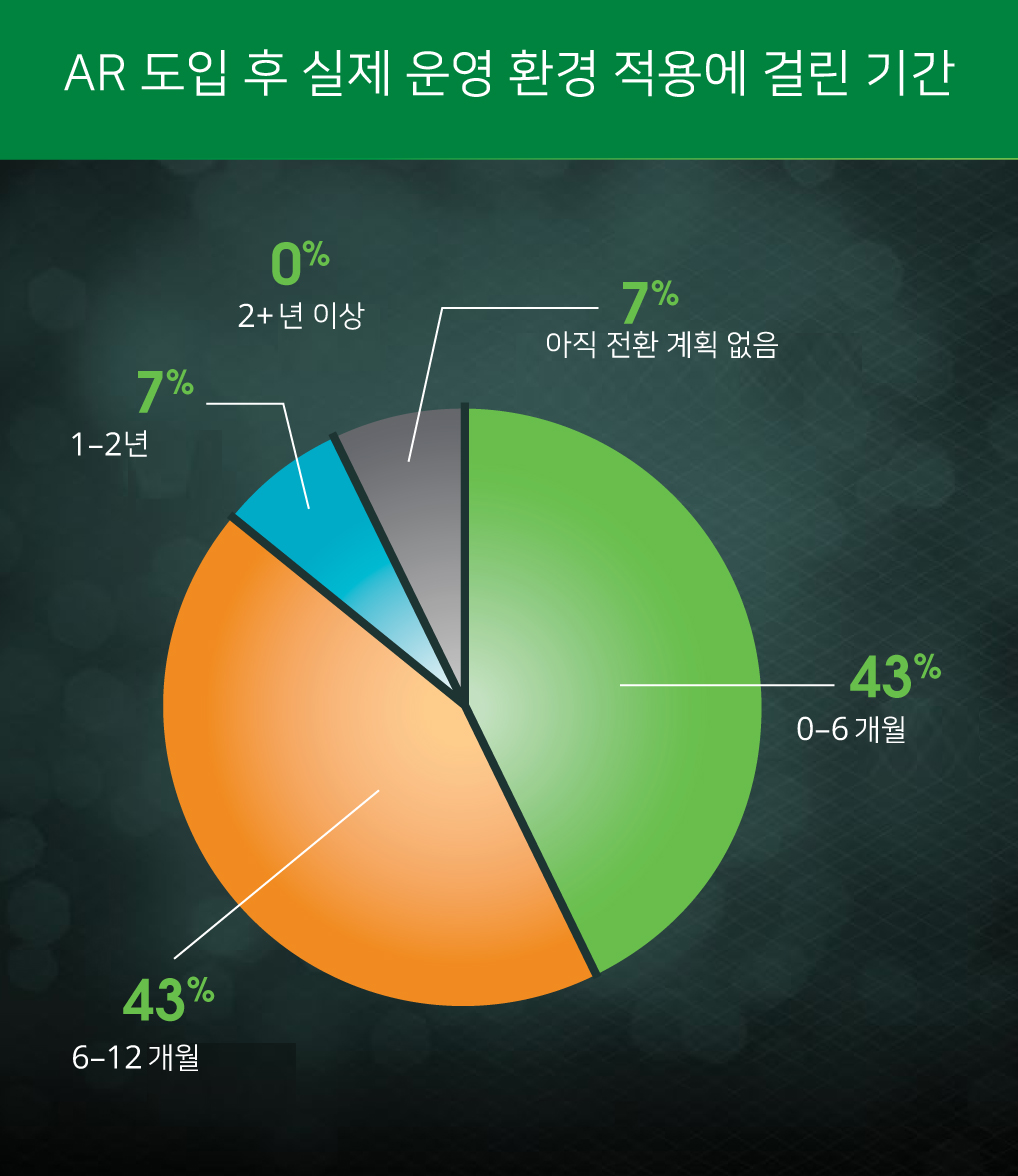
PTC analyzes the primary use cases of strategic differentiation in its AR market report, “Industrial AR: The State of Industrial Innovation.” The report covers companies that have successfully differentiated themselves from their competitors through innovative products, services, and solutions that use AR experiences. According to the data collected in the report, most companies that have adopted AR have experienced a return on investment (ROI) within 12 months, and this rapid adoption suggests both new opportunities and the potential for market reordering.
“Augmented reality is here to stay,” said Mike Campbell, vice president and general manager, AR Products, PTC. “Companies that are starting to dive into AR understand that the ROI will be rapid, but they also recognize that as more and more companies are integrating AR into physical products, there will be limited opportunities to leverage AR for differentiation. In publishing this report, we see a number of examples of companies that started with internal PoCs and quickly expanded into customer-facing products and services. “Both businesses and consumers are experiencing the transformative power of augmented reality,” he said.
IIoT Focused on Remote Monitoring and Service Innovation Cases
The IIoT market report, “The State of Industrial IoT in the Scope of Industrial Innovation,” covers development and deployment trends for companies building IIoT environments to improve customer-facing products, services, and solutions.
According to the report, companies pursuing IIoT primarily for external use are found to be much smaller in size. Large companies typically have large service networks and focus on improving efficiency and productivity, while small and medium-sized companies focus on increasing market share and differentiating their products and services to attract and retain new customers.
While companies seeking early value often adopt IIoT for remote monitoring, those seeking long-term innovation build a foundation by leveraging new capabilities and then create unique use cases. The next step is typically to combine this with machine learning and predictive analytics, which allows businesses to predict failures before they occur and optimize customers’ product experiences.
Service-centric applications also enable individual manufacturers to identify service opportunities, capturing demand for parts that were traditionally handled by third parties, by customers themselves, or through emergency customer support.
In fact, Varian, a manufacturer of radiation oncology equipment, has used IoT technology to increase uptime of its equipment systems in the field and dramatically reduce the costs associated with service. It developed a predictive maintenance system that reduced the number of service visits per equipment by 42%, thereby increasing service margins and improving the quality of the customer experience.
“IoT technology will be the determining factor for industrial enterprises to succeed or fail,” said Joe Biron, CTO of PTC’s IoT division. “Companies of all sizes are trying to find real business value in their IoT deployments, whether internally for manufacturing operations or externally for service and maintenance. The key is to transform your business model so you can be agile and able to respond to the pace of market change.”
The Industrial Innovation Reality Study report is the first in a series of market research and analysis projects that PTC has been conducting since the beginning of the year, and this year’s release explores recent trends in the Industrial Internet of Things and augmented reality technologies that are creating powerful and increasingly complex market opportunities. This report draws on PTC’s 30 years of expertise and the experience of over 30,000 customers and 1,000 partners worldwide to provide trends and actionable insights across the entire IIoT ecosystem.
Comments
Related news
Moxa Develops Azure IoT Edge Integrated IIoT Gateway
Moxa has developed an industrial Internet of Things gateway that integrates Microsoft's Azure IoT Edge.
2018.08.11by 이수민 기자
.jpg)
Moxa Creates a Platform to Address IIoT Utilization Challenges
Moxa will hold the 'Moxa Industrial Internet of Things Solution Day' on September 4th, with a focus on Industrial IoT. The event will cover Moxa's connectivity solutions that enable IIoT connectivity implementation.
2018.08.23by 이수민 기자
European DR Market Meets IoT, Set to Grow 4x by 2025
Frost & Sullivan released the "European Demand Response Market, 2018-2025" analysis report. The report projects that European utilities and DR aggregators will make significant investments in DR technologies and forecasting tools to reduce grid failures and outages and lower power generation costs.
2018.08.28by 이수민 기자

ESP32 Development Environment Selection and GPS Application Implementation
The ESP32 is a microcontroller that integrates Wi-Fi, Bluetooth, 12-bit ADC, capacitive touch, PWM, DAC, and UART in a single SoC. However, the abundance of features does not by itself solve the designer's problems. The real challenges lie in selecting the appropriate development environment, determining which pins can be used and which must be avoided, and converting raw data from modules into usable information. This document addresses ESP32 peripheral constraints (ADC2 and Wi-Fi coexistence limitation, UART1 occupancy, ADC non-linear regions), the trade-offs between Arduino IDE and ESP-IDF, and the process from connecting NEO-6M/NEO-M8N GPS modules to UART2, parsing NMEA sentences, and visualizing routes in Google Earth, all organized based on documented references.
2026.10.12by 편집부
MIPI CSI-2, DSI-2, C-PHY, D-PHY Test Solution Technical White Paper
The MIPI interface adopts a burst mode that transitions between low-power (LP) and high-speed (HS) states for low-power consumption, and in return, strict timing rules are imposed on state transitions. Additionally, the high-speed section operates as a packet-based protocol with headers, ECC, and CRC, so verification engineers must handle waveforms and protocols simultaneously. Traditional configurations combining general-purpose oscilloscopes and AWGs reveal limitations in setup complexity, measurement uncertainty, and lack of reproducibility when faced with these requirements. This white paper, based on webinar materials, organizes the structure of this problem and describes how the SV5C-DPTXCPTX generator for receiver testing and SV5C-DPRXCPRX analyzer for transmitter testing integrate state transition testing, stressed eye testing, and protocol analysis into a single bench, along with their application boundaries.
2026.10.12by 편집부











