This page was machine-translated and may differ from the original. View original
Japanese Companies Adopting NVIDIA AI Solutions: "Wrap Around the Long One"

NTT Introduces NVIDIA Tesla V100 Tensor Core GPUs
Fujifilm Integrates DGX-2 AI Supercomputer into the Medical Field
Jetson AGX Xavier, powered by Yamaha Motor and other autonomous vehicles
There's a Japanese proverb that says, "Follow the long one" (長いものには巻かれろ). While sometimes interpreted negatively as a call to follow the strong, it can also be viewed positively when viewed from the perspective of division of labor and collaboration between companies. Since you can't excel at everything, you delegate what you lack to companies that do. Many Japanese companies are actively leveraging NVIDIA's technological prowess to enhance their own AI capabilities and accelerate the development of related products and services.
NTT introduces NVIDIA GPUs 
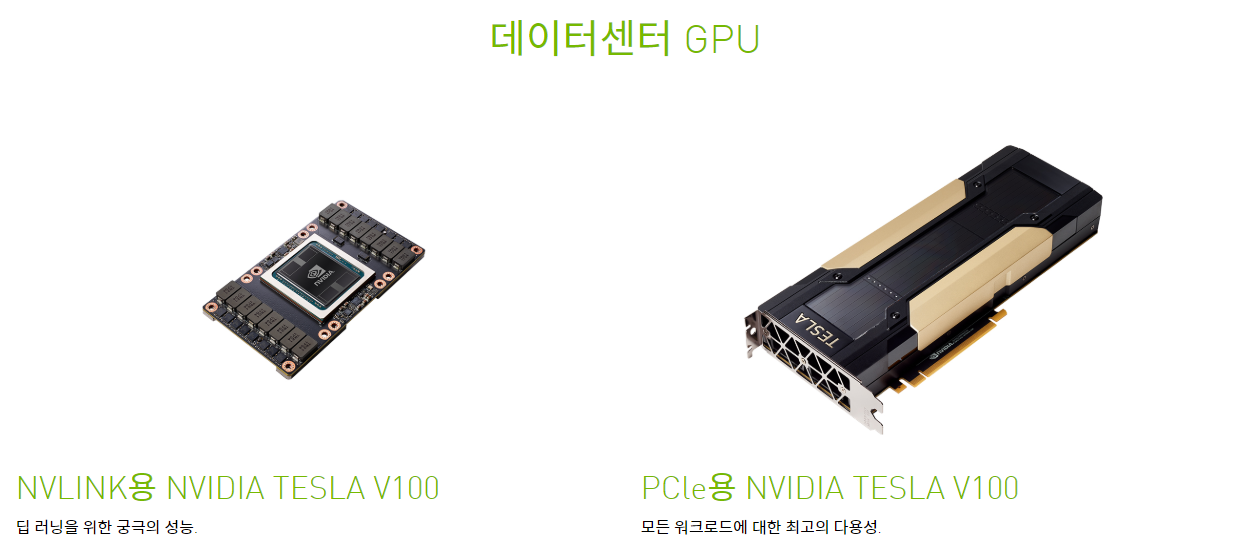
NVIDIA Tesla V100 Tensor Core GPU
Japan's largest telecommunications company, NTT Group, announced at GTC Japan 2018, held on the 13th and 14th, that it would introduce the NVIDIA Tesla V100 Tensor Core GPU to its AI project, 'corevo'.
NTT Group conceived the Korebo Project two years ago to address the challenges facing Japanese society related to its aging population. The AI capabilities that Corevo covers include natural language processing and chat, agent AI for elderly monitoring, Ambient AI focusing on big data analysis for traffic analysis and control, Heart-Touching AI focusing on body and emotional analysis for healthcare, sports, and entertainment, and Network AI for detection, fault prediction, and network monitoring.
NTT Group will build Corevo's cloud-based AI resource center with the Tesla V100 Tensor Core GPU. The Tesla V100 Tensor Core GPU delivers exceptional speed and scalability for high-performance computing and graphics workloads, as well as AI inference and training. Based on NVIDIA's seventh-generation GPU architecture, Volta, the Tesla V100 Tensor Core GPU contains 21 billion transistors and delivers the performance of up to 100 CPUs within a single GPU.
“By establishing a joint development platform for the NTT Group, we will be able to effectively leverage the NTT Group’s AI research and development achievements and accelerate the creation of new value,” said Masahisa Kawashima, Vice President of the NTT Software Innovation Center. “NVIDIA’s AI platform will play a critical role in expanding Corevo’s services and products,” he said.
Fujifilm introduces NVIDIA supercomputer 
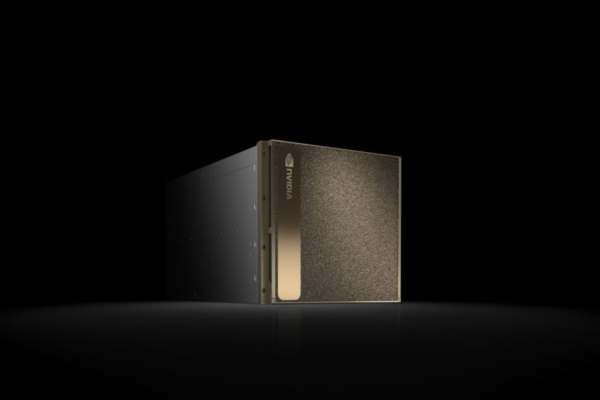
NVIDIA DGX-2 AI supercomputer
Fujifilm announced on the 13th that it will be introducing the NVIDIA DGX-2 AI supercomputer. This will accelerate the development of AI technologies in healthcare, medical imaging systems, and high-performance materials for displays.
Fujifilm, which focuses on healthcare sectors such as pharmaceuticals, bio CDMOs, and regenerative medicine, is active in the medical systems sector, including medical equipment and services that integrate medical image analysis and recognition technologies. It also utilizes simulations in the development of high-performance materials, such as display materials and fine chemicals.
Fujifilm will implement a new supercomputer cluster comprised of multiple DGX-2 systems. Each system integrates an AI network fabric with 16 Tesla V100 Tensor Core GPUs connected via NVIDIA NV Switch, delivering 2.4 terabytes per second of throughput.
DGX-2 is designed to enable you to rapidly develop, test, deploy, and scale new deep learning models. Fujifilm plans to use this system to accelerate AI research across a wide range of fields, including healthcare.
“Fujifilm is applying AI across a wide range of fields,” said Akira Yoda, Chief Digital Officer at Fujifilm. “In healthcare, we are developing AI-based imaging diagnostic technology using various NVIDIA GPUs that provide high-speed computing capabilities. The introduction of supercomputers will significantly enhance processing power. We expect that AI training that previously took days can now be completed in a matter of hours.”
Nvidia AI computer introduced, Yamaha Motor, etc. 
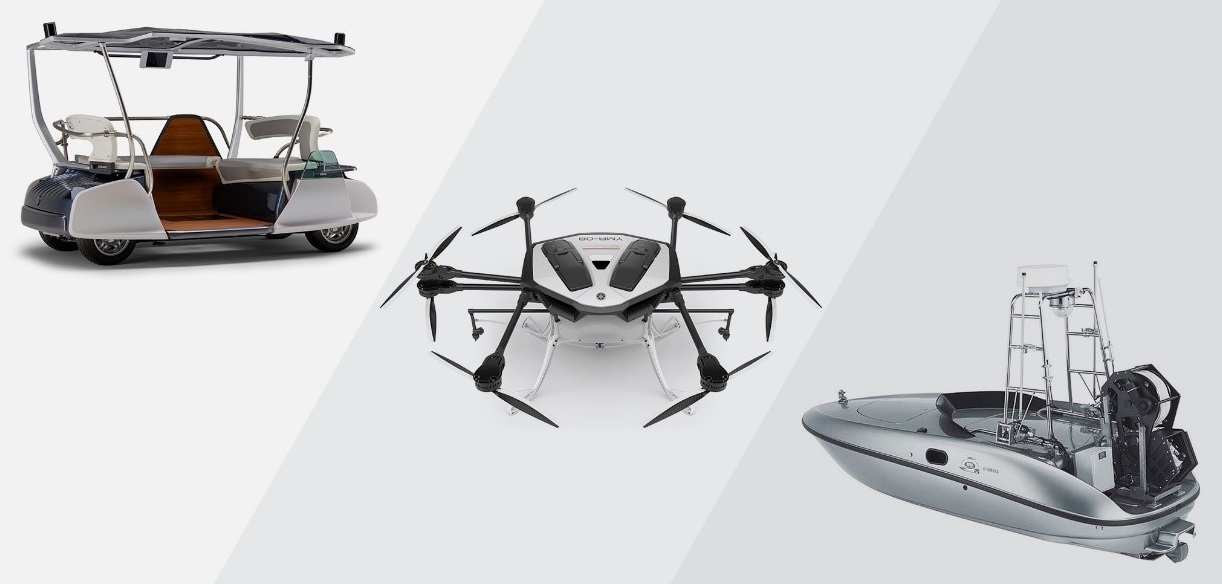
Yamaha Motor's next-generation autonomous machine lineup
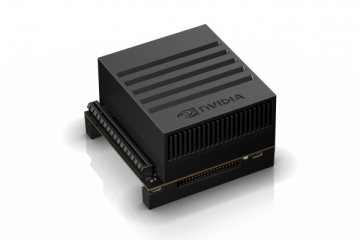
Yamaha Motor selected NVIDIA Jetson AGX Xavier as the foundation system for developing its next-generation autonomous machine product line at GTC Japan 2018, held on the 13th and 14th. Jetson AGX Xavier will power Yamaha Motor's broad portfolio of intelligent machines, including autonomous agricultural machinery, last-mile vehicles and marine transport.
Jetson AGX Xavier, a computer designed for AI, robotics, and edge computing, delivers massive computing power and handles odometry, localization, mapping, vision, perception, and path planning, all essential for developing next-generation robots.
According to Japan's Ministry of Agriculture, Forestry and Fisheries, automation of processes with smart machines has become increasingly important due to the aging population. This is especially true in the agricultural sector, where the average worker is 66.6 years old and the workforce has decreased by more than 30% since 2010.
Yamaha Motor is developing unmanned ground vehicles and drones based on the Jetson AGX Xavier platform that can efficiently spray agricultural fields, harvest crops, and transport harvested crops and equipment. Testing is scheduled to begin in mid-2019, with a formal launch expected soon.
Jetson AGX Xavier will also be used to develop autonomous last-mile vehicles that will transport people ranging from shoppers to seniors. These vehicles will be primarily used in rural areas where public transportation like taxis and buses are not readily available. According to Japan's Ministry of Economy, Trade and Industry, there are approximately 7 million shoppers who require regular transportation, and that number is increasing every year.
Additionally, as a supplier of marine vehicles, Yamaha Motor plans to strengthen its position in the field by leveraging Jetson AGX Xavier to build various autonomous driving use cases, such as deep-sea exploration robots and self-navigating ships.
“Yamaha Motor is constantly striving to inspire people and meet their expectations,” said Hiroaki Fujita, General Manager of Advanced Technology Center and Solutions Business Operations, Yamaha Motor. “With Jetson AGX Xavier, we will standardize our autonomous machine development platform and make all our products more intelligent and innovative, while providing the best possible experience to all users.” 
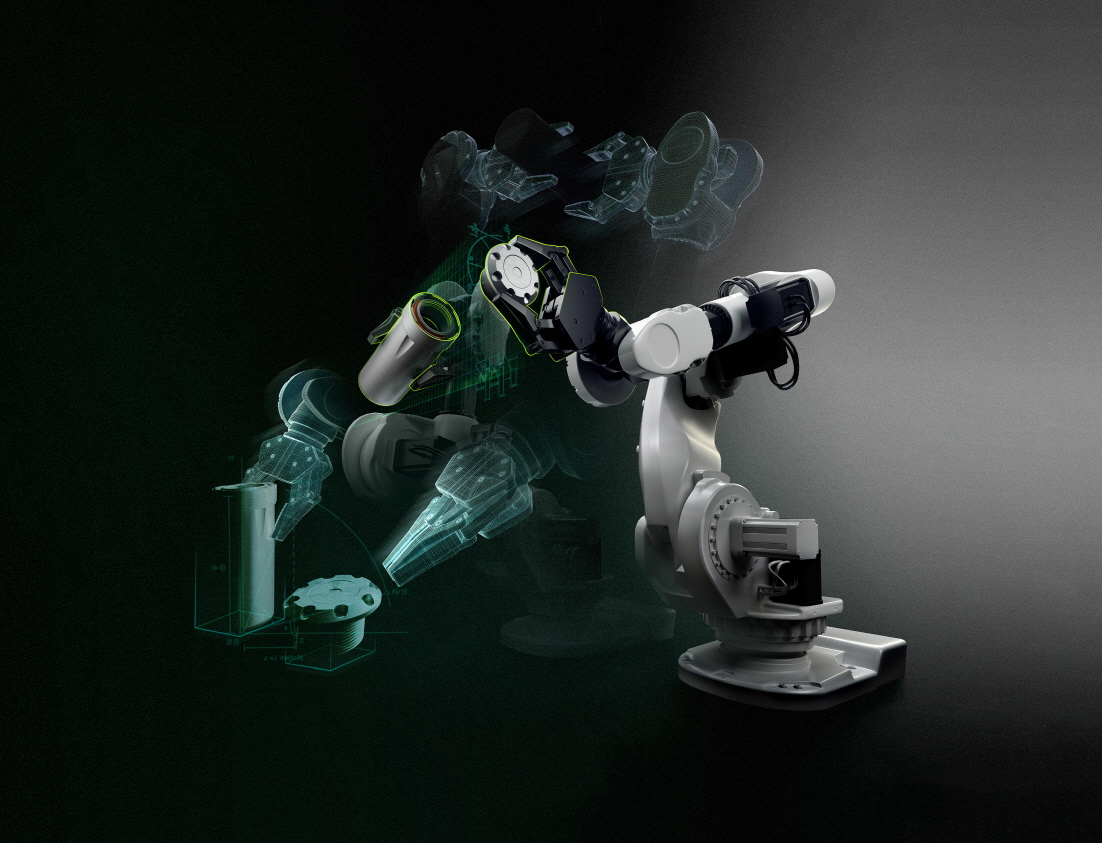
NVIDIA Jetson AGX Xavier
Other companies that are adopting Jetson AGX Xavier in their next-generation autonomous machines include industrial robot manufacturer FANUC, construction machinery and heavy equipment manufacturer Komatsu, transportation equipment manufacturer and seller Musashi Seimitsu, and civil engineering company Kawada Technologies. Jetson AGX Xavier allows these companies to reconfigure and automate factories across various product lines to meet evolving consumer demands and reduce costs.
Fujifilm Integrates DGX-2 AI Supercomputer into the Medical Field
Jetson AGX Xavier, powered by Yamaha Motor and other autonomous vehicles
There's a Japanese proverb that says, "Follow the long one" (長いものには巻かれろ). While sometimes interpreted negatively as a call to follow the strong, it can also be viewed positively when viewed from the perspective of division of labor and collaboration between companies. Since you can't excel at everything, you delegate what you lack to companies that do. Many Japanese companies are actively leveraging NVIDIA's technological prowess to enhance their own AI capabilities and accelerate the development of related products and services.
NTT introduces NVIDIA GPUs

NVIDIA Tesla V100 Tensor Core GPU
Japan's largest telecommunications company, NTT Group, announced at GTC Japan 2018, held on the 13th and 14th, that it would introduce the NVIDIA Tesla V100 Tensor Core GPU to its AI project, 'corevo'.
NTT Group conceived the Korebo Project two years ago to address the challenges facing Japanese society related to its aging population. The AI capabilities that Corevo covers include natural language processing and chat, agent AI for elderly monitoring, Ambient AI focusing on big data analysis for traffic analysis and control, Heart-Touching AI focusing on body and emotional analysis for healthcare, sports, and entertainment, and Network AI for detection, fault prediction, and network monitoring.
NTT Group will build Corevo's cloud-based AI resource center with the Tesla V100 Tensor Core GPU. The Tesla V100 Tensor Core GPU delivers exceptional speed and scalability for high-performance computing and graphics workloads, as well as AI inference and training. Based on NVIDIA's seventh-generation GPU architecture, Volta, the Tesla V100 Tensor Core GPU contains 21 billion transistors and delivers the performance of up to 100 CPUs within a single GPU.
“By establishing a joint development platform for the NTT Group, we will be able to effectively leverage the NTT Group’s AI research and development achievements and accelerate the creation of new value,” said Masahisa Kawashima, Vice President of the NTT Software Innovation Center. “NVIDIA’s AI platform will play a critical role in expanding Corevo’s services and products,” he said.
Fujifilm introduces NVIDIA supercomputer

NVIDIA DGX-2 AI supercomputer
Fujifilm announced on the 13th that it will be introducing the NVIDIA DGX-2 AI supercomputer. This will accelerate the development of AI technologies in healthcare, medical imaging systems, and high-performance materials for displays.
Fujifilm, which focuses on healthcare sectors such as pharmaceuticals, bio CDMOs, and regenerative medicine, is active in the medical systems sector, including medical equipment and services that integrate medical image analysis and recognition technologies. It also utilizes simulations in the development of high-performance materials, such as display materials and fine chemicals.
Fujifilm will implement a new supercomputer cluster comprised of multiple DGX-2 systems. Each system integrates an AI network fabric with 16 Tesla V100 Tensor Core GPUs connected via NVIDIA NV Switch, delivering 2.4 terabytes per second of throughput.
DGX-2 is designed to enable you to rapidly develop, test, deploy, and scale new deep learning models. Fujifilm plans to use this system to accelerate AI research across a wide range of fields, including healthcare.
“Fujifilm is applying AI across a wide range of fields,” said Akira Yoda, Chief Digital Officer at Fujifilm. “In healthcare, we are developing AI-based imaging diagnostic technology using various NVIDIA GPUs that provide high-speed computing capabilities. The introduction of supercomputers will significantly enhance processing power. We expect that AI training that previously took days can now be completed in a matter of hours.”
Nvidia AI computer introduced, Yamaha Motor, etc.

Yamaha Motor's next-generation autonomous machine lineup
Yamaha Motor selected NVIDIA Jetson AGX Xavier as the foundation system for developing its next-generation autonomous machine product line at GTC Japan 2018, held on the 13th and 14th. Jetson AGX Xavier will power Yamaha Motor's broad portfolio of intelligent machines, including autonomous agricultural machinery, last-mile vehicles and marine transport.
Jetson AGX Xavier, a computer designed for AI, robotics, and edge computing, delivers massive computing power and handles odometry, localization, mapping, vision, perception, and path planning, all essential for developing next-generation robots.
According to Japan's Ministry of Agriculture, Forestry and Fisheries, automation of processes with smart machines has become increasingly important due to the aging population. This is especially true in the agricultural sector, where the average worker is 66.6 years old and the workforce has decreased by more than 30% since 2010.
Yamaha Motor is developing unmanned ground vehicles and drones based on the Jetson AGX Xavier platform that can efficiently spray agricultural fields, harvest crops, and transport harvested crops and equipment. Testing is scheduled to begin in mid-2019, with a formal launch expected soon.
Jetson AGX Xavier will also be used to develop autonomous last-mile vehicles that will transport people ranging from shoppers to seniors. These vehicles will be primarily used in rural areas where public transportation like taxis and buses are not readily available. According to Japan's Ministry of Economy, Trade and Industry, there are approximately 7 million shoppers who require regular transportation, and that number is increasing every year.
Additionally, as a supplier of marine vehicles, Yamaha Motor plans to strengthen its position in the field by leveraging Jetson AGX Xavier to build various autonomous driving use cases, such as deep-sea exploration robots and self-navigating ships.
“Yamaha Motor is constantly striving to inspire people and meet their expectations,” said Hiroaki Fujita, General Manager of Advanced Technology Center and Solutions Business Operations, Yamaha Motor. “With Jetson AGX Xavier, we will standardize our autonomous machine development platform and make all our products more intelligent and innovative, while providing the best possible experience to all users.”

NVIDIA Jetson AGX Xavier
Other companies that are adopting Jetson AGX Xavier in their next-generation autonomous machines include industrial robot manufacturer FANUC, construction machinery and heavy equipment manufacturer Komatsu, transportation equipment manufacturer and seller Musashi Seimitsu, and civil engineering company Kawada Technologies. Jetson AGX Xavier allows these companies to reconfigure and automate factories across various product lines to meet evolving consumer demands and reduce costs.
본 기사에 대한 정정·반론·추후보도 청구는 보도 청구 안내를, 그간 게재된 보도문은 정정·반론보도 모아보기를 참고해 주세요.