


SK Telecom Enters the Endgame of 5G Commercialization
 Published2018.10.15 10:01
5G equipment will be installed on-site to conduct final technology verification.
Standard certification for data transmission using 5G and LTE simultaneously
SK Telecom's preparations for 5G commercialization are entering the final stages.
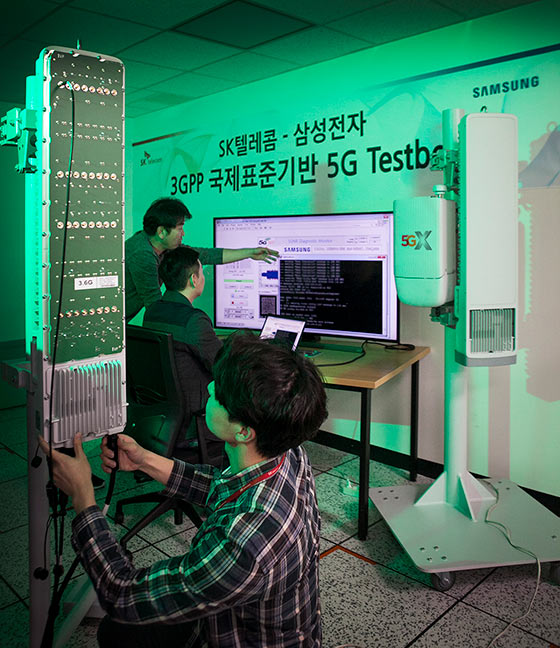
SK Telecom and Samsung Electronics succeed in making the first 5G call.
On the 15th, SK Telecom and Samsung Electronics successfully made a 'first call' using commercial 5G equipment at the 5G test bed in SK Telecom's Bundang office building.
The first call is the final step in verifying that data is transmitted and received normally in an environment identical to commercial services. Only when all necessary data communication processes pass without issue is a "first call record" recorded.
The first call process includes all matters necessary for commercial service, including ▲interconnection between base stations, exchanges, and terminals ▲'synchronization' to perform communication by matching the operating times between various devices ▲'authentication' to determine whether a 5G subscriber is accessing the network normally ▲5G-LTE network connection that complies with 5G NSA.
Meanwhile, various telecommunication companies, including SK Telecom, have successfully made 5G first calls using their own standard or test equipment. This success was achieved by carrying out the entire process using commercial 5G equipment that can be installed on site.
The frequency band utilized a 100MHz width in the 3.5GHz band, which is intended for actual commercial services. All technologies and equipment conform to 3GPP international standards.
Going forward, the two companies will deploy 5G equipment in actual locations and conduct final technology verification. This will be optimized to ensure optimal quality in a variety of settings, including indoors, outdoors, and on the move. Final testing of 5G equipment and technology will also be conducted, taking into account inclement weather, natural disasters, and unexpected situations.
“SK Telecom is several months ahead of global carriers in preparing for 5G commercialization, from the development and demonstration of 5G technology based on global standards, to the selection of equipment suppliers, and this first call,” said Park Jin-hyo, head of SK Telecom’s ICT Technology Research Center. “Based on our best technology, we will maximize quality before commercialization.”
Samsung Electronics Vice President Jeon Kyung-hoon said, “The success of the first call based on international standards using commercial equipment is a case that demonstrates the high technological prowess of both companies,” and added, “We will thoroughly prepare to launch a flawless 5G commercial service.”
SK Telecom is also exploring ways to utilize LTE in the era of 5G commercialization.
5G is not a technology that completely replaces LTE. In the early stages of 5G commercialization, 5G and LTE will be used in parallel. Accordingly, SK Telecom has established a frequency convergence standard that enhances 5G performance by transmitting data simultaneously using 5G and LTE frequencies.
3GPP, a joint research project among mobile communication-related organizations
SK Telecom was the first in Korea to receive approval for a frequency convergence standard that allows simultaneous data transmission using 5G and LTE frequencies at the 3GPP meeting held in Chengdu, China from the 8th to the 12th.
With 3GPP approval, SK Telecom can now apply its 'Dual Connectivity' technology, which allows it to exchange data simultaneously using its 5G frequencies (3.5GHz, 28GHz) and LTE frequencies (800MHz, 1.8GHz, 2.1GHz, 2.6GHz).
LTE utilizes a frequency-bundling technology called carrier aggregation to simultaneously transmit data across multiple frequency bands. However, to simultaneously utilize different communication technologies, such as 5G and LTE, to transmit data across multiple frequency bands requires "dual connectivity" technology.
SK Telecom proposed a convergence of 5G and LTE frequencies at the 3GPP meeting. At the same time, the results of the analysis on the frequency interference that may occur when transmitting data simultaneously with this combination and the appropriate frequency output and protection measures to minimize the interference were announced, and these were approved as a standard.
Applying "dual connectivity" technology to actual commercial networks in the future will allow customers to enjoy high-quality service in areas where both 5G and LTE are deployed. SK Telecom is the only domestic carrier to offer 1 Gbps LTE service, so customer experience is expected to be even better.
SK Telecom's Park Jong-kwan, head of network technology, said, "In the early stages of 5G commercialization, 5G and LTE will be used in parallel," and added, "With this frequency convergence standard approval as an opportunity, we will strengthen the 5G technology ecosystem with domestic and foreign manufacturers and equipment companies to provide the highest quality 5G services to customers."
Comments
Related news

Wi-Fi Gets Faster: SK Telecom Commercializes 'T Wi-Fi AX'
SK Telecom announced on the 17th that it will commercialize 'T WiFi AX,' a next-generation WiFi service that is four times faster than the existing service. T WiFi AX is a WiFi service based on the 802.11ax standard and provides a maximum speed of 4.8Gbps per AP. This is approximately four times faster than Gigabit WiFi (802.11ac Wave1, 1.3Gbps), which was commercialized in 2013.
2018.09.20by 이수민 기자

KT and Korean Disaster Information Society Establish Procedures for 5G-Based Disaster Safety Response
KT and the Korean Disaster Information Society have concluded a business agreement to jointly develop disaster safety solutions. KT will implement a specialized platform that collects earthquake patterns and detects them early by leveraging its communication infrastructure. Various data accumulated through the collaborative process will be stored in a public disaster database and contribute to the construction of disaster safety communication networks, railway wireless communication networks, and maritime wireless communication networks.
2018.10.01by 이수민 기자
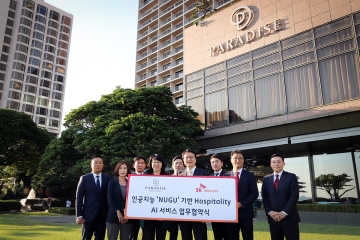
SKT and Paradise Hotel Busan Sign MOU to Build AI-Powered Hotel
SK Telecom has signed an MOU with Paradise Hotel Busan for "Hotel AI Service Based on Artificial Intelligence NUGU." The two companies plan to provide answers to various guest inquiries, information on hotel amenities, and surrounding tourist information through "NUGU Candle" in approximately 100 rooms within this year. Additionally, they agreed to continue cooperation by applying new AI devices and services to hotel operations.
2018.10.06by 이수민 기자
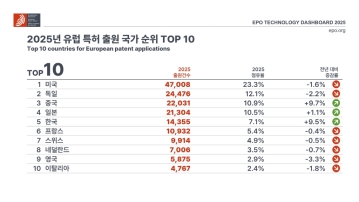
European Patent Applications Surpass 200,000 for the First Time… South Korea Maintains 5th Place, Led by Batteries and Telecommunications
According to the European Patent Office (EPO)'s 'Technology Dashboard 2025', European patent applications last year reached 201,974, surpassing 200,000 for the first time. Korean companies and inventors filed 14,355 applications, representing a 9.5% increase from the previous year and maintaining 5th place by country. Battery, digital communication, and semiconductor technologies led the growth, with Samsung ranking as the top EPO applicant for the second consecutive year and LG reaching 3rd place. The presence of major domestic cities such as Seoul, Suwon, and Yongin was also confirmed. It was also revealed that Korea's European patent strategy is expanding beyond individual technologies to span the entire industry.
2026.03.24by 명세환 기자
SK Telecom First Applies AI-Based Network Operations at Gwanghwamun K-Pop Concert
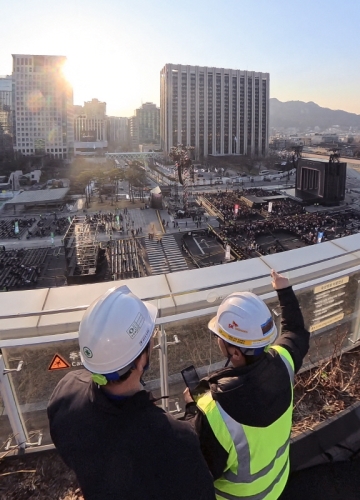
SK Telecom announced that it applied an AI-based network operation system for the first time at a large-scale K-pop concert held in the Gwanghwamun area of Seoul on March 21st, managing communication quality throughout the event. Mobile data usage during the three hours before and after the concert reached 12.15TB, approximately doubling compared to the same time slot the previous weekend. SK Telecom monitored traffic using the AI system 'A-One' in five-minute and 50-meter units to respond to potential overload situations, while also operating temporary communication facilities and on-site personnel in parallel. This case is interpreted as confirmation of the practical applicability of AI-based autonomous network operation in an environment where demand from dense events and foreign users increases simultaneously.
2026.03.23by 명세환 기자











