


Infineon and Next Jointly Develop a Biometric Card Reference Design
 Published2018.11.15 09:02
Easier than standard PIN-based EMV transactions

Infineon-Next Biometric Payment Card Reference Design
Infineon Technologies and Next Biometrics announced on the 14th that they have jointly developed a biometric payment card reference design.
This reference platform includes all the components needed to develop and manufacture smart cards featuring fingerprint sensors, enabling card manufacturers to shorten development times and bring products to market faster.
The use of biometrics for two-factor authentication on payment cards will be a major innovation, following signature, embossed, magnetic stripe, and secure chip technologies. Cardholders can authenticate using the fingerprint sensor embedded in the card, eliminating the need to enter a PIN or present identification. Fingerprint information is stored on the card's secure element and not shared with third parties, protecting user privacy. Fingerprint authentication is faster and easier than standard PIN-based EMV transactions. It also helps prevent counterfeiting, especially when using multi-function cards for social security payments.
This biometric card reference design includes a biometric module, a secure element, an operating system capable of running biometric and payment applets, and a validated lamination technique for card manufacturing. Using this system solution, secure biometric smart card payments can be implemented, significantly reducing the false rejection rate (FRR) to less than 1 percent. The FRR is an indicator of how accurately a user's fingerprint is recognized and how often it is falsely rejected.
“Infineon is committed to enabling secure and convenient payment experiences with fingerprint recognition,” said Bjoern Scharfen, Head of Payment & Wearables at Infineon. “As a turnkey solution, the reference platform we developed jointly with Next will accelerate biometric innovation in the smart card industry, enabling easier and more secure digital transactions.”
Comments
Related news
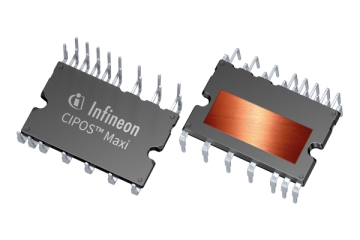
Infineon Launches IPM for 1.8kW Industrial Motor Drives
Infineon has launched the high-performance IPM CIPOS Maxi for industrial motor drives up to 1.8kW. The CIPOS Maxi IM818 series integrates various power and control elements to enhance reliability and optimize PCB size and system cost. Offered in a DIP 36x23D package, the industry's most compact form factor for 1200V IPM, CIPOS Maxi delivers high power density and performance.
2018.10.31by 이수민 기자
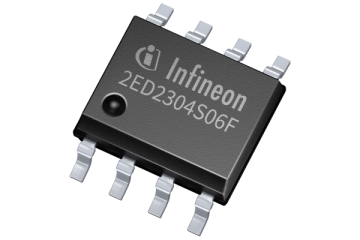
Infineon Releases Bootstrap Diode-Integrated Half-Bridge Driver
Infineon Technologies has launched a new half-bridge 650V EiceDRIVER product based on SOI technology. The 2ED2304S06F features excellent negative VS transient immunity, integrates a bootstrap diode in a monolithic design, and provides superior latch-up immunity, making it suitable for large and small home appliances, low-power drives, and general-purpose inverter-type motor drive applications under 1kW.
2018.11.12by 이수민 기자
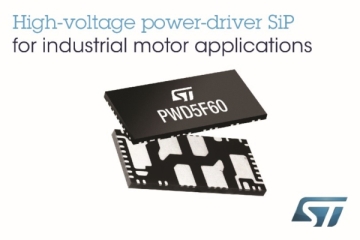
ST Launches Safe and Flexible Full-Bridge 600V/3.5A SiP
STMicroelectronics has launched the PWD5F60, a high-density power driver and the second product in its new power driver SiP series for high-voltage brushed DC and single-phase brushless motor applications. This SiP solution integrates a 600V/3.5A single-phase MOSFET bridge, gate driver, bootstrap diode, protection functions, and two comparators in a 15 x 7mm package, offering superior thermal efficiency that occupies 60% less board space compared to discrete components while enhancing reliability and simplifying design and assembly.
2018.11.14by 이수민 기자

Intel Unveils Next-Generation 'Core Ultra Series 3' and vPro Platform for Enterprise PCs
Intel has officially unveiled the "Intel Core Ultra Series 3" for next-generation enterprise PCs and the latest vPro platform, addressing a wide range of demands from enterprise notebooks to high-performance workstations.
2026.03.26by 배종인 기자
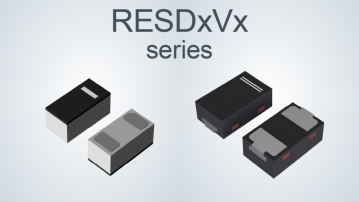
ROHM Launches ESD Protection Diode Compatible with High-Speed Interfaces of 10Gbps or Higher
Semiconductor specialist ROHM has developed the 'RESDxVx series' of ESD (electrostatic discharge) protection diodes capable of responding to next-generation high-speed data communication environments exceeding 10Gbps, simultaneously enhancing both signal quality maintenance required in high-speed interfaces and IC protection performance.
2026.03.26by 배종인 기자











