



Intel Accelerates Launch of Multimode Modem to Open Global 5G World
 Published2018.11.15 09:08
Supports 5G NR at 6GHz or lower
On the 13th, Intel unveiled the Intel XMM 8160 5G modem, optimized for connecting 5G to devices such as mobile phones, PCs, and broadband access gateways. Intel has been accelerating the announcement of this modem by moving its scheduled release date forward by more than six months. The modem will support peak speeds of up to 6 gigabits per second, which is 3 to 6 times faster than the latest LTE modems currently on the market. Scheduled for release in the second half of 2019, this modem provides features and experiences that will accelerate the gradually expanding global adoption of 5G.
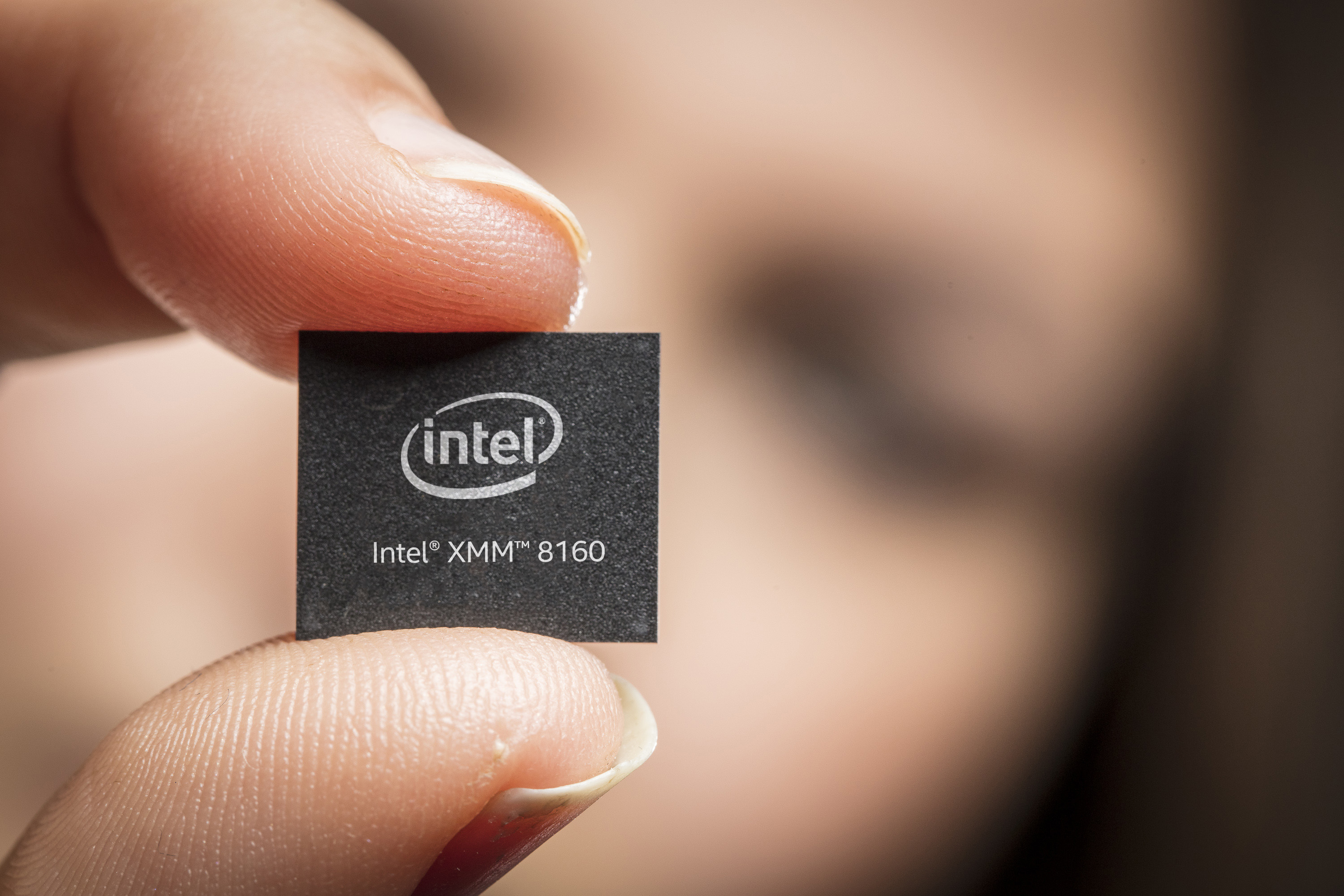
Intel XMM 8160 5G Modem
The Intel XMM 8160 is a multimode modem that supports 4G/3G/2G legacy radios as well as the new 5G NR (New Radio) standard, including standalone (SA) and non-standalone (NSA), on a single chipset.
The Intel XMM 8160 5G modem, featuring single-chip multimode baseband capabilities, enables device manufacturers to design smaller and more power-efficient devices. This is possible without adding complex functions to two separate modems for 5G and legacy connectivity, or adjusting power management and form factors, as is the case with other early 5G modems to be released. By launching a multimode solution ahead of schedule, Intel significantly improves power, size, and scalability. Intel's integrated multimode solution supports LTE and 5G simultaneous connectivity (EN-DC). This is an important feature because 5G mobile network devices must be compatible with 4G unless they can connect to 5G anytime and anywhere.
In addition, the XMM 8160 5G modem supports sub-6GHz 5G NR (including FDD and TDD bands from 600 MHz to 6 GHz) and provides download speeds of up to 6Gbps, as well as advanced technology required for the new mmWave band. As the industry moves to mmWave and mid-band frequencies, it will be able to meet the growing demand from users, devices, and connected devices for more bandwidth.
Finally, the XMM 8160 5G modem is designed to ensure scalability. With global carrier support, extensive platform certifications, and broad OEM support, Intel's XMM 8160 modem provides both operators and device manufacturers with reliable 5G capabilities to drive global 5G adoption.
Shipments of the Intel XMM 8160 5G modem chipset are scheduled for the second half of 2019. The market launch of commercial devices utilizing the Intel XMM 8160 5G modem, such as mobile devices, PCs, and broadband access gateways, is expected in the first half of 2020.
Dr. Cormac Conroy, Intel Vice President and Manager of the Intel Communications and Devices Group, said, “Intel’s new XMM 8160 5G modem provides an ideal solution that supports high capacity to scale across multiple categories of devices in time for widespread 5G implementation.” "Due to high demand for the advanced features of the XMM 8160, Intel made the strategic decision to bring the chipset launch forward by six months to provide leading 5G solutions," it was reported.
Comments
Related news

Intel Unveils Next-Generation Data Center Strategy
[Americas Weekly IT News] [1] Apple Unveils Budget-Friendly MacBook Air , [2] Facebook Strengthens Open Source AI Platform , [3] Intel Reveals Next-Generation Data Center Strategy , [4] "Apple to Stop Disclosing iPhone Sales Figures" , [5] Gartner: "Australian IT Market to Grow 3.5% Next Year"
2018.11.07by 류아연 외신

Intel Unveils Two Intel Xeon Processors with Enhanced AI and Cloud Capabilities
Intel has unveiled two portfolios of Intel Xeon processors: Cascade Lake Advanced Performance and Intel Xeon E-2100 processors for entry-level servers. Designed for HPC, AI, and IaaS workloads, Cascade Lake Advanced Performance is scheduled for release in the first half of 2019 and includes a multi-chip package to deliver up to 48 cores per CPU and 12 DDR4 memory channels per socket.
2018.11.09by 이수민 기자

Apple Officially Acknowledges iPhone X Hardware Issues and Expects Production to be Reduced
[US Weekly IT News] [1] "Apple to reduce iPhone production outlook", [2] Apple officially acknowledges serious iPhone X hardware issues, [3] Intel's new XMM 8160 5G modem draws attention, [4] "IT spending in Europe, Middle East and Africa projected at $933 billion next year", [5] Microsoft to introduce Surface Go with built-in LTE
2018.11.13by 류아연 외신

Intel Unveils Next-Generation 'Core Ultra Series 3' and vPro Platform for Enterprise PCs
Intel has officially unveiled the "Intel Core Ultra Series 3" for next-generation enterprise PCs and the latest vPro platform, addressing a wide range of demands from enterprise notebooks to high-performance workstations.
2026.03.26by 배종인 기자
ROHM Launches ESD Protection Diode Compatible with High-Speed Interfaces of 10Gbps or Higher
Semiconductor specialist ROHM has developed the 'RESDxVx series' of ESD (electrostatic discharge) protection diodes capable of responding to next-generation high-speed data communication environments exceeding 10Gbps, simultaneously enhancing both signal quality maintenance required in high-speed interfaces and IC protection performance.
2026.03.26by 배종인 기자











