


Dell: Companies Aiming for Digital Transformation Need to Understand Generation Z
 Published2018.11.22 10:31
직업 선택에 최신 기술 제공 여부도 고려
비대면보다 대면 소통, 팀 단위 업무를 선호
델 테크놀로지스가 전 세계 17개국의 고등학생 및 대학생 1만 2천 명 이상을 대상으로 실시한 설문 조사 결과를 발표했다.
1996년부터 2000년대 중반 사이에 태어난 청소년들을 뜻하는 ‘Z세대’의 기술과 미래 직업에 대한 인식을 알아보기 위해 실시된 이번 조사는 델 테크놀로지스가 글로벌 시장 조사 기관 다이멘셔널 리서치(Dimensional Research)에 의뢰해 진행됐다. 일명 ‘디지털 네이티브’로 일컬어지는 Z세대는 현재 16세부터 23세에 해당되며, 2020년경 전 세계 비즈니스 인구의 20%를 차지할 것으로 예상된다.
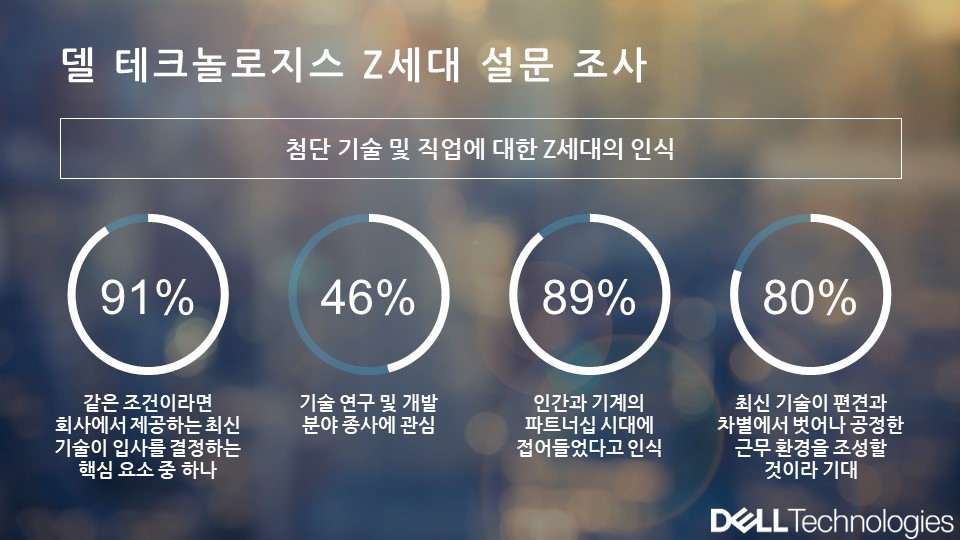
Z세대의 기술 및 직업 인식
정규 교육의 일부로 IT 기술을 다룬(98%) Z세대는 91%가 ‘같은 조건이라면 회사에서 제공하는 최신 기술이 입사를 결정하는 핵심 요소 중 하나가 될 것’이라고 답했다. 대다수의(80%) 응답자들은 업무에서 최신 기술의 사용을 원했으며, 특히 이중 46%는 기술 연구 및 개발 분야 종사에 관심을 가지고 있는 것으로 나타났다. 응답자의 89%는 인간과 기계의 파트너십 시대에 접어들었다고 답했으며, 절반가량(51%)은 사람과 기계가 하나의 팀으로 일하게 될 것이라고 전망했다. 나아가 80%는 최신 기술과 자동화가 나이, 성별, 인종 등에 대한 편견과 차별에서 벗어나 보다 공정한 근무 환경을 조성할 것이라 믿었다.
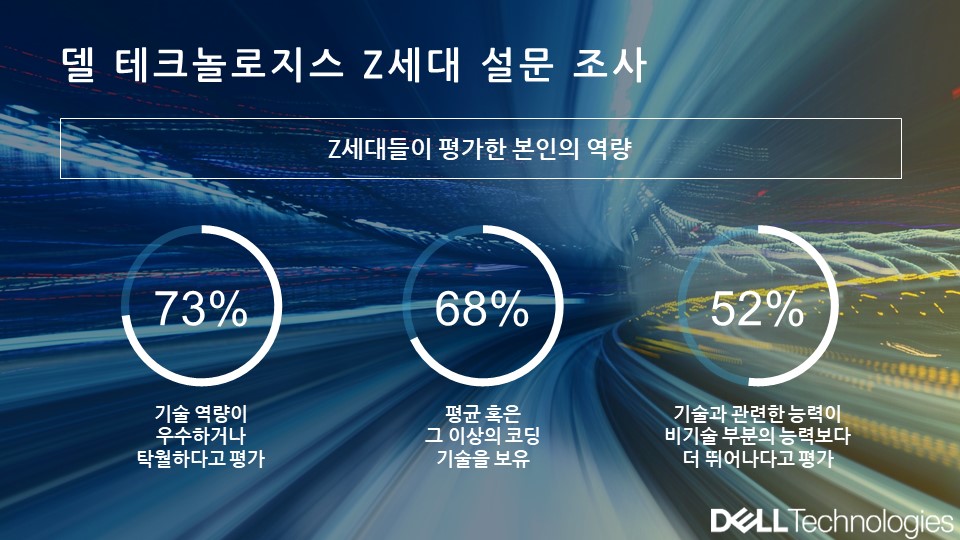
Z세대가 평가하는 본인의 역량
대부분의 Z세대들은 IT 기술 역량에 대한 자신감을 보였다. 73%의 응답자들은 기술 역량이 우수하거나 탁월하다고 평가했으며, 68%는 평균 혹은 그 이상의 코딩 기술을 보유하고 있다고 답했다. 기술과 관련한 능력이 비기술 부분의 능력(소통, 창의력, 논리력)보다 더 뛰어나다고 스스로를 평가한 응답자도 52%에 달했다.
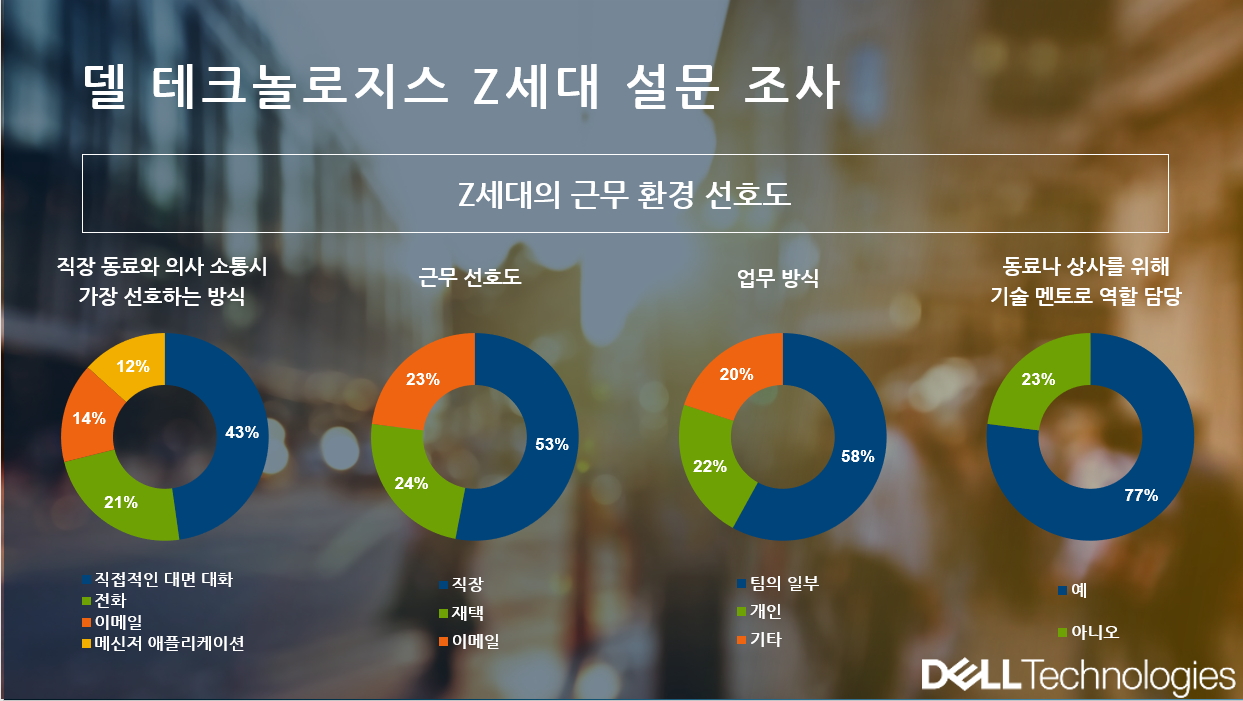
Z세대의 근무환경 선호도
이번 조사에서는 디지털 기술을 통한 비대면 커뮤니케이션을 선호하거나 개인주의 성향이 강하게 드러날 것이라는 Z세대에 대한 선입견을 뒤엎는 결과도 다수 발견됐다. 직장 동료와 의사소통 시 가장 선호하는 방식은 ‘직접적인 대면 대화’(43%)며, 그다음으로는 ‘전화’(21%), ‘이메일’(14%)였으며, ‘메신저 애플리케이션’은 12%로 가장 낮은 순위를 차지했다. 재택근무 선호도(24%)보다 직장 근무 선호도(53%)가 두 배 이상 높았으며, 혼자 독립적으로 일하는 것(22%)보다 팀의 일부로 일하기(58%)를 원했다. 직장 내 깊어지는 세대 간의 장벽을 허물 실마리도 엿볼 수 있다. 디지털 문화에 익숙하고 최신 기술을 빠르게 습득하는 Z세대는 직장에서 동료나 상사들이 최신 기술을 습득할 수 있도록 돕는 ‘기술 멘토’ 역할을 기꺼이 하겠다고 답한 비율이 77%에 달했다.
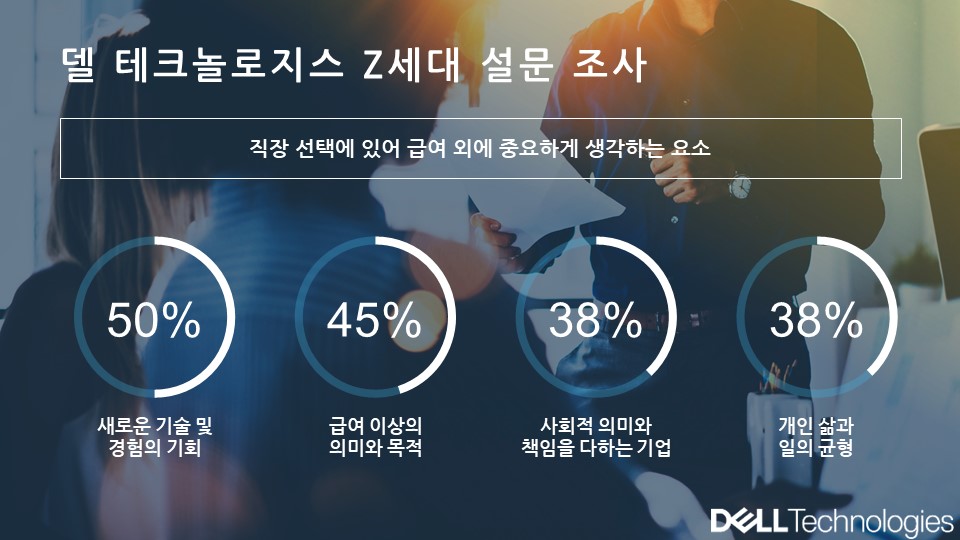
Z세대의 직장 선택 요소
한편, Z세대들은 직장 선택에 있어 급여 외의 의미도 중요한 것으로 나타났다. 직장 선택에 있어서 가장 중요한 요소를 묻는 질문(복수응답)에 있어 ‘안정적인 수입’과 ‘새로운 기술 및 경험의 기회’가 각 50%로 동률을 이뤘으며, 그 외에도 ‘급여 이상의 의미와 목적’(45%) ‘사회적 의미와 책임을 다하는 기업’(38%), ‘개인 삶과 일의 균형’(38%) 등도 주요 요소로 꼽혔다.
대니 코브(Danny Cobb) 델 테크놀로지스 기술전략 부문 부사장은 “최신 기술을 가장 빠르게 받아들이는 ‘디지털 네이티브’ Z세대는 기존 세대와 다르게 사용자 중심의 차별화된 방법론을 제시하며 조직의 디지털 트랜스포메이션을 이끌 것”이라며, “기업들은 새로운 세대를 포옹하고 기업 경쟁력을 강화하기 위해 최신 기술 역멘토링 등 세대 간의 벽을 좁히고 Z세대들의 잠재력을 끌어낼 새로운 전략을 세워야 할 때”라고 조언했다.
Comments
Related news
Dell Technologies Forum 2018 Discusses Digital Transformation
Dell Technologies held the Dell Technologies Forum 2018 on the 30th at COEX in Samseong-dong, Seoul. Through keynote presentations, 25 sessions, demonstrations, and exhibition booths at the event attended by IT industry leaders and stakeholders, Dell Technologies presented a digital future for enterprises and shared the latest strategies and solutions for digital transformation.
2018.10.30by 이수민 기자
.jpg)
Dell Announces Digital Transformation Status of 100 Korean Companies
Dell Technologies, which hosted Dell Technologies Forum 2018, separately previewed advance survey results of the Digital Transformation Index report covering 100 domestic companies mentioned at the forum. According to the survey, only 4% of domestic companies have completed digital innovation. Additionally, 91% of respondents believed they would face difficulties in responding to changing customer demands over the next five years. Furthermore, domestic companies were found to have established investment plans in the following order of priority: cybersecurity, AI, multi-cloud, IoT, and VR/AR.
2018.10.30by 이수민 기자
The reality of ICT talent training that is neither here nor there, a paradigm shift is needed
The fourth industrial revolution is a revolution of universal hyper-intelligence that hyper-connects and hyper-intelligentizes people, things, and spaces through ICT. The number of objects connected to the Internet is expected to increase from 900 million in 2012 to 50 billion by 2020, and securing large amounts of data sent by these objects is increasingly becoming a measure of competitiveness. It is ultimately humans who decide when, where, and how to utilize data. To gain a competitive advantage in the fourth industrial revolution era, organizations must first secure talented personnel who know how to leverage data before securing the data itself. The ICAN project is intended to supplement the shortcomings of the ITRC project, which has been ongoing for over 20 years.
2018.11.05by 이수민 기자
Nvidia invests $5 billion in Intel
NVIDIA and Intel, leaders in global AI computing technology, are now forging ahead in providing cutting-edge solutions through NVLink-based architecture integration. NVIDIA and Intel have officially announced a strategic partnership and stated that they will jointly develop customized data center and personal computing products to accelerate diverse applications and workloads ranging from hyperscale to enterprise and consumer markets, thereby laying the foundation for the next generation computing era.
2025.09.22by 배종인 기자
.jpg)
Applied Materials Launches Environmental Protection Campaign to Mark World Cleanup Day
Applied Materials Korea (CEO Park Kwang-seon) is carrying out environmental cleanup activities with employees and their families around the Dongtan Sinricheon area on the occasion of World Cleanup Day, evolving into a company that engages with the local community beyond technological innovation.
2025.09.22by 명세환 기자











