


[KES 2018 Finding Hidden Technologies] Dream Factory "Graphene IoT Leakage Sensor"
 Published2018.11.28 10:20
Dream Factory possesses source technology for graphene nanomaterials
Sensing material can be selected depending on the reaction resin combination
Numerous companies participated in the 2018 Korea Electronics Show and showcased their unique technologies.
Regardless of the size of the companies, all the technologies were interesting and sufficient to capture the attention of visitors. Dream Factory's Graphene IoT Leak Sensor, 'SMART-ON,' was one of them.
Industrial sites are always extremely dangerous. This is because numerous pieces of equipment, possessing power far greater than that of humans, handle massive quantities of hazardous substances. If hazardous materials leak from these facilities, it results not only in property damage but also in loss of life. Therefore, leaks must be detected and addressed in advance. Since leak sensors must detect hazardous substances at the closest possible distance, they must not be destroyed by them. If a sensor is destroyed, everything falls apart. This is why the durability of sensors must be exceptional.
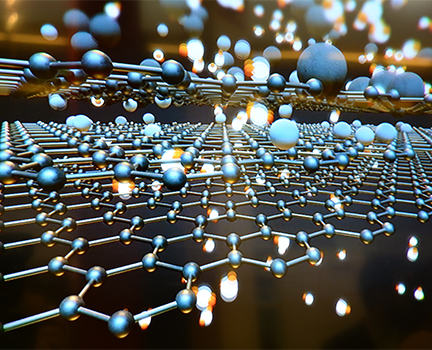
Graphene illustration
Graphene, one of the allotropes of carbon, is extremely thin with a thickness of 0.2 nm (2 ten-billionths of a meter) and possesses high physical and chemical stability. Other allotropes of carbon include graphite, carbon nanotubes, fullerenes, and diamond, but graphene is only a single atomic layer thick. Although its bonding structure is the same, its characteristics differ from graphite, which is composed of multiple layers. Graphene, which has very high electron mobility and thermal conductivity, also has a very large theoretical specific surface area. Because it consists of a single layer of atoms, it has very low absorption of visible light, and its transmittance for light with a wavelength of 550 nm is 97.7%.
Graphene conducts electricity more than 100 times better than copper and can move electrons more than 100 times faster than single-crystal silicon, which is mainly used as a semiconductor. It is more than 200 times stronger than steel, has more than twice the thermal conductivity of diamond, which boasts the highest thermal conductivity, and has excellent elasticity, so it does not lose its electrical properties even when stretched or bent. Due to these characteristics, graphene is evaluated as a material that surpasses carbon nanotubes, which are in the spotlight as next-generation new materials, and is called the "dream nanomaterial."

Dream Factory logo
The IoT leakage sensor made by Dream Factory using such graphene is SMART-ON.
Dream Factory, located in Seongnam, Gyeonggi-do, is a startup established in October 2015. Dream Factory manufactures sensors with improved sensitivity and accuracy using graphene nanomaterials secured through joint industry-academia-research collaboration, and provides IoT leakage sensors that can protect customers' lives and property by integrating them into monitoring systems.
Dream Factory possesses core technology capable of manufacturing graphene nanomaterials used as sensor electrodes and sells IoT systems that enable the status of installed sensors to be displayed in applications, the web, and more.
SMART-ON is an optimized hazardous chemical leak detection and monitoring system that sends an alarm within seconds of a leak occurring, ensuring customer safety and minimizing damage.
Due to the strong durability and high versatility of Dream Factory sensors and monitoring systems, they can be applied in various fields, such as industrial sites like chemical plants, university chemical and materials engineering research institutes, and tank trucks.
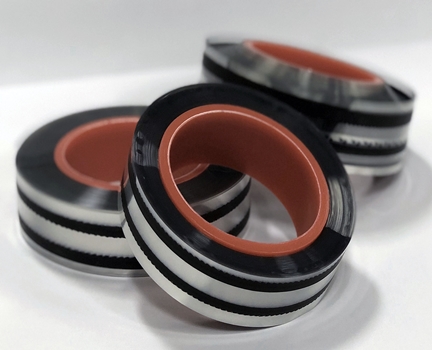
graphene film sensor
At the Korea Electronics Show, Hyun Min-hwan, a principal researcher at Dream Factory, demonstrated a hazardous substance detection film sensor utilizing graphene. The film coated with the graphene sensor detects acids, bases, and organic substances. When hazardous substances adhere to or adsorb into the film's pores, the resistance of the connector rises sharply.
If the resistance rises above a preset value, it notifies the customer via communication such as Wi-Fi. If this film sensor is installed in a band around the oil storage area or surroundings of a factory handling hazardous materials, it can detect the emission or leakage of hazardous materials in advance and prevent accidents.
Although SMART-ON is made of graphene, specific substances that can be detected can be selected depending on how the reactive resin is combined. In addition to liquids, gases and colors can also be detected.
"It can be installed in large-scale chemical plants, or on a smaller scale at university laboratories or reagent warehouses, to prepare for the risk of leakage," said Hyun Min-hwan, a principal researcher at Dream Factory. "Since it is an IoT sensor with endless applications, hazardous substance detection sensors can be installed to suit the customer's specific situation."
Comments
Related news
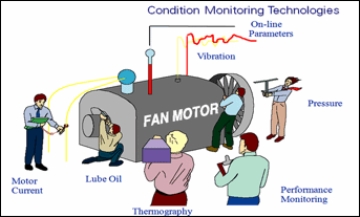
PHM technology that predicts failures through real-time monitoring
PHM technology emerging as an alternative to regular preventive maintenance, preventing casualties and property damage through sensing-based predictive fault detection.
2018.07.12by 이수민 기자
.jpg)
[KES 2018 Finding Hidden Technologies] Misung Polytech "Pressure-Sensitive Sensor Technology"
Numerous companies participated in the 2018 Korea Electronics Show held at COEX in Samsung-dong, Seoul, showcasing their technological capabilities. Regardless of company size, each firm's technology was sufficient to capture the attention of visitors. Miseong Polytech's pressure-sensitive sensor technology was one of them. The pressure-sensitive sensor presented by Miseong Polytech is a hybrid sensor that integrates a capacitive sensor and a pressure-sensitive sensor into a single component. This sensor can be used in input devices such as touch pressure buttons and pressure pads. It enables multi-directional multi-touch recognition and can also be attached to curved surfaces.
2018.10.26by 이수민 기자
.jpg)
[KES 2018 Hidden Technology Search] Visionin “Embedded Vehicle License Plate Recognition Technology”
The 2018 Korea Electronics Show held at COEX in Samseong-dong, Seoul from October 24 to 27 saw numerous companies showcasing their technological capabilities. The technology of all participating companies was compelling enough to capture the attention of visitors. The same was true of VisionIn's embedded vehicle license plate recognition technology. VisionIn's embedded vehicle license plate recognition technology detects vehicles and recognizes license plates using CNN, and has embedded implementation cases with NVIDIA TK1, TX1, and other platforms.
2018.11.15by 이수민 기자
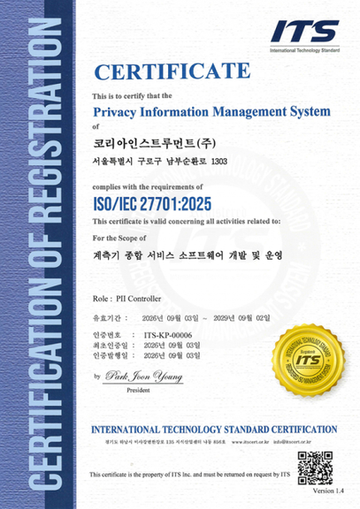
Korea Instrument, KOLAS Accredited Calibration Agency First to Simultaneously Acquire ISO/IEC 27,001·27,701
Korea Instrument has become the first among KOLAS accredited calibration agencies to simultaneously acquire ISO/IEC 27,001 and ISO/IEC 27,701 certifications. Through its proprietary platforms CWIZ Enterprise and CWIZ Partners, the company has embedded information security and personal data protection requirements across all business processes including customer information, equipment data, and calibration reports, with plans to continuously advance its management system through regular audits and security inspections.
2026.10.12by 배종인 기자

TeamViewer One, IT Incident Automation Workflow and Resolution Center Enhanced
TeamViewer has added IT incident automation capabilities and an advanced Resolution Center to its integrated digital workplace management platform 'TeamViewer ONE'. Recurrent service disruptions, configuration errors, and capacity shortages are automatically handled according to preset policies, and device status verification through script deployment can be managed in a unified interface, significantly reducing repetitive tasks for IT teams.
2026.10.12by 배종인 기자











