


Augmented Analytics, Explainable AI… Respond to the Top 10 Data and Analytics Technology Trends of 2019
 Published2019.02.20 11:01
Identify the potential of technology trends and set priorities
Data-centric architecture determines business survival

Gartner
Gartner announced the top 10 data and analytics technology trends for 2019 on the 19th.
Gartner identified augmented analytics, continuous intelligence, and explainable AI as data and analytics technology trends that will have a tremendous disruptive impact over the next 3 to 5 years.
At the Gartner Data & Analytics Summit held in Sydney, Australia from the 18th to the 19th, Rira Sallam, Research Vice President at Gartner, said, “Data and analytics leaders must identify the potential impact of these trends on their business and adjust their business models and operations; otherwise, they risk losing their competitive edge to other companies that do so.”
Salam, Vice President of Research, continued, “The utility of data and analytics continues to evolve, ranging from supporting internal decision-making to continuous intelligence, information products, and even the appointment of a chief data officer,” adding, “these advancements "It is important to gain a deeper understanding of driving technology trends and prioritize them based on business value," he said.
According to Donald Feinberg, Vice President and Chief Researcher at Gartner, the massive amount of data—a side effect of digital transformation—has also created unprecedented opportunities. When combined with enhanced, powerful cloud-based processing capabilities, it is possible to train and execute large-scale algorithms necessary to realize the full potential of AI.
“The scale, complexity, distributed nature of data, speed of action, and continuous intelligence required for digital business mean that rigid and centralized architectures and tools are being disrupted,” said Vice President Feinberg. “Agile and data-driven architectures capable of responding to ongoing change will determine the continued survival of businesses.”
Gartner recommended that data and analytics leaders discuss critical business priorities with senior business leaders and explore ways to leverage the following top trends.
Trend 1_Augmented Analysis
Augmented analytics is the next wave of innovation in the data and analytics market. It uses machine learning and AI technologies to revolutionize the way analytical content is developed, consumed, and shared.
Augmented analytics is expected to be a major driver of new purchases of analytics and business intelligence, data science and machine learning platforms, and embedded analytics by 2020. Data and analytics leaders must develop plans to introduce augmented analytics as platform capabilities mature.
Trend 2_Augmented Data Management
Augmented data management involves creating enterprise information management categories by leveraging machine learning capabilities and AI engines. This includes data quality, metadata management, master data management, data integration, and the self-configuration and self-tuning of database management systems (DBMS). Through this, many manual tasks are automated, allowing users with less technical expertise to work more autonomously with data, while enabling skilled technicians to focus on more valuable work.
Through augmented data management, metadata is transitioning from being used solely for accounting audits, lineage, and reporting to running dynamic systems. Metadata is shifting from passive to active and is becoming the driving force behind all AI and machine learning.
By the end of 2022, manual data management is expected to decrease by about 45% with the addition of machine learning and automated service level management.
Trend 3_Continuous Intelligence
By 2022, it is expected that more than half of major new business systems will improve decision-making by integrating continuous intelligence using real-time contextual data.
Continuous Intelligence is a design pattern in which real-time analytics are integrated into business operations to determine actions in response to events by processing current and historical data. This automates or supports decision-making. Continuous intelligence utilizes various technologies such as augmented analytics, event stream processing, optimization, business regulation management, and machine learning.
“Continuous intelligence is a significant change in the work of data and analytics teams,” said Salam, Vice President of Research. “In 2019, it is a massive change and a great opportunity for analytics and business intelligence teams to support enterprises in making smarter, real-time decisions, which can be seen as the ultimate goal of operational business intelligence.”
Trend 4_Explainable AI
An increasing number of AI models are being used to enhance and replace human decision-making. However, companies sometimes need to justify how these models arrive at decisions. To build trust with users and stakeholders, application leaders must make AI models more interpretable and explainable.
Unfortunately, the majority of these advanced AI models are complex black boxes that cannot explain the reasons for reaching specific recommendations or decisions. For example, explainable AI in data science and machine learning platforms automatically generates descriptions of models in natural language in terms of model accuracy, attributes, statistics, and features.
Trend 5_Graph
Graph analysis is a series of analytical techniques that can explore relationships between stakeholders, such as organizations, people, and transactions.
Graph processing applications and graph database management systems will grow by 100% annually until 2022, continuously accelerating data preparation and enabling more complex and adaptable data science.
Graph data stores enable the efficient modeling, exploration, and querying of data through complex interrelationships across data silos, but their adoption has been limited to date due to the need for specialized technical skills.
As the need to ask complex questions across complex data emerges, graph analysis will grow in the coming years. Using SQL queries may not always be practical, and large-scale execution may be impossible.
Trend 6_Data Fabric
Data fabric enables frictionless access and data sharing in a distributed data environment. This enables the establishment of a consistent, single data management framework and supports seamless data access and processing by replacing siloed repositories at the design stage.
By 2022, custom data fabric designs will be built primarily on static infrastructure, and companies will have to pay new costs to completely redesign more dynamic data mesh approaches.
Trend 7_NLP and Conversational Analytics
By 2020, 50% of analytics queries will be generated or automatically created through search, natural language processing (NLP), and speech.
As the need to analyze complex data combinations and ensure everyone within an organization has access to such analysis increases, widespread adoption of the technology will occur, making analytics tools as easy to use as search interfaces or conversations with virtual assistants.
Trend 8_Commercial AI and Machine Learning
Gartner predicts that by 2022, 75% of new end-user solutions utilizing AI and machine learning technologies will be built on commercial solutions rather than open source platforms.
Commercial vendors have now established connectors in the open source ecosystem and provide enterprise capabilities lacking in open source technologies—such as project and model management, reuse, transparency, data lineage, platform cohesion, and integration—to scale and popularize AI and machine learning.
Trend 9_Blockchain
The core value proposed by blockchain and distributed ledger technology is to provide distributed trust across a network of untrusted participants. The potential impact on analytics use cases is important, and is particularly important when utilizing participant relationships or interactions.
However, it will take several years for four or five major blockchain technologies to become mainstream. Until then, end-technology users will have no choice but to integrate the blockchain technologies and standards required by key customers or networks. This includes integration with existing data and analytics infrastructure. The cost of integration may outweigh the potential benefits.
Blockchain is a data source, not a database, and will not replace existing data management technologies.
Trend 10_Persistent Memory Server
New persistent memory technology can reduce the cost and complexity associated with adopting in-memory computing (IMC)-based architectures. Persistent memory refers to a new memory tier between DRAM and NAND flash memory that can provide cost-effective, high-capacity memory for high-performance workloads. It holds the potential to control costs while improving application performance, availability, boot times, clustering methods, and security. Furthermore, by reducing the need for data replication, it helps enterprises reduce the complexity of application and data architectures.
“The volume of data is increasing rapidly, and the urgency to transform data into value in real time is increasing at the same rate,” said Vice President Donald Feinberg. “New server workloads require not just faster GPU performance, but large amounts of memory and faster storage.”
Comments
Related news
Why SK Telecom disclosed part of its self-developed big data solution as open source
SK Telecom disclosed part of its big data analytics solution, Metatron, as open source to revitalize the big data ecosystem. Metatron is a solution that helps enterprises more easily prepare and refine big data, and develop and commercialize AI-based technologies.
2018.12.17by 이수민 기자

Government CIOs Worldwide to “Invest Heavyly in Data Analytics and Cybersecurity”
Gartner announced the results of a survey conducted with chief information officers from governments worldwide. According to the survey results, in 2019, chief information officers from governments around the world identified data analytics and cybersecurity as the top areas where technology investment would expand most significantly, surpassing cloud. The high level of interest in data reflects the recognition that AI and data analytics would become the most transformative technologies for government in 2019.
2019.01.26by 이수민 기자
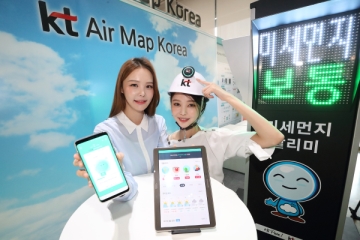
KT Launches "Air Map Korea" App, Providing Fine Dust Big Data Information
KT held a press briefing for AirMap Korea at KT Square in Gwanghwamun, Seoul, announcing that it will provide the public with real-time fine dust information through KT's platform and offer living guides to prevent damage. The AirMap Korea project is a social contribution activity in which KT supports fine dust policy establishment through IoT solutions and big data analysis. Through approximately 2,000 self-operated measurement networks built over two years, KT is collaborating with local governments nationwide, constructing a comprehensive response situation room, and conducting demonstration projects to reduce fine dust by setting operation routes for water spraying vehicles and dust collection vehicles.
2019.02.19by 이수민 기자

[e4ds Tech Day 2026 ⑨] Sim Sang-gyu, Autocrypt CTO: "In the Physical AI Era, Automotive Security Must Extend Beyond the Vehicle"
At e4ds Tech Day 2026, Sim Sang-gyu, CTO of Autocrypt, explained automotive cybersecurity strategies in the era of Physical AI and SDV (Software-Defined Vehicle). Automobiles are evolving as part of an ecosystem connected to AI, cloud, chargers, IoT, and robots, and he emphasized that the scope of security must expand beyond the vehicle interior to the entire connected environment. In particular, AI model tampering, adversarial attacks, OTA updates, and EV charger hacking were identified as major threats. He explained that response measures require zero trust, AI model integrity protection, intrusion detection, Security by Design and Default, and full lifecycle security management, and that proactive security system establishment beyond regulatory compliance is critical for securing future mobility competitiveness.
2026.10.12by 배종인 기자
NVIDIA to Invest $1 Billion in U.S. Science Over Next Five Years
NVIDIA has announced plans to invest $1 billion over the next five years to strengthen U.S. scientific and technological competitiveness. The company will enhance cutting-edge artificial intelligence research and development capabilities in key areas including quantum computing, healthcare, and energy security, while expanding support for higher education research institutions and cloud service providers. NVIDIA is participating as a major industry partner in the White House Office of Science and Technology Policy's Genesis Mission, and is promoting supercomputer construction in collaboration with national laboratories including Argonne and Los Alamos.
2026.10.12by 배종인 기자











