


KT Aggressively Expands 5G Infrastructure… Preparing for Commercial 5G Services
 Published2019.03.26 17:53
Reduced transmission latency from 18ms to edge communication center to 10ms
Security enhanced with Giga Stealth and Network Slicing technology
KT held a press briefing on 5G network technology on the 26th ahead of the launch of its commercial 5G service this coming April. At the event, KT highlighted four key keywords for its 5G network: the largest coverage in Korea, a user-centric '5G First' strategy, ultra-low latency, and battery saving technology.
In time for the launch of commercial services, KT has prioritized the completion of 5G network construction across Seoul, the metropolitan area, six major cities, parts of 85 cities, and 70 large shopping malls and department stores nationwide that are major densely populated areas. In addition, 5G networks have been built on major transportation routes connecting these areas, such as ground sections of KTX and SRT, the entire Gyeongbu and Honam Expressways, and six airports nationwide. KT stated that it is the only operator to have announced the construction of a 5G network on major inter-regional travel routes.
In addition, KT has completed the construction of 5G coverage at 464 university campuses and nearby areas nationwide, as well as at major industry-academia-research sites including Hyundai Heavy Industries in Ulsan and K-City in Hwaseong, to foster a 5G technology ecosystem through industry-academia-research cooperation.
KT plans to expand its 5G network to cover most areas of 85 cities by the end of this year, and plans to secure in-building coverage in major buildings such as subways, government offices, and university hospitals nationwide, including Seoul and the metropolitan area.
Providing customer-first 5G networks with the 5G First strategy
KT announced that through its user-focused '5G First' strategy, it provides a customer-first 5G network that offers not only speed superiority but also ultra-low latency and battery saving effects.
When discussing the maximum speed of a 5G device, LTE speeds are sometimes added. In this case, while there is an advantage in that the maximum speed is increased by adding LTE speeds, a counterproductive effect occurs where the ultra-low latency performance described as a key characteristic of 5G cannot be expected because the total latency is leveled down by reflecting LTE latency.
In mobile communication, the maximum speed provided by a single base station is shared among all subscribers served by that base station. Therefore, considering that the number of 5G subscribers will be smaller than that of LTE in the early stages of 5G service, it is judged that the speed improvement expected when combining LTE, which already accommodates a large number of subscribers, with 5G will be minimal. KT provides a 5G network based on the '5G First' strategy to complement these limitations and provide the best 5G services to customers.
KT's '5G First' strategy prioritizes the allocation of 5G base station resources to enable customers to experience the maximum performance of 5G. This not only enables the provision of services that fully utilize 5G's ultra-low latency but also reduces battery consumption on customer devices by approximately 25%. KT announced that it achieved a maximum transmission speed of 1Gbps in actual field environments using Samsung Electronics' 3.5GHz commercial base station and the Galaxy S10.
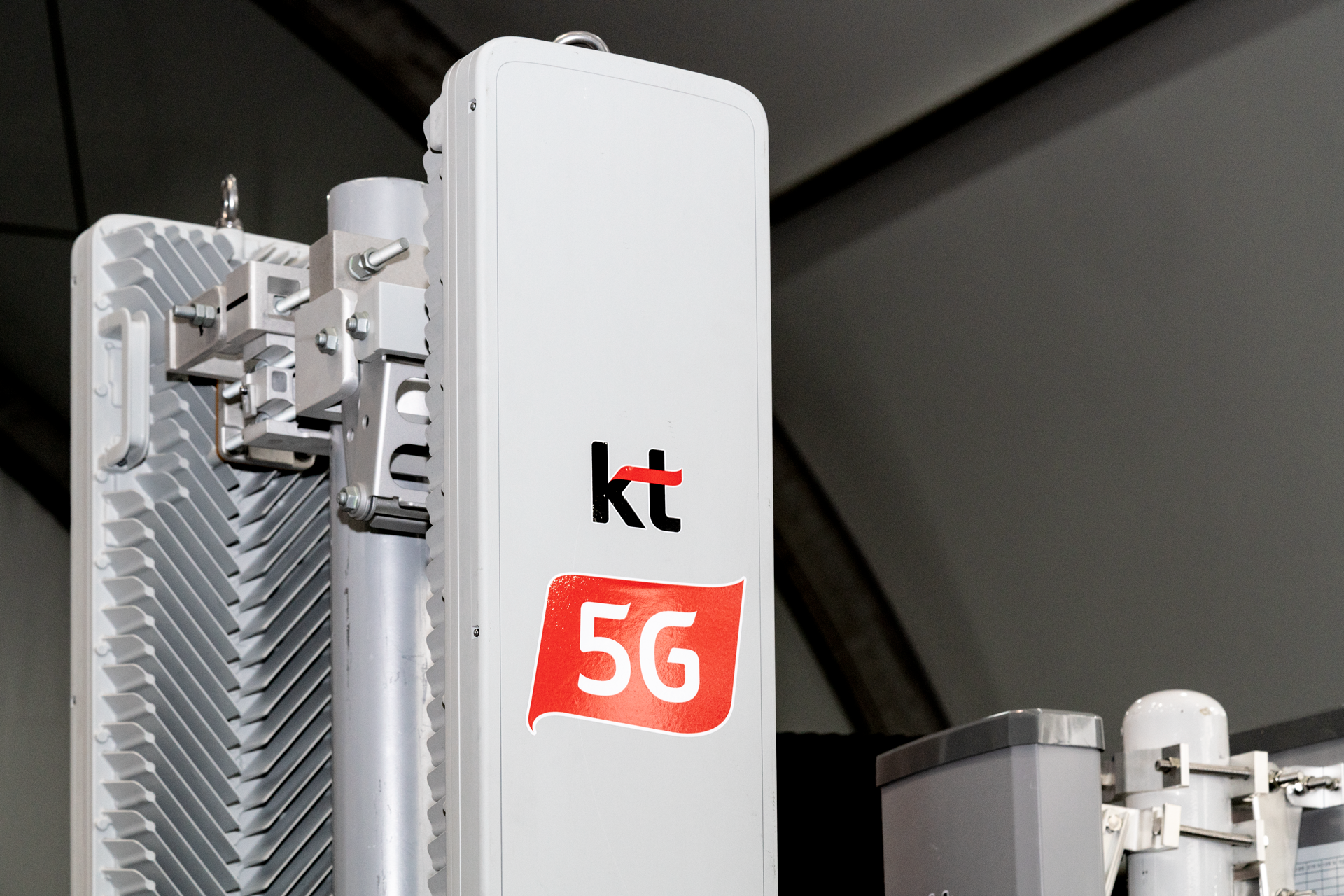
Samsung Electronics 3.5GHz Commercial Base Station
"We will install 30,000 base stations nationwide by the 5th of next month, when we begin recruiting 5G subscribers," said Seo Chang-seok, Executive Vice President and Head of KT's Network Strategy Division. "Half of them, 15,000, will be installed in Seoul, and Chinese Huawei products will not be included."
Improved perceived quality with ultra-low latency 5G networks at edge communication centers
In conventional mobile communications, user-perceived quality has generally been improved by increasing bandwidth and reducing 'transmission latency'. However, as there are limitations to improving perceived quality through increased bandwidth, 5G focused on reducing transmission latency.
For example, when loading a webpage that requires receiving about 3MB of data, the process actually requires repeating transmission and reception about 100 times, and the transmission delay time occurring between these transmission and reception processes determines the overall webpage loading time. Minimizing such transmission delay time on the network can significantly improve the user experience quality.
KT has established '5G Edge Communication Centers' in eight locations nationwide by applying Edge Computing technology, which can reduce transmission latency, in order to provide 5G services with maximized ultra-low latency characteristics and improve user-perceived quality.
KT has reduced the existing transmission latency of 18ms to 10ms by having users process data traffic at the nearest adjacent edge communication center. A transmission latency of 10ms is expected to significantly aid the activation of VR media. This is because VR content must be transmitted with a latency of 16.67ms or less to allow users to enjoy it continuously.
Providing 5G networks for customers with battery saving technology
From a user's perspective, the biggest concern when using a smartphone is battery drain. To address this concern, KT announced that it has introduced the world's first 'battery saving technology (C-DRX)' to its 5G network. KT already introduced C-DRX to its nationwide LTE network in 2017.
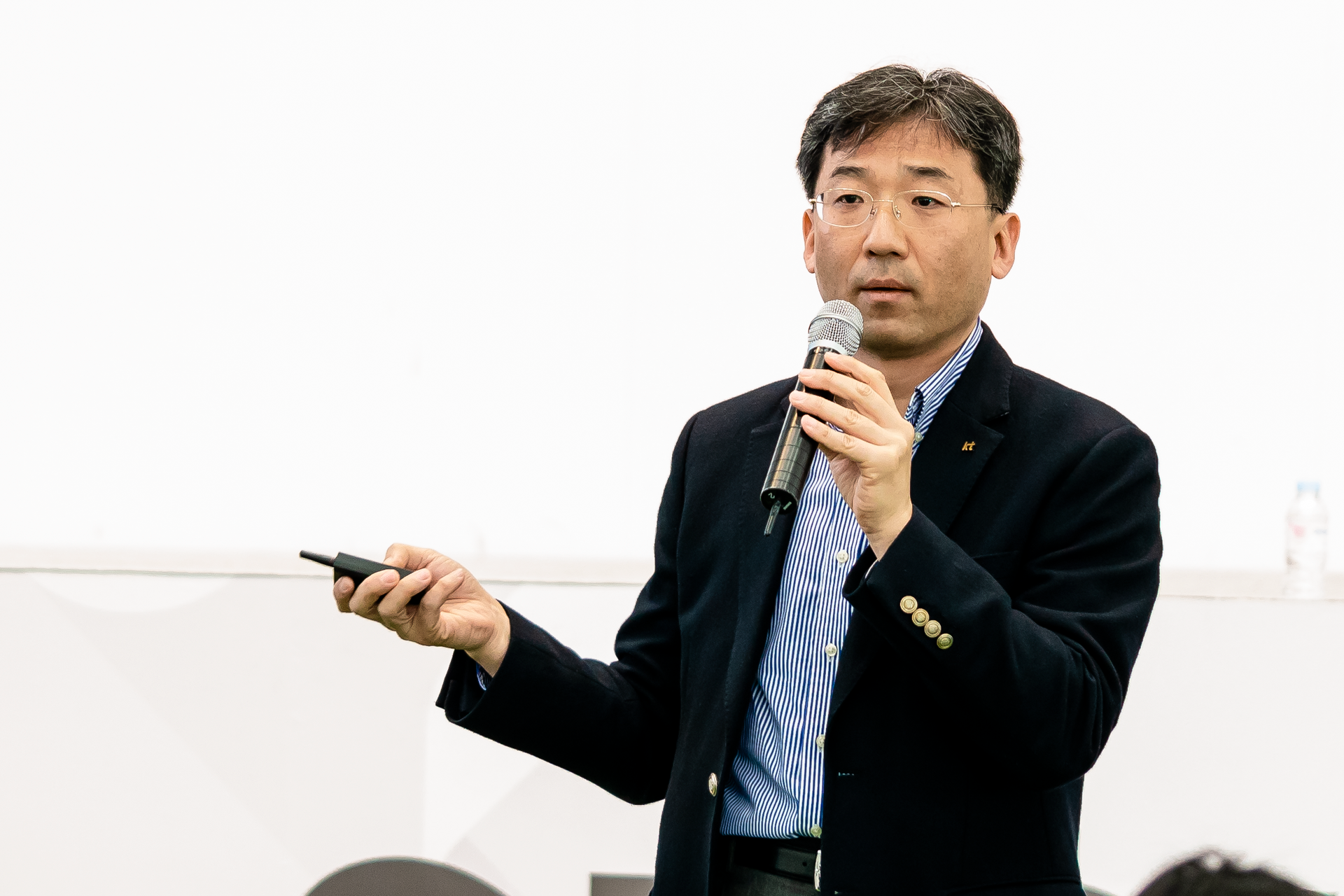
Seo Chang-seok, Executive Vice President and Head of KT Network Strategy Division
"Going forward, we will provide the highest quality 5G services to our customers and realize customer satisfaction through people-centered technology," said Seo Chang-seok, Executive Vice President and Head of KT Network Strategy Division.
Advanced network control technology based on 5G
KT has applied new security technologies to 5G to ensure that individuals and businesses can receive secure communication and services. The newly introduced security technologies are GiGA Stealth and Network Slicing, which were also mentioned at MWC19.
It was explained that Giga Stealth is a security technology that makes the IP of IoT itself invisible, and Network Slicing is a service that guarantees security and quality through network separation suitable for the characteristics of each service and terminal, and will be applied to enterprise-dedicated 5G in the future.
KT offers ▲Dr. Wais (AI SON), an AI-based self-recovery technology, and ▲Dr. Wais, a technology that analyzes and prevents the root causes of network failures, such as line failures and accidents, based on big data. Lauren also introduced AI-powered technologies, such as OPERA, a technology that supports configuring the entire network to suit the customer's specific needs.
Along with this, technologies were also announced, including: ▲ holograms that provide the exact size of the other party on the screen, transcending spatial and temporal limitations; ▲ GiGA Twin, an intelligent remote control platform that can be quickly and easily applied to various domains such as energy, bridge safety, and buildings; ▲ Edge CDN, which enables seamless transmission of large-capacity data and real-time sharing with ultra-low latency; and ▲ 'precision positioning,' which provides location information essential for sophisticated autonomous driving in real-time with ultra-low latency.
.jpg)
Lee Seon-woo, Executive Director and Head of the Infra Research Institute at KT Convergence Technology Institute
Lee Seon-woo, Senior Vice President and Head of the Infra Research Institute at KT Convergence Technology Institute, said, “We developed an in-building coverage repeater through the Open Lab,” adding, “Our goal is to build 1,000 partner companies by 2020 to develop and verify technology together with various partners.”
KT opened the '5G Open Lab' on September 4 of last year to promote 5G commercialization and ecosystem activation, marking 555 days since the declaration of 5G commercialization.
Comments
Related news
KT Unveils Massive 5G Technology Experience Hall at Gwanghwamun Square to Commemorate 100th Anniversary of National Sports Festival
KT opened a KT 5G Experience Center at Gwanghwamun Plaza in Jongno-gu, Seoul, where visitors can experience KT's 5G services. The KT 5G Experience Center was established to commemorate the 100th National Sports Games being held by Seoul City. The KT 5G Experience Center is designed as a massive 11-meter-high facility spanning approximately 400 pyeong, allowing visitors to directly experience and enjoy various services incorporating KT 5G technology. It consists of a total of seven themed spaces: KT 5G Mission Room, KT 5G Smart Factory, KT 5G VR Sports, KT 5G Terminal Experience, KT 5G Telepresence, Robot Café, and the 100th National Sports Games booth. The experience center operates daily from 12:00 PM to 8:00 PM, excluding Mondays, from March 15 through March 30.
2019.03.17by 이수민 기자
KT Opens World's First 5G-Based UHD Live Broadcasting Era
KT will unveil for the first time a UHD live broadcast utilizing 5G network through the third segment of SBS's live morning program "Morning Wide" on the 19th. The UHD live relay based on 5G network leverages KT's 'Enterprise 5G' service and '5G MNG' equipment. MNG refers to a method of transmitting video footage captured by broadcast cameras through a wireless network. The 5G MNG with KT's Enterprise 5G service applied enables ultra-high-definition video transmission with just a single 5G SIM card. Unlike LTE MNG, the 5G MNG with 'Enterprise 5G' applied is characterized by transmitting UHD video through a dedicated 5G network for broadcasters that is segregated from the public network, minimizing transmission delay.
2019.03.20by 이수민 기자
.jpg)
SK Telecom lays the groundwork for its 5G smartphone launch.
SK Telecom has completed critical testing for mass production of the Galaxy S10 5G. Over two months, SK Telecom conducted numerous tests including 5G network-smartphone interoperability tests, interface verification, and frequency compliance verification at the 5G device test lab located in its Bundang headquarters and at commercial field sites. Using specialized equipment in the laboratory, the company also performed scenario-based testing by creating over 100 virtual environments. Smartphones can only be officially launched after passing performance testing at both the 5G device test lab and commercial networks. This is why this process is called the final gateway to commercialization. With the completion of this critical testing, the launch of the world's first 5G smartphone is expected to proceed more smoothly. In the next phase, SK Telecom will conduct acceptance inspection of mass-produced products manufactured at the factory this week. Through this process, the company plans to prepare for the first 5G smartphone launch without any disruptions.
2019.03.26by 이수민 기자
European Patent Applications Surpass 200,000 for the First Time… South Korea Maintains 5th Place, Led by Batteries and Telecommunications
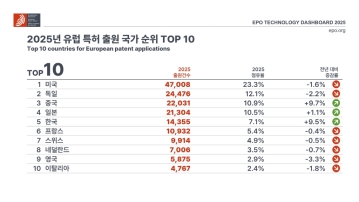
According to the European Patent Office (EPO)'s 'Technology Dashboard 2025', European patent applications last year reached 201,974, surpassing 200,000 for the first time. Korean companies and inventors filed 14,355 applications, representing a 9.5% increase from the previous year and maintaining 5th place by country. Battery, digital communication, and semiconductor technologies led the growth, with Samsung ranking as the top EPO applicant for the second consecutive year and LG reaching 3rd place. The presence of major domestic cities such as Seoul, Suwon, and Yongin was also confirmed. It was also revealed that Korea's European patent strategy is expanding beyond individual technologies to span the entire industry.
2026.03.24by 명세환 기자
SK Telecom First Applies AI-Based Network Operations at Gwanghwamun K-Pop Concert
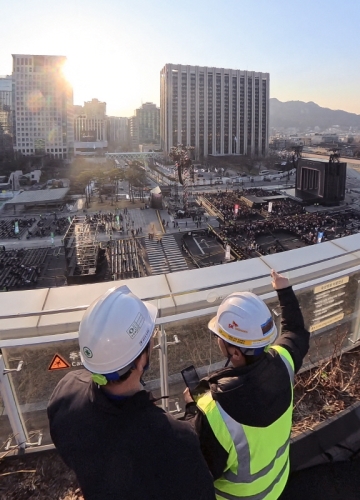
SK Telecom announced that it applied an AI-based network operation system for the first time at a large-scale K-pop concert held in the Gwanghwamun area of Seoul on March 21st, managing communication quality throughout the event. Mobile data usage during the three hours before and after the concert reached 12.15TB, approximately doubling compared to the same time slot the previous weekend. SK Telecom monitored traffic using the AI system 'A-One' in five-minute and 50-meter units to respond to potential overload situations, while also operating temporary communication facilities and on-site personnel in parallel. This case is interpreted as confirmation of the practical applicability of AI-based autonomous network operation in an environment where demand from dense events and foreign users increases simultaneously.
2026.03.23by 명세환 기자











