


Samsung Electronics to Open System Semiconductor Business with NPU
 Published2019.06.18 17:34
| NPU, a processor optimized for deep learning operations
Expanding NPU adoption from mobile to battlefield and IoT
Samsung Electronics announced on the 18th that it is putting its life on the line to foster its Neural Processing Unit (NPU) business.
By 2030, Samsung Electronics plans to expand its NPU workforce by more than tenfold to 2,000 people and focus its entire company's capabilities on strengthening "next-generation NPU technology."
By developing its own NPU technology, Samsung Electronics is accelerating the achievement of its "Semiconductor Vision 2030," which aims to become the global leader in system semiconductors by 2030.
NPU is a processor optimized for deep learning algorithm operations.
Deep learning algorithms require parallel computing technology to process thousands of calculations simultaneously, and NPUs are considered a key technology for implementing AI because they can efficiently perform these large-scale parallel calculations.
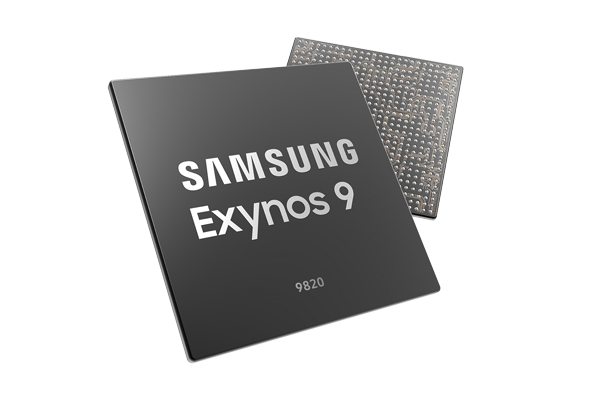
Samsung Electronics Exynos 9 (9820)
Samsung Electronics has been conducting advanced research and product development in its System LSI Business Division and Advanced Technology Research Center to strengthen its NPU technology capabilities, and as its first result, it has developed the 'Exi', which has its own NPU embedded in a mobile SoC.North 9 (9820) was introduced last year.
This product implements 'On-Device AI', enabling mobile devices to perform artificial intelligence computations that were previously performed by exchanging data with cloud servers.
Samsung Electronics plans to expand NPU adoption across all IT sectors, from mobile devices to battlefields, data centers, and IoT.
Samsung Electronics plans to sequentially expand the application of NPUs starting with its flagship SoC products for mobile devices, and will also focus on developing automotive SoC products equipped with NPUs, such as in-vehicle infotainment (IVI) systems and advanced driver assistance systems (ADAS).
We also plan to expand the scope of its use by developing a deep learning-specific NPU that can enhance the big data processing performance of data centers and strengthen AI operations.
Samsung Electronics also plans to expand ongoing collaborations with global research institutions and domestic universities, and invest heavily in discovering key talent.
Last May, Samsung Electronics expanded and relocated its Montreal AI Lab, a research institute specializing in deep learning, to the Mila Institute in Canada, and is collaborating with researchers from the University of Montreal and McGill University, led by world-renowned scholar Professor Yoshua Bengio.
Since 2017, we have been conducting joint research on artificial intelligence with domestic universities through the Neural Processing Research Center (NPRC).
NF2.png" style="width: 600px; height: 400px;" />
“We will take the lead in the coming AI era by strengthening our NPU business, which is at the core of deep learning algorithms,” said Kang In-yeop, President of Samsung Electronics’ System LSI Business. “We will present innovative processors that are one step ahead through differentiated technologies, collaborations with global organizations, and recruitment of key talent.”
Samsung Electronics plans to further develop NPU technology and expand it into neuromorphic processor technology that enables information processing and recognition at the level of the human brain.
Comments
Related news
Samsung Electronics to Use AMD's Ultra-Low-Power Graphics IP
Samsung Electronics has entered into a strategic partnership with AMD regarding ultra-low-power and high-performance graphics intellectual property (IP). Through licensing agreements with AMD, Samsung Electronics plans to strengthen its graphics technology capabilities and drive innovation across the mobile market, including smartphones. Under this partnership, AMD will provide customized graphics IP based on its latest RDNA architecture that can be utilized in mobile devices and applications, while Samsung Electronics will pay licensing fees and royalties.
2019.06.04by 이수민 기자
Samsung Electronics Presents 8K Roadmap at 8K Display Summit
Samsung Electronics held an 8K Display Summit in Manhattan, New York, and moved forward with establishing 8K as the mainstream trend. At this event, Samsung Electronics presented the latest technology trends and roadmap for 8K. The event, co-hosted by Samsung Electronics and Insight Media, a U.S. research specialist, was attended by approximately 100 industry experts including display equipment-related companies, video production companies, and tech specialized media. The event was organized into three major sessions: 8K technology and market status, 8K content ecosystem, and advanced 8K technology. Experts from across all sectors of the 8K ecosystem shared the latest technology status related to 8K from multiple perspectives and discussed future outlook.
2019.06.12by 이수민 기자
"The era of supercomputers capable of 100 quadrillion calculations per second has arrived." NVIDIA provides AI and HPC software stacks to Arm.
Nvidia is advancing work to provide its entire AI and HPC software stack to the Arm ecosystem by the end of this year. The stack includes Nvidia CUDA-X AI in its entirety, HPC libraries, GPU-accelerated AI frameworks, and software development tools such as the PGI compiler with OpenACC support and profiler. Upon completion of stack optimization work, Nvidia will be capable of accelerating all major CPU architectures, including x86, Power, and Arm.
2019.06.18by 이수민 기자

Intel Unveils Next-Generation 'Core Ultra Series 3' and vPro Platform for Enterprise PCs
Intel has officially unveiled the "Intel Core Ultra Series 3" for next-generation enterprise PCs and the latest vPro platform, addressing a wide range of demands from enterprise notebooks to high-performance workstations.
2026.03.26by 배종인 기자

ROHM Launches ESD Protection Diode Compatible with High-Speed Interfaces of 10Gbps or Higher
Semiconductor specialist ROHM has developed the 'RESDxVx series' of ESD (electrostatic discharge) protection diodes capable of responding to next-generation high-speed data communication environments exceeding 10Gbps, simultaneously enhancing both signal quality maintenance required in high-speed interfaces and IC protection performance.
2026.03.26by 배종인 기자











