



TI Launches Ultra-Low-Power Switching Regulator IC to Extend IoT Device Battery Life
 Published2019.07.16 12:01
Buck converter based on 60nA quiescent current
Miniaturization of battery-powered applications
A switching regulator IC that extends the battery life of IoT devices has been released.
Texas Instruments (TI) announced on the 16th that it is launching an ultra-low power switching regulator IC based on 60nA quiescent current (IQ).

The newly released TPS62840 synchronous step-down converter extends system battery life with 80% light-load efficiency at a 1-mA load. It also enables the use of smaller batteries or fewer batteries, minimizing overall power solution size and reducing costs.
TI's new switching regulators have one-third the quiescent current of competing devices and operate over a wide input voltage (V in ) range of 1.8 V to 6.5 V, supporting a variety of battery chemistries and configurations.
The TPS62840 is suitable for a variety of battery-powered industrial and personal electronics applications, such as NB-IoT and grid infrastructure equipment, as well as wearables. It not only provides flexibility, wireless range and high accuracy, but also prevents electromagnetic interference (EMI).
The TPS62840 adds to TI's diverse portfolio of highly integrated, low-quiescent-current DC/DC converters, enabling engineers to design smaller systems while maximizing power delivery.
The TPS62840's low quiescent current extends battery life in systems operating at very low loads (less than 100 mA) or in standby/shipping mode. The new device improves efficiency to 80% at 1 mA, approximately 30% higher than competing devices.
The TPS62840 offers user-selectable modes and a stop function to minimize noise and reduce signal distortion. This allows system developers to achieve the same performance without the need for expensive precision signal chain components, sensors, and wireless solutions, thereby reducing solution design costs.
The mode pin is implemented in continuous conduction mode (CCM), also known as forced pulse-width modulation (PWM) mode. This minimizes ripple and noise, reducing the impact on sensitive radio frequency (RF) applications.
In particular, the stop pin can be used to stop all switching, reducing electromagnetic interference and ripple, as well as minimizing distortion transmitted to precision signal chains, measurement, sensor and wireless connectivity devices.
TI's new switching regulators enable developers to design systems that use half the number of batteries or smaller batteries. For example, by using four AAA batteries instead of four AA batteries, you can save 16,980mm 3 of space.
The TPS62840 can support a wide input voltage range of 1.8 V to 6.5 V and a variety of battery chemistries and configurations, including two lithium manganese dioxide (2s-LiMnO2) cells in series, a single cell of lithium thionyl chloride (LiSOCL2), four or two alkaline cells, and lithium polymer (Li-Po).
Pre-production samples of the TPS62840 are currently available from the TI store.
The packages are a 1.5mm x 2.0mm 8-pin SON and a 0.97mm x 1.47mm 6-pin WCSP, with a 3mm x 5mm 8-pin thermally enhanced package (HVSSOP) also planned for later this year.
Pricing starts at $0.85 each in 1,000-unit quantities, with the TPS62840-1DLCEVM55 and TPS62840-1YBGEVM56 evaluation modules priced at $49 each.
Comments
Related news
.png)
Reducing Hidden Costs When Designing Next-Generation Insulation Solutions
Electronic device systems are becoming increasingly compact and lightweight. The need for isolation between various electronic devices and systems is also rising. Isolation requires complex architecture and processes, which in turn reduces agility and flexibility, making design changes difficult. In isolated designs, isolation is naturally essential, but designing it is not straightforward. Many considerations must be taken into account, from determining the required isolation level to providing isolated power via isolated data paths and fitting the solution within the given space. Many of these challenges can be easily addressed by using a compact and user-friendly integrated isolated DC-DC converter that includes comprehensive documentation regarding safety certifications.
2019.06.04by 이수민 기자

ADI Launches Multi-Channel Mixed-Signal RF Converter Platform
Analog Devices has launched its MxFE RF data converter platform that integrates high-performance analog and digital signal processing capabilities for various wireless equipment such as 4G LTE and 5G mmWave. Through ADI's AD9081/2 MxFE platform, wireless equipment manufacturers can install multi-band RF in the same footprint as single-band RF, enabling them to achieve three times greater call handling capacity compared to conventional 4G LTE base stations. The new MxFE platform supporting 1.2 GHz channel bandwidth enables wireless operators who are adding more antennas to their communication towers to meet the high radio density and data rate requirements of 5G mmWave.
2019.06.11by 이수민 기자
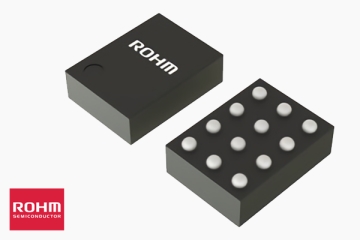
ROHM Launches Ultra-Low Power Boost/Buck DC/DC Converter for IoT
Rohm has developed the BD83070GWL, a MOSFET-integrated buck-boost DC/DC converter for mobile, wearable, and IoT applications. The BD83070GWL incorporates a low-loss MOSFET employing a power process 0.13µm BiCDMOS, achieving 97% power conversion efficiency at a load current of 200mA through a low-consumption current circuit. Equipped with Rohm's proprietary X Ramp PWM control technology, the device enables smooth buck-boost switching according to input voltage, with a quiescent current of only 2.8µA. Sample shipments of the new product commenced in April 2019, with mass production scheduled to begin in October 2019 at a production capacity of 1 million units per month.
2019.07.10by 이수민 기자
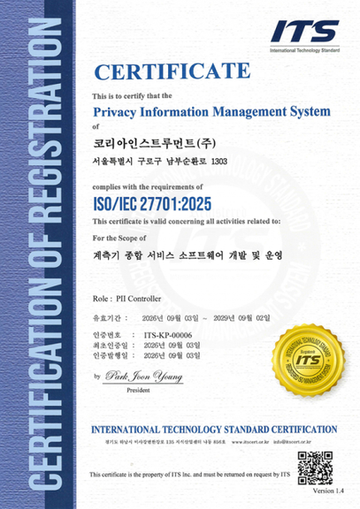
Korea Instrument, KOLAS Accredited Calibration Agency First to Simultaneously Acquire ISO/IEC 27,001·27,701
Korea Instrument has become the first among KOLAS accredited calibration agencies to simultaneously acquire ISO/IEC 27,001 and ISO/IEC 27,701 certifications. Through its proprietary platforms CWIZ Enterprise and CWIZ Partners, the company has embedded information security and personal data protection requirements across all business processes including customer information, equipment data, and calibration reports, with plans to continuously advance its management system through regular audits and security inspections.
2026.10.12by 배종인 기자

TeamViewer One, IT Incident Automation Workflow and Resolution Center Enhanced
TeamViewer has added IT incident automation capabilities and an advanced Resolution Center to its integrated digital workplace management platform 'TeamViewer ONE'. Recurrent service disruptions, configuration errors, and capacity shortages are automatically handled according to preset policies, and device status verification through script deployment can be managed in a unified interface, significantly reducing repetitive tasks for IT teams.
2026.10.12by 배종인 기자











