


Lenovo Partners with Intel to Strengthen AI Leadership in HPC
 Published2019.08.08 15:10
| 레노버 냅튠 수냉 기술, HPC 전력효율 상승시켜
| 전 세계에서 HPC & AI 전문 센터 함께 설립한다
트랜스폼 3.0을 통해 에지 컴퓨팅 포트폴리오를 강화한 레노버가 인텔과의 협력을 발표했다.
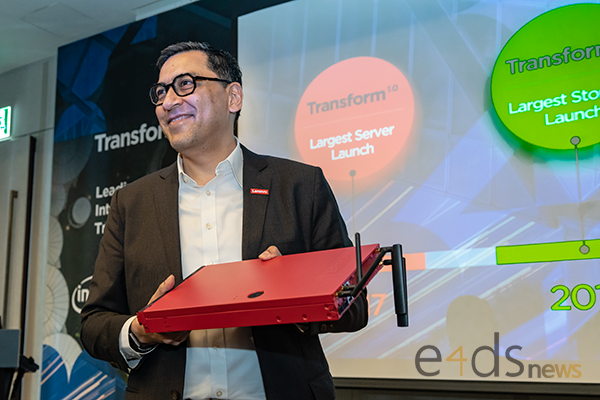
수미르 바하티(Sumir Bhatia) 레노버 DCG 사장
레노버 데이터센터 그룹이 인텔과 고성능 컴퓨팅(High-Performance Computing; HPC) 및 AI 융합 분야에서 다년간 협력한다고 6일 밝혔다.
레노버는 인텔의 HPC와 AI 하드웨어 및 소프트웨어 솔루션의 전체 포트폴리오를 최적화하여 이를 시장 가속화 전략의 토대로 활용할 계획이다.
‘2세대 인텔 제온 스케일러블(2nd Gen Intel Xeon Scalable)’ 플랫폼과 ‘레노버 넵튠(Lenovo Neptune)’ 수냉식 쿨러 기술 결합은 양사의 공동 엔지니어링과 고유한 HPC IP 조합을 통해 성과를 내고 있다. 기존 공랭식 쿨러 기술이 아닌 수냉식 쿨러 기술 채택으로 레노버는 기존 대비 40~45% 전력 소모율을 줄였다.
현재 19개 국가에서 사용하는 가장 빠른 슈퍼컴퓨터 리스트 TOP500에서 173대가 레노버 서버를 사용하고 있다. 글로벌 연구 중심 대학 25곳 중 17곳에서도 레노버의 인프라를 기반으로 시스템을 운영하고 있다. 지난 7월 말, 우리 조달청은 기상청 슈퍼컴퓨터 도입 사업에서 레노버를 공급자로 선정하고 공급 계약을 체결한 바 있다.
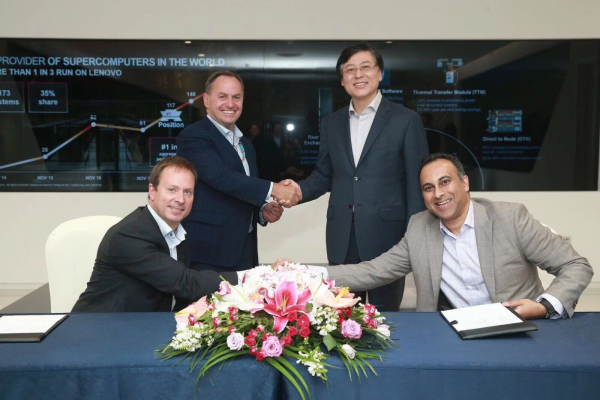
양 위안칭 레노버 CEO, 나빈 셰노이 인텔 매니저,
커크 스카우젠 레노버 수석 부사장

이번 협력으로 ‘레노버 트루스케일 인프라스트럭처(Lenovo TruScale Infrastructure)’를 비롯한 레노버의 포트폴리오와 ‘인텔 Xe 컴퓨팅 아키텍처(Intel Xe computing architecture)’, ‘인텔 옵테인 DC 퍼시스턴트 메모리(Intel Optane DC persistent memory)’, ‘인텔 oneAPI 프로그래밍 프레임워크(Intel oneAPI programming framework)’, 빌트인 AI 가속화 기능인 ‘인텔 딥러닝 부스트(Intel Deep Learning Boost)’을 탑재한 현세대 및 차세대 인텔 제온 스케일러블 프로세서 등 인텔의 대표적인 기술들이 결합된다.
레노버는 리코(LiCO) HPC/AI 소프트웨어 스택을 인텔의 차세대 기술에 최적화하고 인텔 oneAPI 프로그래밍 프레임워크에 맞추어 레노버의 소프트웨어를 제공하는 데 주력할 예정이다. AOS 첨단 스토리지 프레임워크 구현 및 기타 엑사스케일급 소프트웨어 최적화를 통해 HPC 및 AI 사용자가 기존보다 쉽게 애플리케이션을 실행하도록 하는 데에도 집중할 예정이다.
그 밖에도 인텔과 레노버는 HPC 및 AI의 융합을 위한 새로운 에코시스템 구축을 지원하는 데 협력할 계획이다. 전 세계에 ‘HPC & AI 전문 센터(HPC & AI centers of excellence)’를 공동 설립하여 연구 및 대학 기관이 유전체 연구, 암, 날씨 및 기후, 우주 탐사 등 전 지구적인 도전 과제를 해결하는 솔루션을 개발하도록 하는 안도 포함된다.
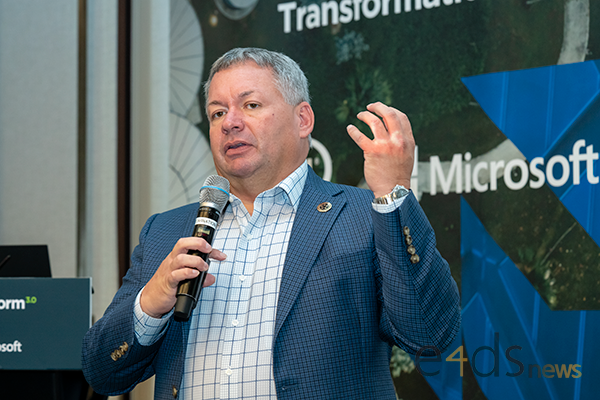
레노버 트랜스폼 3.0 기자간담회에서 레노버의 비전을 소개한 스콧 티즈(Scott Tease) 레노버 데이터센터 HPC & AI 총괄 디렉터는 “레노버 데이터센터 그룹은 오픈 파트너십과 오픈 소스에 기반을 둔 AI 기술로 고객을 지원하는데 집중하고 있다”라며, “HPC를 사용하려는 전 세계 고객들에게 혁신적인 컴퓨팅 모델의 장점을 가진 오픈 AI 포트폴리오를 제공하는 것이 목표다”라고 밝혔다.
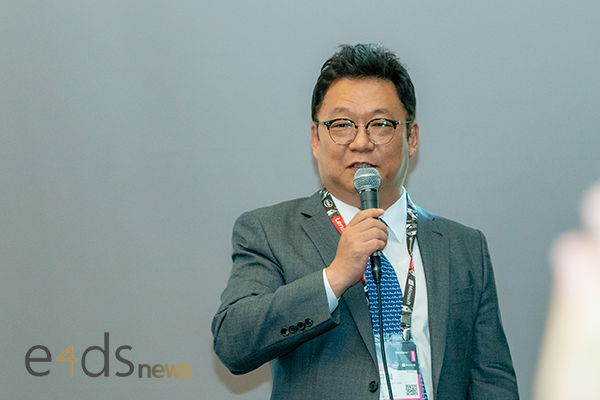
레노버 글로벌 테크놀로지 코리아 신규식 대표는 “레노버는 최근 5분기 연속 평균 38%의 성장률을 기록했다”라며, “오는 2020년에는 업계 평균 성장률보다 2배 높은 성장을 목표로 하고 있다”고 말했다.
Comments
Related news
Lenovo Announces Subscription Data Center TrueScale Infrastructure Service
Lenovo has announced Lenovo TrueScale Infrastructure Services, a comprehensive service-oriented product. Lenovo TrueScale is a subscription-based product that enables customers to use datacenter hardware and services at their on-premises facility or at a location of their choice and pay only for what they use, without having to purchase equipment. Lenovo's ThinkSystem and ThinkAgile product portfolios are available through this offering, which includes hardware installation and deployment, management, maintenance, and decommissioning.
2019.02.15by 이수민 기자
"The era of supercomputers capable of 100 quadrillion calculations per second has arrived." NVIDIA provides AI and HPC software stacks to Arm.
Nvidia is advancing work to provide its entire AI and HPC software stack to the Arm ecosystem by the end of this year. The stack includes Nvidia CUDA-X AI in its entirety, HPC libraries, GPU-accelerated AI frameworks, and software development tools such as the PGI compiler with OpenACC support and profiler. Upon completion of stack optimization work, Nvidia will be capable of accelerating all major CPU architectures, including x86, Power, and Arm.
2019.06.18by 이수민 기자
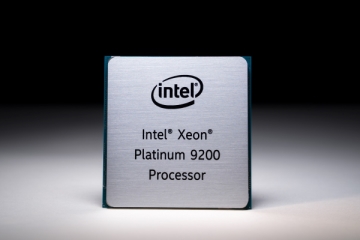
Next-generation Intel Xeon 'Cooper Lake' processor with up to 56 cores to be released in the first half of next year
Intel announced the Xeon Scalable processor family, the Cooperlake processor. The Cooperlake processor provides up to 56 cores per socket on standard and CPU sockets with built-in AI acceleration capabilities. The platform performance delivered by the Cooperlake processor leverages features built into the Intel Xeon Platinum 9200 series. With lower power consumption compared to the current Intel Xeon Platinum 9200 processor, Cooperlake, as an x86 processor, will add bfloat16 support to Intel Deep Learning Boost to provide built-in high-performance AI acceleration capabilities.
2019.08.08by 이수민 기자
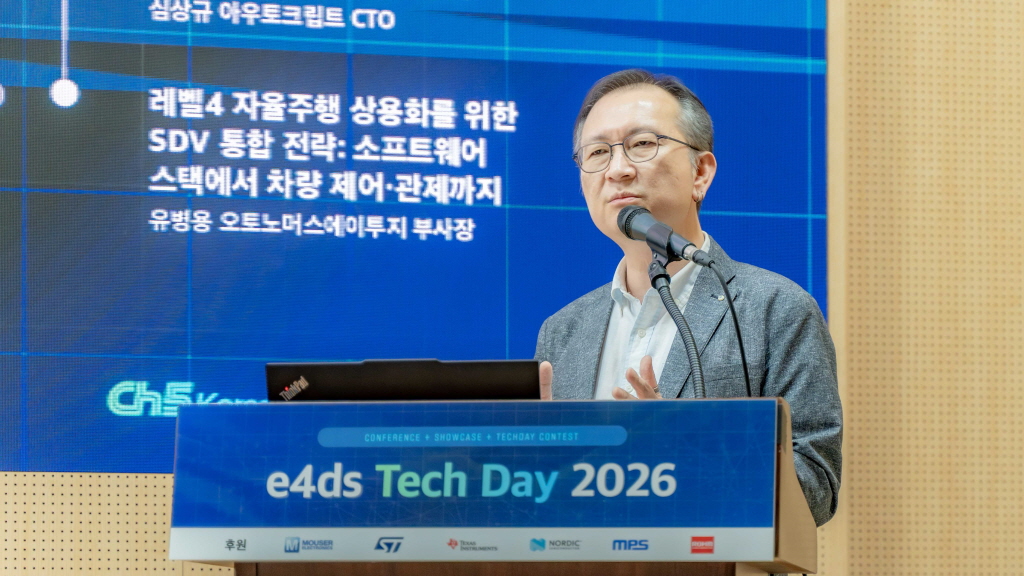
[e4ds Tech Day 2026 ⑨] Sim Sang-gyu, Autocrypt CTO: "In the Physical AI Era, Automotive Security Must Extend Beyond the Vehicle"
At e4ds Tech Day 2026, Sim Sang-gyu, CTO of Autocrypt, explained automotive cybersecurity strategies in the era of Physical AI and SDV (Software-Defined Vehicle). Automobiles are evolving as part of an ecosystem connected to AI, cloud, chargers, IoT, and robots, and he emphasized that the scope of security must expand beyond the vehicle interior to the entire connected environment. In particular, AI model tampering, adversarial attacks, OTA updates, and EV charger hacking were identified as major threats. He explained that response measures require zero trust, AI model integrity protection, intrusion detection, Security by Design and Default, and full lifecycle security management, and that proactive security system establishment beyond regulatory compliance is critical for securing future mobility competitiveness.
2026.10.12by 배종인 기자
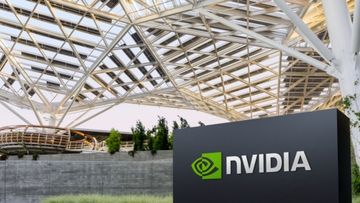
NVIDIA to Invest $1 Billion in U.S. Science Over Next Five Years
NVIDIA has announced plans to invest $1 billion over the next five years to strengthen U.S. scientific and technological competitiveness. The company will enhance cutting-edge artificial intelligence research and development capabilities in key areas including quantum computing, healthcare, and energy security, while expanding support for higher education research institutions and cloud service providers. NVIDIA is participating as a major industry partner in the White House Office of Science and Technology Policy's Genesis Mission, and is promoting supercomputer construction in collaboration with national laboratories including Argonne and Los Alamos.
2026.10.12by 배종인 기자











