



Porsche's 800V-based electric vehicle completes final long-distance testing
 Published2019.08.25 17:22
평균 시속 200Km로 24시간 동안 3,425Km 주파
지난해 미션E로 탄생한 포르쉐의 자사 최초의 순수 전기차가 올해 '타이칸'이란 이름을 달고 다양한 주행테스트가 진행되었다.
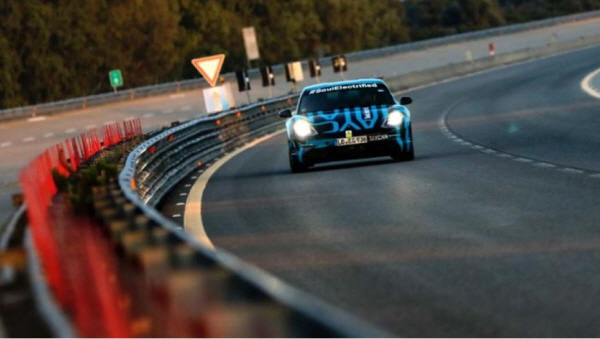
Nardius Technical Center에서 주행테스트중인 타이칸

특히 8월 진행된 이탈리아 Nardius 에서의 고속 장거리 주행 테스트에서는 전기차로서의 주행 안정성과, 쉽고 빠른 충전기술, 그리고 효율적인 열관리의 3가지 면을 보여주었다.
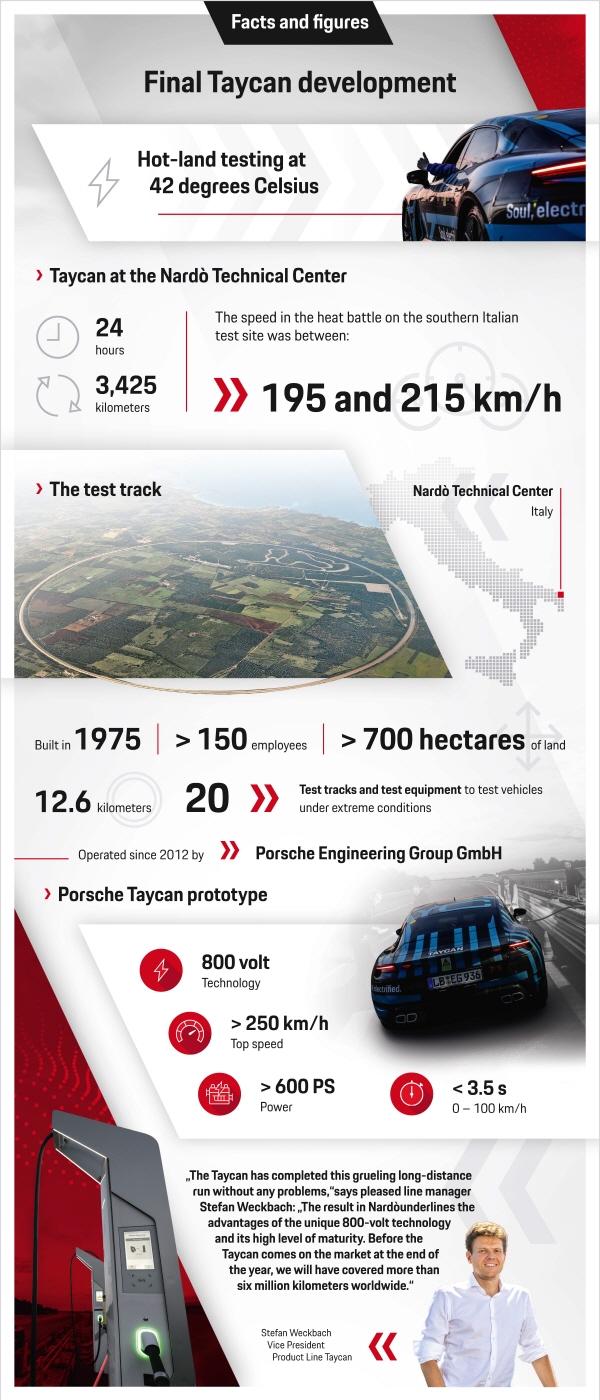
총 주행거리 3,425Km의 장거리 주행으로 평균속도 195Km 에서 215Km/h 로 진행되었으며, 섭씨 42도에서 최고 54도 까지 치솟은 기온에서 진행되었다.
이중 주행을 멈춘 구간은 배터리 충전과 운전자 변경을 위한 구간 외 총 24시간 동안 중단 없이 실시되었다고 포르쉐 테스트관계자는 밝혔다.
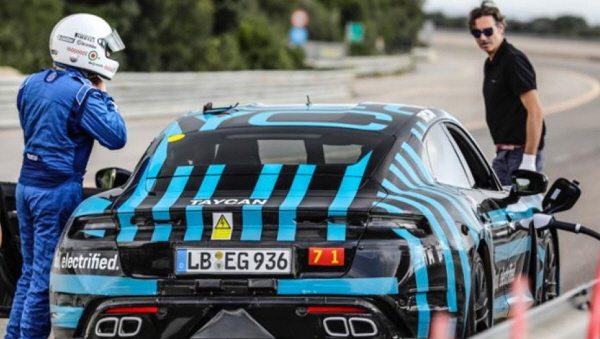
충전과 동시에 운전자의 교체가 이뤄지고 있다
올해 9월 출시를 앞두고 있는 포르쉐의 전기차 '타이칸'은 출시전 총 600만 킬로미터의 테스트 완료를 목표로 하고 있으며, 안정적인 440kW(600마력) 시스템 출력을 완성하기 위해 60여명 이상의 개발자가 마무리 테스트를 진행 중에 있다.
800V 기반, 15분 충전으로 400Km 주행
포르쉐는 2020년까지 전기 모빌리티에 약 6억유로의 투자를 예정하고 있다. 전기차의 핵심인 배터리 효율성 문제와 안전한 고속 충전 기술을 위한 투자이다.
특히 스포츠카 컨셉을 가지고 있는 포르쉐 전기차는 일반차량과 달리 최대한 가볍고 효율성 높은 배터리 구조를 가지고 있어야 한다. 현재 '타이칸'에 장착된 배터리는 270Wh/kg 으로 리튬이온기반의 고압배터리를 사용하고 있다.
그러나 최대 주행거리와 고효율 배터리 사용을 위한 배터리팩의 총중량과의 상관관계 해결이 필요하다. 또한 리튬배터리 특유의 온도 및 안정적 운용을 위한 배터리 모니터링 기술적용은 출시 이후에도 지속적으로 개발해 나가야 할 부분 중 하나로 보인다.
고속 충전을 위한 충전 스테이션은 국내의 경우 전국 10개 주요 장소에 320kW 초급속 충전기 그리고 120여 장소에는 완속 충전기를 설치할 예정이다.
.jpg)
포르쉐의 800V기반의 고속 충전폴
포르쉐가 선보이는 800V 충전폴은 기본 400V차량과 호환되어 사용이 가능하며, 15분 충전시 400Km 주행이 가능하다.
주행 중 즉시 충전을 위한 효율적인 열관리 기술
전기 차량의 고속주행과 차량의 열은 직접적인 상관관계를 가지고 있다. 주행으로 인한 고온배터리를 바로 고속 충전할 경우 충전시 발생하는 배터리 열은 차량 화재로 직결될 수 있다.
이러한 문제로 충전시 배터리 모니터링을 통한 차량 충전을 절연시키기도 한다.
포르쉐에서는 이러한 문제를 해결하기 위해 지능형 충전 프로토콜과 효율적 열교환 시스템으로, 충전시 적정 온도에 이르게 하는 고속 가열 및 냉각 시스템을 적용하였으며, 이를 통해 15분안에 400Km 주행에 필요한 에너지 충전을 가능하게 한다.
이번 테스트가 진행된 포르쉐의 최초 전기 스포츠카 '타이칸'은 20개 이상의 테스트 트랙과 시설을 가지고 있는 이탈리아 Puglia의 Nardius Technical Center에서 진행되었으며 이는 포르쉐 엔지니어링 그룹 GmbH가 운영하고 있다.

Comments
Related news
Siemens Launches Thermal Simulation Solution Specialized for AEV Design
Siemens announced the launch of a new Simcenter software solution for thermal simulation in autonomous electric vehicle design. This solution is a comprehensive offering that addresses thermal-related issues associated with AEV design, including extending the driving range of electric vehicles, optimizing ride comfort, sensor design, and ensuring the stability of all autonomous driving systems.
2018.09.30by 이수민 기자
Saenggiwon Develops Variable Architecture EV Platform, "Even EVs Can Be Customized"
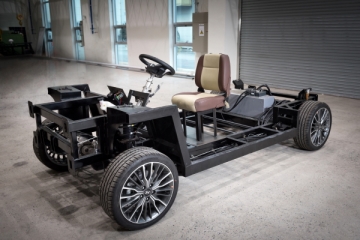
The Korea Institute of Industrial Technology has developed a "variable architecture electric vehicle platform" that enables the production of various types of industrial EVs such as shuttles, logistics vehicles, and cleaning vehicles on a single EV platform. This platform features a variable structure that allows for flexible adjustment of the wheelbase distance between the front and rear axles of the vehicle. Through this platform, manufacturers can now produce diverse types of EVs in small quantities while reflecting the intended use, driving range, and vehicle price desired by customers.
2019.01.31by 이수민 기자
ROHM Develops Four Types of 1200V Withstand Voltage IGBTs for Automotive Compliant with AEC-Q101 Automotive Reliability Standard
The electrification of automobiles is accelerating. In conventional engine-equipped vehicles, the compressor is powered by the engine, but with the increase in electrified vehicles, the electrification of compressors is also being promoted. Additionally, vehicle heating has traditionally utilized engine heat, but demand is also increasing for systems that circulate hot water using PTC heaters as a heat source for heating. The semiconductors used in the inverter circuits and switching circuits of these applications have low switching frequencies, with IGBTs being the mainstream. Particularly in electric vehicles, the power consumption of compressors and heaters affects driving range, making high efficiency a requirement. In response, Rohm has newly developed four types of 1200V withstand voltage IGBT 'RGS Series' that comply with the automotive equipment reliability standard AEC-Q101.
2019.05.13by 이수민 기자

[e4ds Tech Day 2026 ⑨] Sim Sang-gyu, Autocrypt CTO: "In the Physical AI Era, Automotive Security Must Extend Beyond the Vehicle"
At e4ds Tech Day 2026, Sim Sang-gyu, CTO of Autocrypt, explained automotive cybersecurity strategies in the era of Physical AI and SDV (Software-Defined Vehicle). Automobiles are evolving as part of an ecosystem connected to AI, cloud, chargers, IoT, and robots, and he emphasized that the scope of security must expand beyond the vehicle interior to the entire connected environment. In particular, AI model tampering, adversarial attacks, OTA updates, and EV charger hacking were identified as major threats. He explained that response measures require zero trust, AI model integrity protection, intrusion detection, Security by Design and Default, and full lifecycle security management, and that proactive security system establishment beyond regulatory compliance is critical for securing future mobility competitiveness.
2026.10.12by 배종인 기자

Practical HIL Construction Strategy for Automotive and Off-Highway Controller Validation
As vehicle E/E architecture transitions to zonal structures and shifts to software-defined vehicles (SDV), the number of controllers (ECUs) requiring validation and software complexity are surging dramatically. Meanwhile, real vehicle testing cannot provide repeated verification under identical conditions and entails lead time and safety concerns. This white paper explains the principles of HIL (Hardware-in-the-Loop) validation and the structure of the NI platform composed of PXI, SLSC, and VeriStand, and through two actual implementation cases—Camera Record & Replay HIL for In-Cabin Monitoring Controller (ICMU) and Forklift Controller (VCU) HILS—describes how controller-level regression testing becomes possible. Additionally, it explicitly states application boundaries and limitations, such as lack of A2B support.
2026.10.12by 편집부











