


"Overcoming Memory Hierarchy Limitations with Optane Technology": Intel Hosts First Memory Technology Event in Korea
 Published2019.09.27 09:31
Next-generation Xeon processors, Optane memory,
Pre-release of 144-layer QLC NAND products, etc.
Data is pouring out not only from humanity but also from the machines created by humans. Data is even referred to as a resource of the Fourth Industrial Revolution era. However, data has almost no value in itself. It only acquires value when analyzed at the right time and place.
Was it as if they wanted to convey the message that "data that is merely accumulated is not a resource; it is a resource only when analyzed quickly"? With more than half of the world's memory semiconductors produced in Korea, Intel, a leader in system semiconductors, held its first technology event in the country centered on memory.

(Photo by Reporter Lee Su-min)
Intel announced on the 26th that it held its global media event, 'Memory & Storage Day 2019,' at the JW Marriott Dongdaemun Square Hotel in Jongno 6-ga, Seoul, and would provide Optane technology and 3D NAND solutions to customers.
On this day, Intel announced plans to operate a new Optane technology development line at 'Fab 11x' located in Rio Rancho, New Mexico. In addition, it unveiled next-generation Xeon Scalable processors, Optane Data Center (DC) Persistent Memory, and 144-layer QLC NAND products scheduled for release next year.
Even at this very moment, humanity and machines are producing data at an explosive rate, but data retains its value only when analyzed in real time. However, the memory hierarchy issue—where DRAM is insufficient for rapid data processing and SSDs are not fast enough—is becoming a major concern. This is a problem that has persisted since the 1970s, when the CPU was first invented.
Intel explained that 'Optane Data Center Persistent Memory' can resolve this problem. This means that even if massive data sets are required, the issue can be solved using Optane technology connected via a storage interface. It was also emphasized that a technology combining Optane technology and QLC NAND is necessary because HDDs cannot provide the speeds required for data-centric computing.
Optane memory is a memory introduced by Intel in April 2019 that combines the speed of DRAM with the advantages of NAND flash, which retains information even when the power is turned off.
Intel stated that various customers, including ASUS, Baidu Cloud, Cisco, Dell, Dell EMC, Fujitsu, HP, Hewlett Packard Enterprise, Hyundai Motor, Inspur, JD Cloud, Lenovo, Microsoft, MSI, Naver, NEC, Netmarble, Oracle, Redis, SAP, Supermicro, and VMware, are utilizing Intel's memory and storage solutions.
In particular, Dell launched high-end storage equipped with Intel Optane SSDs on the 25th, and Oracle announced on the 16th that it has adopted Optane DC persistent memory in its new data server, the Exadata X8M.
Rob Crooke, Senior Vice President and General Manager of the Non-Volatile Memory Solutions Group at Intel, emphasized, “Companies are now grappling with how to handle data being generated at incredibly fast speeds,” adding, “Creating meaningful value from data leads to enhanced corporate competitiveness.”
“Optane technology supports in-place writing and is byte-addressable like DRAM while being non-volatile like NAND,” said General Manager Crook. “Intel will overcome the limitations of the memory hierarchy through Optane memory, the first memory produced in large quantities.”
Comments
Related news
.png)
Intel Begins Full-Scale Shipments of 10nm FPGA "Agilex" for '5G Era Data Centers'
Intel has begun shipping Intel Agilex FPGAs manufactured on its 10-nanometer process to early access program customers. Reconfigurable and power-efficient, Agilex provides the flexibility and agility needed to address these challenges with high performance and low latency. It also creates intelligent, higher-bandwidth networks through accelerated AI and other analytics performed across edge, cloud, and network environments. It also offers compute capabilities and high-speed interface capabilities that deliver actionable insights in real time. Intel provides a custom logic continuum that enables developers to seamlessly migrate designs from FPGAs to structured ASICs.
2019.09.02by 이수민 기자

Baidu Designs In-Memory Database Based on 'Intel Optane DC Persistent Memory'
As data processing demands surge exponentially, internet service providers such as Baidu must realize fast and efficient data access and storage. Intel and Baidu designed an in-memory database for Baidu's feed stream service to leverage the high-capacity, high-performance capabilities of Intel Optane DC Persistent Memory. By building a memory platform equipped with 2nd Generation Intel Xeon Scalable Processors and based on Intel Optane DC Persistent Memory, Baidu was able to lower TCO while delivering personalized search results to users. Additionally, Intel and Baidu unveiled a storage solution that accelerates machine learning performance in HPC workloads.
2019.09.09by 이수민 기자
Dell Launches High-End Storage with Intel Optane SSDs
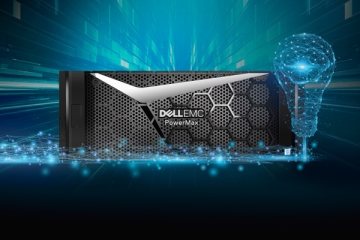
Dell Technologies has launched a new PowerMax high-end storage system. The new Dell EMC PowerMax is equipped with dual-port Intel Optane SSDs, marking the first application of Storage Class Memory technology in persistent storage. The Dell PowerMax consists of PowerMax 32Gb Fibre Channel I/O modules, 32Gb Connectrix switches, 32GB NVMe host adapters, and various directors. Dell EMC PowerPath software is also integrated, being the first enterprise-class SAN multipath software to support NVMe-oF.
2019.09.25by 이수민 기자

Intel Unveils Next-Generation 'Core Ultra Series 3' and vPro Platform for Enterprise PCs
Intel has officially unveiled the "Intel Core Ultra Series 3" for next-generation enterprise PCs and the latest vPro platform, addressing a wide range of demands from enterprise notebooks to high-performance workstations.
2026.03.26by 배종인 기자

ROHM Launches ESD Protection Diode Compatible with High-Speed Interfaces of 10Gbps or Higher
Semiconductor specialist ROHM has developed the 'RESDxVx series' of ESD (electrostatic discharge) protection diodes capable of responding to next-generation high-speed data communication environments exceeding 10Gbps, simultaneously enhancing both signal quality maintenance required in high-speed interfaces and IC protection performance.
2026.03.26by 배종인 기자











