



[Power Design Interview with 3 Experts] Noise Reduction: Not an Option, But a Requirement
 Published2019.11.25 16:02
The growing importance of noise reduction in digital systems
As electronic devices become smaller and faster, semiconductor components are increasingly integrated. Consequently, power supply noise, previously unnoticed, is now affecting the operation of electronic devices.
Now, even electronic product engineers must have an understanding of hardware and basic hardware control skills to be competitive.
We asked three power design experts how the electronics design environment has changed and what skills engineers need in that environment.
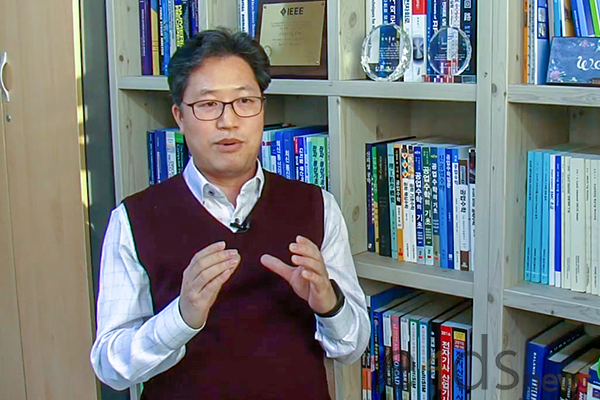
Kim Ji-seong, Professor of Electronic Engineering, Suwon Science College
Professor Ji-Sung Kim, a former KAIST research professor and former Samsung Electronics senior researcher, is currently conducting research on EMI/EMC, high-speed digital system design, signal and power integrity, and wireless power transmission.
Q. Why has noise reduction emerged as an issue in electronic product design?
A. There's no electronic device that doesn't have a power circuit. The role of a power circuit is to supply power. However, when power is supplied, noise inevitably occurs. Noise can cause problems with the operation of power supplies and can cause problems in products that use that power, especially digital systems. Noise must be reduced, and reducing it is a skill.
Q. Why should I be concerned about power supply noise?
A. Power circuits have high voltages, which leads to high noise levels. Recently, the frequencies of digital products have been rapidly increasing and decreasing. Think of smartphones. They've moved from 3G to LTE and now to 5G. Speeds have increased, but the devices are small and contain numerous wireless communication devices, such as antennas. Because they're so small and designed with all the electronics inside, any power circuit inside is highly likely to generate noise, affecting other components.
Q. Haven't efforts to reduce noise been made in the past?
A. Of course, noise reduction has been a challenge for a long time. It's just that the changing electronic product development environment has made it more important. In the past, digital designers didn't have to worry about noise from power supplies. Back then, digital circuits could operate without significant impact from noise.
As signal levels and speeds in digital technology decrease, noise is becoming increasingly unavoidable. Digital engineers must now consider the causes of noise and solutions. To do this, you need to know the causes of noise in the power circuit, how to eliminate it, and the principles of how the power circuit operates.
Q. There may also be noise issues in high-power fields.
A. The easiest area to think of is automobiles. Electric vehicles operate on motors. Motors require electricity to operate, which is why batteries are used. Batteries store DC current. To power the motors, they must be converted to AC current. Furthermore, many power supplies are used within automobiles.
The DC voltage used in electric vehicles is quite high, reaching over 500 V, sometimes hundreds of V. This voltage level is different from that of smartphones. Switching this voltage also results in higher noise levels. The components used aren't identical either. Instead of MOSFETs, IGBTs are used. The environment is also different. The noise environment is significantly different from that of a PCB. Therefore, while the theoretical foundations are similar, the optimized solutions differ.
Q. What capabilities do engineers need to reduce noise?
A. You need to understand why noise occurs, what methods should be used to reduce it, and what component characteristics should be considered. Additionally, when using power integrated circuits (power-integrated) in digital systems, you need to understand the noise generated by the power supply.
Semiconductors used in digital systems require power to operate. Just as the heart pumps blood, the power supply must supply power. If the power supply is noisy, the blood will be unclean. While this wasn't a problem in the past, today's digital systems are becoming faster and smaller, making them more sensitive to noise. Power supply design is also crucial for digital PCBs. Proper design is crucial not only for traditional power supplies like SMPS but also for DC power supplies used within digital PCBs. This is the field known as power integration.
Q. In which fields is noise reduction particularly useful for engineers?
A. Power circuits always generate noise, so governments regulate it through certification. Therefore, EMI filters must be designed. Let's take digital PCB design, not power circuits, as an example. Digital systems often assume that DC power is clean, but that's not the case. When looking at PCB systems, not all systems receive power; instead, the power supply must be converted into various voltages within the PCB.
Looking at a computer motherboard, nearly a quarter of its power system is dedicated to it. While digital, the importance of power is significant. Therefore, PCB designers must also understand power circuitry and noise. They need to understand component selection and countermeasure techniques. The primary source of electromagnetic interference (EMI) is typically the PCB circuitry. Failure to consider noise during the design phase will result in failure of EMI certification, ultimately requiring only shielding. This leads to increased costs.
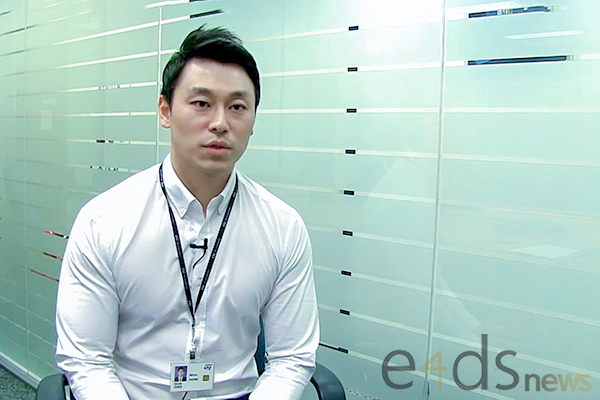
Choi Si-hoon, FAE, STMicroelectronics
Sihoon Choi, Deputy Manager at STMicroelectronics Korea, is currently working as a FAE in the Power & Discrete division.
Q. Are there any solutions that are currently attracting attention among noise reduction solutions in power design?
A. There are many solutions, but two in particular utilize silicon-controlled rectifiers (SCRs), also known as thyristors.
Q. What are two solutions that utilize SCR?
A. First, I will explain an overvoltage protection circuit solution utilizing an SCR. This solution protects devices from various types of external overvoltages, such as surges, within the circuit. This solution can improve the circuit's immunity to overvoltage.
The second is an inrush current limitation solution using SCR and TRIAC (TRIode for Alternating Current). This solution was developed to meet the market demand to replace mechanical relays with semiconductor devices. Several domestic companies are currently testing this solution, and it is already in mass production overseas.
Q. What does it mean to protect a circuit with an SCR?
A. The SCR circuit is essentially a protection circuit, making it an additional circuit from a circuit perspective. Therefore, its circuit configuration and operation must be simple. There is a requirement that high-speed circuit operation be accurate within the range specified by the manufacturer.
Protection circuits utilizing ST's SCR circuits offer high accuracy and reliability, and minimize the amount of devices used, making them a solution that customers can easily apply.
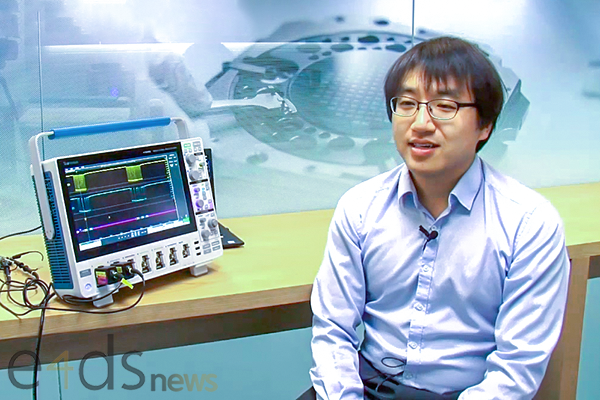
Koo Byeong-jun, Application Engineer at Tektronix Korea
Byung-Jun Koo, a deputy manager in charge of technical support for high-speed serial interfaces, RF, and EMI measurements at Tektronix Korea, is currently supporting various technical consulting areas, such as compliance testing.
Q. What are some of the current issues in electronic product design?
A. The voltage requirements of microprocessors are decreasing. Consequently, the importance of ripple management is also increasing. Now, we need relatively more accurate ripple measurements than before.
Q. What is Ripple?
A. You can think of it as voltage noise. For example, a 3.3V voltage has a portion that fluctuates up and down in addition to the 3.3V voltage. This portion is called ripple. Because the degree of ripple can affect the performance of converters like the CPU, ADC, and DAC, measuring ripple is essential.
While the voltage requirements for devices have historically been relatively high, they've recently been decreasing, leading to products that are more sensitive to ripple. With the increasing number of devices using low voltages, more precise ripple design is now required than ever before.
When we say the ripple level to be managed is ±5%, the implications of ±5% at 3V or 5V are very different from those at 1V. Ripple management is becoming significantly more difficult.
Q. What applications require precise ripple measurement?
A. First, battery-powered applications. These applications have recently been increasingly moving toward low-voltage systems. IoT applications, in particular, fundamentally require low standby power, so the voltages used by their internal components are also low. Compared to other applications, devices designed for low-voltage systems are often sensitive to voltage.
Q. How do I measure ripple?
A. Tektronix recently released a power rail probe. This probe can precisely measure ripple at around 1V. It can accurately measure ripple switching in the millivolt or gigahertz bands. The probe and analysis software are provided together, enabling designers to accurately measure ripple and ensure that the measured ripple value satisfies the actual design value while proceeding with the design.
Q. What benefits can engineers gain from ripple measurement solutions?
A. Solutions are increasingly being developed that allow precise measurement of areas previously overlooked due to system noise inherent in oscilloscopes and probes. These new solutions will provide insights that allow for accurate and precise measurement of ripple in the millivolt (mV) and gigahertz (GHz) bands.
e4ds News will host the '2019 e4ds Analog Day' on Friday the 29th to discuss power design technology required in electronic product development and problem-solving methodologies.
This seminar will focus on power, an essential component of all electronic products, from low-power to high-power, and cover core technologies required in the field. Engineers who are actually developing the technology will also present practical examples based on their own experience.
In addition to the three people interviewed earlier, ▲ iWells CEO Bae Ju-sik will present on ‘Things to consider when designing high-speed CPU-based PCB power supplies,’ ▲ Gyeongbuk Technopark’s Dr. Kim Hyeong-jun will present on ‘Qi international standard technology status and certification acquisition procedures,’ and ▲ Cracka’s CEO and e4ds Electronic Education Center instructor Dr. Park Gyeong-jin will present on ‘Things to consider when understanding hardware circuit noise phenomena.’
Comments
Related news

How will the IEC-based Korean Electrical Installation Regulations, scheduled to be introduced in January 2021, replace electrical installation technology standards?
The Korean Electrical Equipment Standard (KEC) began its development in 2011 when the government and the Korean Electrical Association recognized the necessity to develop Korean standards that meet IEC international standards. Following its announcement in 2018, the KEC underwent a three-year grace period to minimize industry confusion and is scheduled for implementation in 2021. The KEC unified the existing judgment criteria that had been divided into electrical equipment and power generation equipment sectors, organizing them into common matters, low-voltage electrical equipment, high-voltage and extra-high-voltage electrical equipment, electric railway equipment, distributed power generation equipment, thermal power generation equipment, and hydroelectric power generation equipment. Additionally, it was structured with a numbering system that considers future expandability.
2019.10.29by 이수민 기자
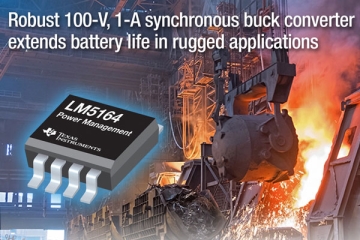
TI Releases DC/DC Buck Converter to Reduce Power Supply Board Space
Texas Instruments has launched the LM5164 synchronous DC/DC buck converter, which can reduce board space in battery-powered industrial and automotive power supplies. The TI LM5164 100V 1A step-down voltage converter in a 5×6mm 8-pin SOIC package features an input voltage range of 6~100V, a standby current of 10mA, and can deliver up to 1A of DC load current. It adopts a COT (Constant On-Time) control architecture and includes both high-side and low-side power MOSFETs. Consequently, no external components are required, and with the integrated internal VCC bias supply and bootstrap diode included, no additional capacitors are needed.
2019.11.13by 이수민 기자
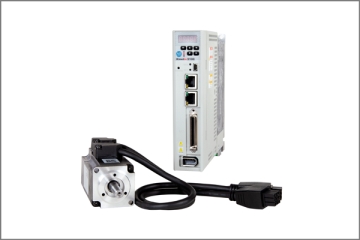
Rockwell Launches Servo System That Can Operate as a System Without a Controller
Rockwell Automation announced the launch of the Kinetix 5100 servo drive and TLP motor and cable that operate as a system without a controller. The Kinetix 5100 servo drive features control functions that support high-speed, low-power motion control applications. It can be used with Micro800 controllers and Logix-based control systems, or can be used standalone. With the built-in safe torque off function, users can remove motor torque without powering down the entire equipment, enabling quick restart when the equipment is in a safe state.
2019.11.18by 이수민 기자

Intel Unveils Next-Generation 'Core Ultra Series 3' and vPro Platform for Enterprise PCs
Intel has officially unveiled the "Intel Core Ultra Series 3" for next-generation enterprise PCs and the latest vPro platform, addressing a wide range of demands from enterprise notebooks to high-performance workstations.
2026.03.26by 배종인 기자

ROHM Launches ESD Protection Diode Compatible with High-Speed Interfaces of 10Gbps or Higher
Semiconductor specialist ROHM has developed the 'RESDxVx series' of ESD (electrostatic discharge) protection diodes capable of responding to next-generation high-speed data communication environments exceeding 10Gbps, simultaneously enhancing both signal quality maintenance required in high-speed interfaces and IC protection performance.
2026.03.26by 배종인 기자











