



Microchip Launches MCU Implemented in Hardware with Software
 Published2020.02.13 11:20
Offload software tasks to hardware
In MCU-based system design, software often causes bottlenecks in both development and release times, as well as system performance.
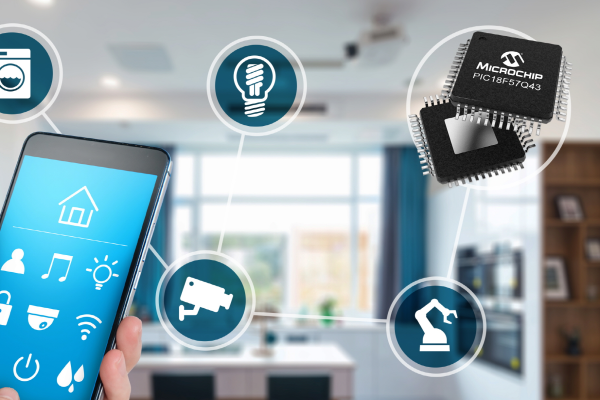
On the 13th, Microchip Technology launched the PIC18-Q43 family, which accelerates the launch of high-performance solutions by offloading various software tasks to hardware.
The PIC18-Q43 product family, which combines various peripherals, provides users with versatility and ease of use through development tools when creating custom hardware-based functions.
Configurable peripherals are interconnected to share data, logic inputs, or analog signals without delay, without the need for separate additional code to improve system response.
Suitable for various real-time control and connected applications such as home appliances, security systems, motors and industrial controls, lighting, and IoT, it reduces board space, Bill of Material (BOM), and overall costs, as well as development and market time.
A CIP is a peripheral device designed with additional features to handle various tasks without CPU intervention. The PIC18-Q43 family is designed to allow developers to easily customize it to their design configurations based on CIPs such as timers, simplified Pulse Width Modulation (PWM) output, CLC, Analog to Digital Converter with Computation (ADCC), and multiple serial communications.
CLC provides customers with the ability to control waveform generation, timing measurements, and more through programmable logic that operates beyond software execution speed limits. Based on its exceptional ease of use during hardware customization, CLC can serve as the 'glue' logic connecting on-chip peripherals.
This core-independent communication interface, encompassing UART, SPI, and I2C, provides developers of custom devices with flexible and easy-to-use building blocks, while also accelerating real-time control with simplified software loops by adding multiple DMA channels and interrupt management capabilities.
Microchip’s suite of development tools allows users to easily and quickly generate application code and customize CIP combinations in a graphical user interface (GUI) environment. Additionally, this suite operates up to 5V, enhancing noise immunity and enabling customers to connect a wide range of sensors.
The PIC18-Q43 family is supported by Microchip's MPLAB X IDE and MPLAB Xpress IDE development environments and the MPLAB Code Configurator (MCC). MCC is a free software plugin that provides a graphical interface for configuring peripherals and functions for applications. This product family is also supported on the PIC18F57Q43 Curiosity Nano board, which features programming and debugging capabilities.
The PIC18-Q43 family consists of various memory sizes, packages, and price points to meet diverse application requirements. All products are available for mass production and sampling in various packages, and can be purchased starting at $0.64 per unit during mass production.
Comments
Related news
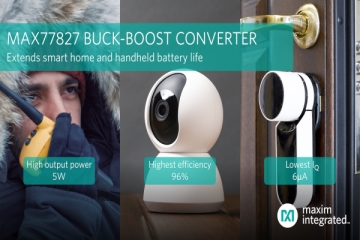
Maxim Launches Buck-Boost Converter with 98% Peak Efficiency and 6μA Quiescent Current
Maxim Integrated Korea announced the MAX77827, a buck-boost converter that achieves 96% peak efficiency and 6μA standby current. The newly announced buck-boost converter consumes current over a wide range regardless of battery type, and supports all power rails between 2.8~3.8V for power supply to microcontroller (MCU), Wi-Fi, low energy Bluetooth (BLE), and GPS functions, thereby providing designers with a solution for maximizing battery life in portable devices.
2019.10.04by 명세환 기자
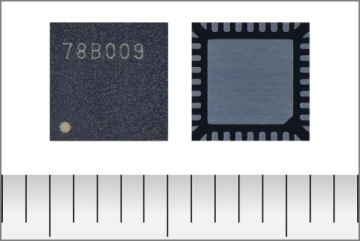
Toshiba Launches Pre-Driver IC for Three-Phase Motor Control Without the Need for Hall Sensors or External MCU Closed-Loop Speed Control
Fan driver ICs must be capable of driving external FETs to deliver greater power. On the 4th, Toshiba commenced mass production and shipment of the TC78B009FTG, a pre-driver IC for 3-phase brushless motor control. The TC78B009FTG controls motor rotation without a Hall sensor by detecting rotational position from back-EMF.
2019.12.06by 이수민 기자
ST Unveils AutoDevKit to Accelerate Automotive ECU Development
Modern vehicles can contain over 100 ECUs. As vehicle complexity continues to increase in this manner, design teams must accelerate development speed to meet these demands. STMicroelectronics has launched a new tool to support the development of ECUs that manage automotive electrical systems. The AutoDevKit library, provided free of charge, is a software environment that enables users to easily develop automotive solution prototypes by selecting MCUs and functional boards from ST's automotive portfolio.
2020.02.11by 이수민 기자
Intel Unveils Next-Generation 'Core Ultra Series 3' and vPro Platform for Enterprise PCs
Intel has officially unveiled the "Intel Core Ultra Series 3" for next-generation enterprise PCs and the latest vPro platform, addressing a wide range of demands from enterprise notebooks to high-performance workstations.
2026.03.26by 배종인 기자
ROHM Launches ESD Protection Diode Compatible with High-Speed Interfaces of 10Gbps or Higher
Semiconductor specialist ROHM has developed the 'RESDxVx series' of ESD (electrostatic discharge) protection diodes capable of responding to next-generation high-speed data communication environments exceeding 10Gbps, simultaneously enhancing both signal quality maintenance required in high-speed interfaces and IC protection performance.
2026.03.26by 배종인 기자











