



Technology developed to reduce electric vehicle battery size by half
 Published2020.03.11 11:01
Ensuring all-solid-state battery life and safety at the same time
800 km driving range on a single charge, over 1,000 recharges
Samsung Electronics' Advanced Institute of Technology has published in the world-renowned academic journal 'Nature Energy' a source technology that can increase the lifespan and safety of the 'all-solid-state battery', which is attracting attention as a next-generation battery, while reducing its size by half.
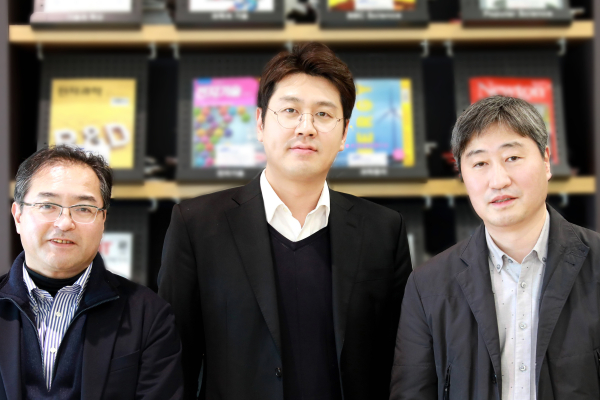
On the 10th, Samsung Electronics Advanced Institute of Technology, together with Samsung Electronics Japan Research Institute, announced the results of a research on an all-solid-state battery that can drive 800 km on a single charge and be recharged over 1,000 times.
All-solid-state batteries replace the electrolyte between the battery's positive and negative electrodes from liquid to solid, enabling the implementation of larger-capacity batteries and higher safety compared to the currently used lithium-ion batteries.
Generally, lithium metal (Li metal) is used as the battery cathode material in all-solid-state batteries. However, lithium metal has a technical challenge of having to solve the problem of dendrites that reduce the lifespan and safety of solid-state batteries.
Dendrites are tree-shaped crystals that appear on the surface of the negative electrode as lithium moves from the positive electrode to the negative electrode when the battery is charged. These crystals damage the battery separator, reducing its lifespan and safety.
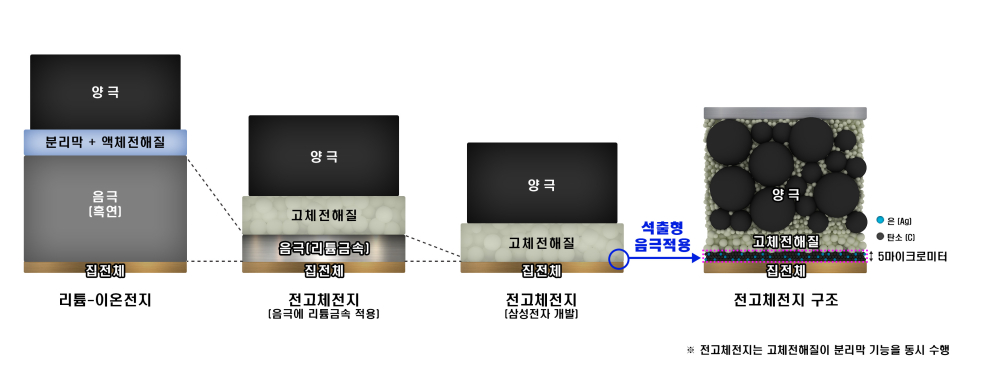
Samsung Electronics applied 'precipitation-type lithium cathode technology' that applies a 5 micrometer (㎛) thick silver-carbon nanoparticle composite layer (Ag-C Nanocomposite Layer) to the all-solid-state battery cathode to solve the dendrite problem.
This technology not only increases the safety and lifespan of all-solid-state batteries, but also makes it possible to increase energy density by making the battery cathode thinner than before, thereby reducing the size by half compared to lithium-ion batteries.
Samsung Electronics Advanced Institute of Technology Master Dong-min Lim said, “This research is a fundamental technology that will increase the driving range of electric vehicles,” and “We will overcome the limitations of next-generation batteries through research on all-solid-state battery materials and mass production technology.”
Comments
Related news
ST Launches BMS L9963 Controller to Advance EV Technology
The advanced battery management system L9963 controller launched by STMicroelectronics enhances the reliability, safety, driving range, and cost efficiency of electric vehicles. To improve safety, a temperature monitoring input function has been added, and industry-leading voltage accuracy has been implemented to extend driving range and battery life.
2020.02.24by 최인영 기자
LG Chem Exclusively Supplies Cylindrical Batteries to U.S. Lucid Motors
LG Chem will exclusively supply cylindrical batteries to Lucid Motors' Lucid Air electric vehicle model, which will be produced from the second half of this year through 2023. The cylindrical battery measures 21mm in diameter and 70mm in height, offering 50% improved capacity compared to existing cylindrical batteries. LG Electronics plans to pursue market penetration not only in the existing pouch-type segment but also in the cylindrical market.
2020.02.26by 최인영 기자
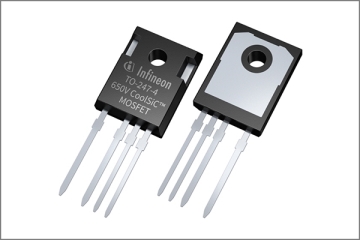
Infineon Launches CoolSiC MOSFET 650V Family with Enhanced Energy Efficiency and Power Density
Infineon is adding 650V products to its silicon carbide portfolio in response to growing demand for improved energy efficiency and power density. The 650V CoolSiC MOSFET is suitable for servers, telecommunications, industrial SMPS, photovoltaic energy systems, energy storage and battery formation, UPS, motor drives, and EV charging applications.
2020.03.05by 최인영 기자

[e4ds Tech Day 2026 ⑨] Sim Sang-gyu, Autocrypt CTO: "In the Physical AI Era, Automotive Security Must Extend Beyond the Vehicle"
At e4ds Tech Day 2026, Sim Sang-gyu, CTO of Autocrypt, explained automotive cybersecurity strategies in the era of Physical AI and SDV (Software-Defined Vehicle). Automobiles are evolving as part of an ecosystem connected to AI, cloud, chargers, IoT, and robots, and he emphasized that the scope of security must expand beyond the vehicle interior to the entire connected environment. In particular, AI model tampering, adversarial attacks, OTA updates, and EV charger hacking were identified as major threats. He explained that response measures require zero trust, AI model integrity protection, intrusion detection, Security by Design and Default, and full lifecycle security management, and that proactive security system establishment beyond regulatory compliance is critical for securing future mobility competitiveness.
2026.10.12by 배종인 기자

Practical HIL Construction Strategy for Automotive and Off-Highway Controller Validation
As vehicle E/E architecture transitions to zonal structures and shifts to software-defined vehicles (SDV), the number of controllers (ECUs) requiring validation and software complexity are surging dramatically. Meanwhile, real vehicle testing cannot provide repeated verification under identical conditions and entails lead time and safety concerns. This white paper explains the principles of HIL (Hardware-in-the-Loop) validation and the structure of the NI platform composed of PXI, SLSC, and VeriStand, and through two actual implementation cases—Camera Record & Replay HIL for In-Cabin Monitoring Controller (ICMU) and Forklift Controller (VCU) HILS—describes how controller-level regression testing becomes possible. Additionally, it explicitly states application boundaries and limitations, such as lack of A2B support.
2026.10.12by 편집부











