


Things Engineers Should Consider to Develop IoT Devices Suitable for the Non-Face-to-Face Era
 Published2020.03.24 16:23
IoT has great potential for use in non-face-to-face and remote work.
Select suitable hardware to highlight differentiating features
COVID-19, discovered in Wuhan, China on December 1, 2019, is having a global impact as of March 2020. As of the 24th, when this article was written, the cumulative number of confirmed cases is approaching 400,000, and the number of deaths has exceeded 16,000.
The Hyundai Research Institute predicted a decline in the economic growth rate and composite business index in the first quarter of 2020 due to COVID-19 in its report, 'Recent Economic Trends and Business Assessment (Q1 2020)'.
To prevent the spread of COVID-19, governments around the world are conducting social distancing campaigns to minimize face-to-face interactions. Some companies are canceling scheduled events and encouraging working from home and remote work.
As these work conditions persist for several months depending on the country, an increasing number of executives are considering applying IoT technology to their businesses to minimize economic losses. Even if this situation subsides, the threat of infectious disease spread will never disappear, just as MERS followed SARS and COVID-19 followed MERS. Non-face-to-face and remote-based IoT devices will continue to receive steady interest as long as humanity exists.
So, what factors should be considered to develop effective IoT devices? Arm recently presented seven factors that engineers must decide when developing IoT devices through its white paper, 'Ensuring IoT Success: The 7 Most Important Decisions.' In this article, we will look at the first of these: hardware and software options.

To define system functions, you must first determine the hardware.
Hardware specifications must meet the minimum requirements to run features to be implemented now and in the future. Otherwise, some features may have to be abandoned. Even if some compromises are made, features that can differentiate the product should not be sacrificed.
It is also important not to select hardware features beyond the requirements. Otherwise, product costs may increase excessively, and unnecessary power consumption could reduce the product's market competitiveness.
Energy Sources and Power Management
There are three power sources that operate IoT devices: constant power, batteries, and energy harvesting. Unlike smartphones that are charged daily, IoT devices may need to operate for years in remote locations on a single battery.
During the architecture design phase, expected usage habits and device applications must be considered to create an energy profile that prioritizes energy efficiency.
Hardware security
When selecting hardware, you must find a layered approach to security. For example, hardware-based security built into the SoC processor can establish a foundation of trust and protect the device from threats.
Sensors, processors, and memory storage
Most IoT devices collect information using sensors or actuators. If you have selected a sensor, an amplifier or ADC is required to consider the interface with the MCU.
The type of processor selected should be heavily influenced by the type of sensing required for the target application. Some devices perform processing of limited data sets, such as humidity, while more complex systems can process high-resolution video streams.
When comparing memory options, you must determine the priorities required by the device, such as cost, size, power consumption, and boot time.
External flash memory is affordable, stable, flexible, and can operate without excessive power consumption, while also providing a relatively high level of density.
Embedded flash memory is widely used in IoT devices where applications store critical data and code due to its high level of performance and density. It also supports most MCU applications.
Multichip package memory combines a CPU, GPU, memory, and flash storage on a single chip.
Hardware options
You must choose from four major hardware options by prioritizing functionality, cost, energy requirements, and security.
Single-board computers (SBCs) are relatively inexpensive and ready-to-use embedded hardware platforms that come with designed system interfaces and functions, as well as expansion slots for additional capabilities. SBCs are customizable, allowing for the simple construction of IoT devices. SBCs implement a wide range of functions and adequate performance at low power.
Off-the-shelf silicon embodies the experience and knowledge accumulated by vendors over years of meeting the diverse requirements of developers across various industries. To realize device scalability, the design must be prepared to integrate numerous different components. As the value of data increases, IoT devices must enhance their computing power. To meet these requirements, it must be possible to connect various sensors along with other IP, such as digital signal processors, as well as offer diverse performance options.
Custom SoCs can simplify the development process and reduce costs by leveraging components already proven in the market. Based on limited initial investment, using custom chips enables the production of better products, differentiation from competitors, and cost reduction; in particular, during mass production, it not only reduces the Bill of Materials (BOM) and lowers power consumption but also prevents imitation by competitors. Currently, many companies utilize vendor ecosystems to build IoT devices, minimizing the risks associated with custom chip design.
System modules are used to add functionality to existing devices and can provide almost any additional features needed. For example, simply adding a Bluetooth-enabled module can transform a disconnected sensor device into a connected IoT device. Furthermore, using modules allows for cost reduction and the introduction of new features while enhancing performance and tailoring functions to specific markets. The greatest advantage is that companies can reap these benefits without having to design entirely new devices.
IoT operating system
IoT-dedicated operating systems already take into account key factors such as power consumption, connectivity, and security. Application developers can focus on the end-user experience rather than low-level code to realize additional business value and remotely resolve device functional defects.
An effective OS enables devices to respond to security threats occurring in the field. Standard-based IoT RTOS platforms support the development of IoT solutions, allowing them to communicate via various protocols and enabling developers to create applications without having to integrate functions from multiple sources individually.
Software battery requirements
Software updates can sometimes consume a significant amount of battery power. To date, remote wireless software updates have been one of the most efficient methods for distributing and installing software changes.
The impact of software-based communication traffic processed by the device for the cloud on battery life must also be considered. For example, if the device continues to poll the network even while in sleep mode, additional battery consumption may occur. As the lifespan of IoT devices increases, more software updates and maintenance are required.
Security IoT software solutions
For companies seeking to implement security from the chip to the cloud, embedded security is another factor influencing software decision-making. In addition to embedded security, a suitable cloud-based platform also plays a crucial role in maintaining the security of IoT devices.
You should look for IoT software technology solutions that emphasize security and provide a system lifecycle approach, as well as low-power device operating systems built for IoT solutions. It is even better if they come with cloud services that can be deployed on-premises or publicly hosted, and provide connectivity, provisioning, and over-the-air updates.
Comments
Related news
South Korea's IoT Sales Surpass 10 Trillion Won for the First Time in History in 2019
IoT sales exceeded 10 trillion won for the first time in 2019. The Ministry of Science and ICT announced the results of the 2019 Internet of Things Industry Survey, which covers the status of South Korea's IoT industry over the past year. According to the announcement, domestic sales accounted for 9.734 trillion won, representing 89.0% of total IoT industry sales, while exports showed rapid growth at an average annual rate of 46.3% from 2015 to 2019.
2020.02.26by 이수민 기자
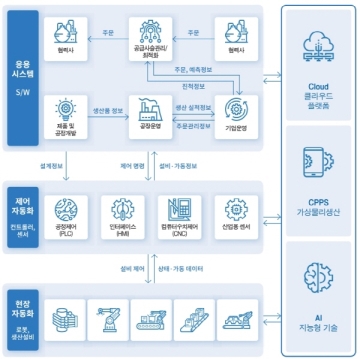
Domestic manufacturing industry emerges as a global IIoT powerhouse with digital twin strategy
Global manufacturing enterprises are focusing on IoT technology as a new growth driver, and attention is being directed toward OPC UA platform utilization strategies that enable real-time CPS data provision beyond data sharing and integration within a single factory. A smart factory market valued at over $7.8 billion is being analyzed from a CPS perspective.
2020.03.03by 최인영 기자
IRS Global Releases Market and Technology Trends Report for Smart Manufacturing Factories
IRS Global has published a report on market and technology standardization analysis and response strategies for smart manufacturing and smart factories. Realizing smart factories requires technologies such as IoT, AI, big data, manufacturing robotics, and CPS, and the key is to operate factories while leveraging advanced technologies and linking them together.
2020.03.20by 최인영 기자
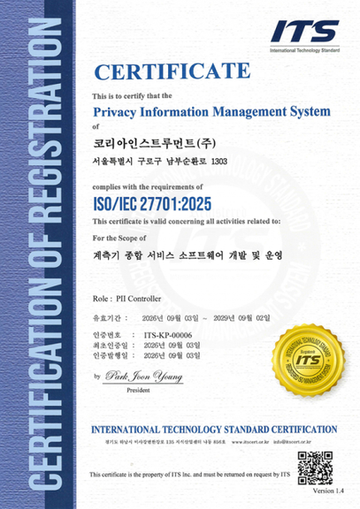
Korea Instrument, KOLAS Accredited Calibration Agency First to Simultaneously Acquire ISO/IEC 27,001·27,701
Korea Instrument has become the first among KOLAS accredited calibration agencies to simultaneously acquire ISO/IEC 27,001 and ISO/IEC 27,701 certifications. Through its proprietary platforms CWIZ Enterprise and CWIZ Partners, the company has embedded information security and personal data protection requirements across all business processes including customer information, equipment data, and calibration reports, with plans to continuously advance its management system through regular audits and security inspections.
2026.10.12by 배종인 기자

TeamViewer One, IT Incident Automation Workflow and Resolution Center Enhanced
TeamViewer has added IT incident automation capabilities and an advanced Resolution Center to its integrated digital workplace management platform 'TeamViewer ONE'. Recurrent service disruptions, configuration errors, and capacity shortages are automatically handled according to preset policies, and device status verification through script deployment can be managed in a unified interface, significantly reducing repetitive tasks for IT teams.
2026.10.12by 배종인 기자











