


"Capturing with a 0.02nm Camera and Identifying 3D Structure with AI": Domestic Researchers Successfully Develop Nanoparticle 3D Imaging Technology
 Published2020.04.03 08:35
빅데이터 알고리듬 기반 2차원 이미지를
3차원 데이터로 재구성 성공, 사이언스紙 게재
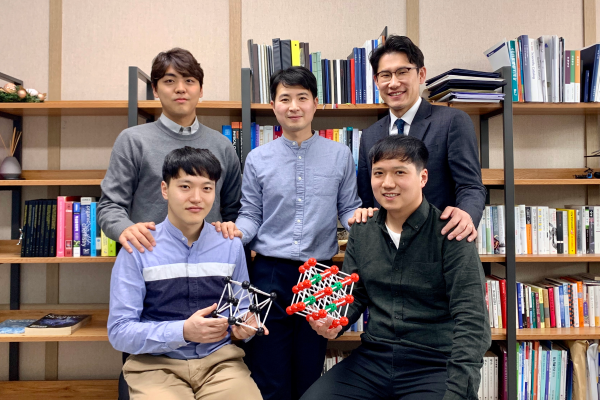
기초과학연구원(IBS) 나노입자연구단 박정원 연구위원(서울대 화학생물공학부 교수) 연구팀은 호주 모나쉬대, 미국 로렌스버클리국립연구소와 함께 0.02nm까지 관찰할 수 있는 분석기법을 개발, 개별 나노입자의 3차원 구조를 원자 수준에서 포착하는 데 성공했다.
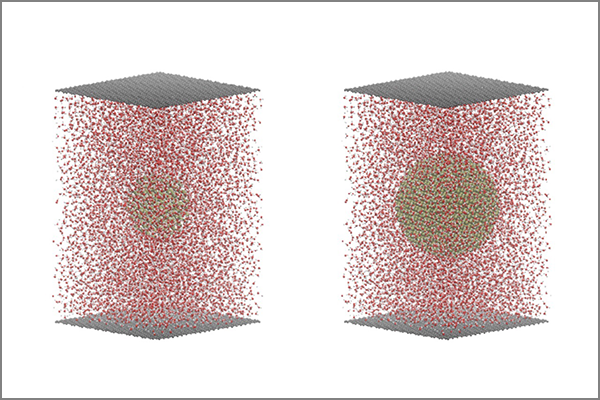
연구진은 액상 투과전자현미경(Liquid cell TEM)을 이용해 수소보다 1/6 작은 수준의 정확도로 나노입자를 관찰했다.
고성능 나노소재를 설계‧합성하기 위해서는 구조를 제대로 파악해야 한다. 나노입자의 원자 배열이 미세하게 바뀌면 촉매의 활성이 저하되거나, 디스플레이의 색 순도가 바뀌는 등 물성이 달라진다. 지금까지는 나노입자의 전체적 형상만 관찰할 뿐, 원자 배열을 입체적으로 관찰할 방법이 없었다.
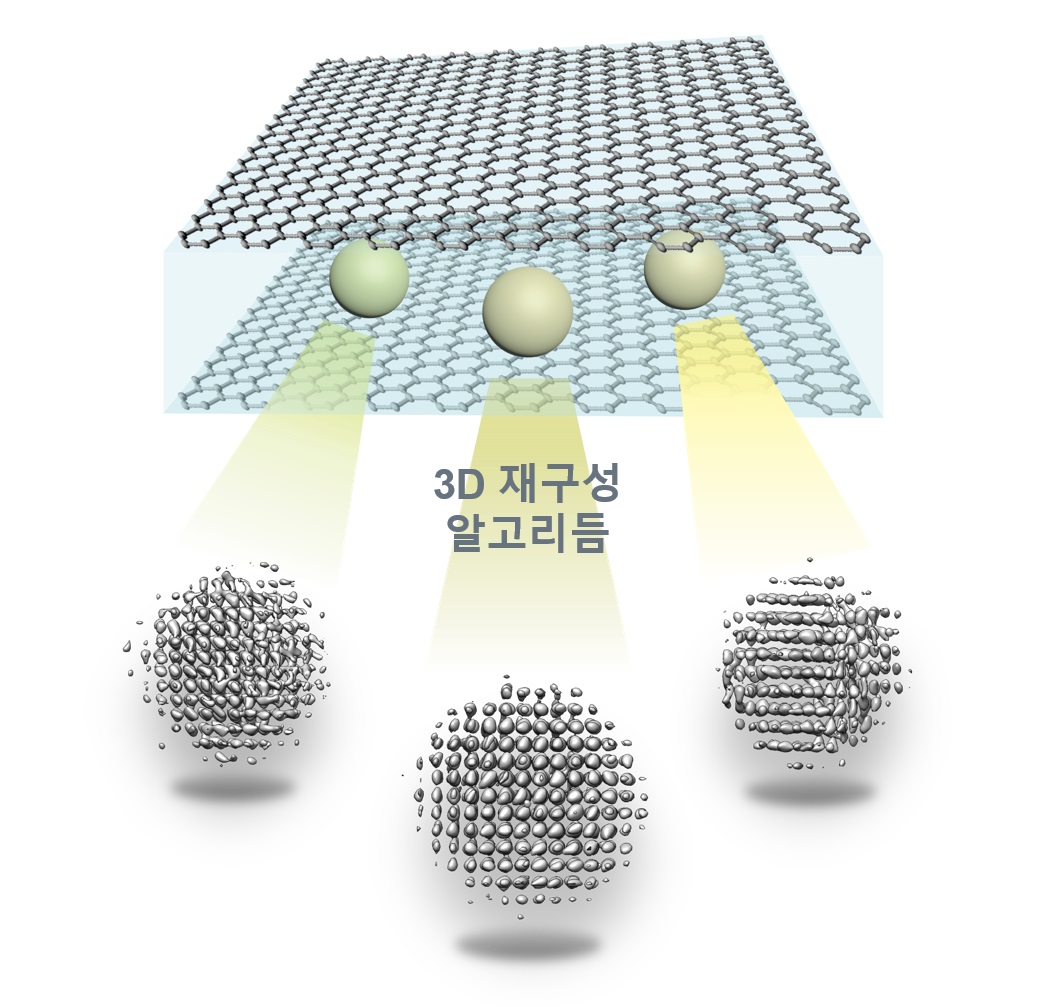

연구진은 나노입자가 녹아있는 극미량의 용액을 담을 수 있는 특수용기인 액체 셀(Liquid Cell)을 자체 개발한 뒤, 액상 투과전자 현미경을 이용해 나노입자를 관찰했다.
액상 투과전자현미경은 용액 내에서 회전하는 나노입자를 관찰하며 초당 400장의 이미지를 촬영한다. 이후 연구진은 개별 나노입자의 위치를 추적하며, 촬영된 수천 장의 이미지를 3차원으로 재구성하는 알고리즘으로 처리하여 정밀한 입체구조를 얻었다.
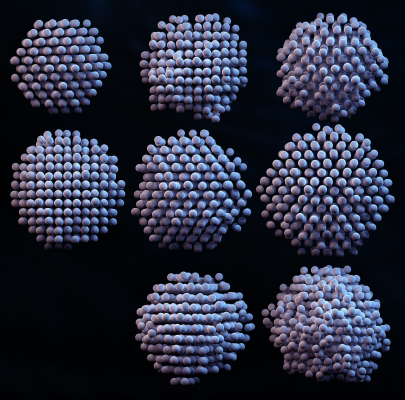
이를 통해 용액상에서 합성된 백금(Pt) 나노입자의 3차원 원자 배열을 관찰했다. 동일한 조건에서 만들어진 나노입자라 하더라도 원자 수준에서는 배열 등 구조가 제각각 다름을 확인했다.
이번 연구로 나노소재의 물리‧화학적 특성을 결정하는 표면 구조를 직접 관찰하고, 표면 구조에 영향을 미치는 요인을 분석할 수 있게 되었다. 촉매의 성능 개선, 디스플레이의 색 순도 향상 등 다양한 응용 분야에 파급 효과가 있을 것으로 전망된다.
박정원 연구위원은 “AI로 물질의 성질을 예측하고 합성하는 것이 미래 소재 개발의 중요한 방법론”이라며 “촉매, 디스플레이, 신약 개발 등 광범위한 과학기술 분야에서 나노 재료의 설계 및 합성에 중요한 단서를 제시한 것”이라고 연구의 의의를 설명했다.
이번 연구는 IBS와 삼성미래기술육성재단의 지원을 받아 수행되었으며, 학술지 사이언스(Science, IF 41.037) 4월 3일 자 표지논문으로 게재되었다.
Comments
Related news
.jpg)
Pressure display developed to show object surface information
A research team from ETRI and Seoul National University has developed an ultra-high-sensitivity transparent pressure sensor with sensitivity up to 20 times greater than existing products using nano-composite materials. The researchers utilized nano materials as a new sensor material and applied them to a stacked structure of quantum dot light-emitting devices, enabling both enhanced sensitivity and real-time visualization of pressure distribution.
2020.02.13by 이수민 기자
Success in localizing hard mask materials for memory semiconductors
DCT Material and the Nano Convergence Technology Center announced successful technological independence in spin-coating hard mask materials for memory semiconductor devices with high aspect ratio structures, which have been dependent on imports. Hard masks are auxiliary materials for photomasks used to etch semiconductor fine circuits, and are process materials that enable effective pattern formation through etching processes. The newly developed material demonstrates superior planarization characteristics and price competitiveness compared to existing products, making it possible to replace imported hard mask materials for memory semiconductors that have been dependent on foreign sources such as Japan with domestic alternatives.
2020.02.13by 이수민 기자

Samsung Electronics Establishes Mass Production System for 1st Generation 10nm-Class EUV DRAM
Samsung Electronics has supplied one million units of its first-generation 10-nanometer-class DDR4 DRAM modules produced using EUV process technology to customers, presenting a new paradigm to overcome the limitations of semiconductor fine-process technology. The fourth-generation 10-nanometer-class DRAM manufactured using EUV has doubled productivity per 12-inch wafer compared to the first-generation 10-nanometer-class DRAM.
2020.03.25by 최인영 기자

Intel Unveils Next-Generation 'Core Ultra Series 3' and vPro Platform for Enterprise PCs
Intel has officially unveiled the "Intel Core Ultra Series 3" for next-generation enterprise PCs and the latest vPro platform, addressing a wide range of demands from enterprise notebooks to high-performance workstations.
2026.03.26by 배종인 기자

ROHM Launches ESD Protection Diode Compatible with High-Speed Interfaces of 10Gbps or Higher
Semiconductor specialist ROHM has developed the 'RESDxVx series' of ESD (electrostatic discharge) protection diodes capable of responding to next-generation high-speed data communication environments exceeding 10Gbps, simultaneously enhancing both signal quality maintenance required in high-speed interfaces and IC protection performance.
2026.03.26by 배종인 기자











