



Bluetooth LE Unlocks the Potential of IoT Devices
 Published2020.06.08 08:01
Bluetooth LE, low-power characteristics suitable for IoT devices
ST BlueNRG product family, supports the latest Bluetooth technology
We can now commonly encounter consumer devices that adopt Bluetooth technology.
It is a familiar sight to hear music and make calls using wireless earphones connected to a smartphone via Bluetooth. According to Counterpoint Research, the global wireless earphone market is expected to reach approximately $27 billion, or about 33 trillion won, in 2021.
Bluetooth is no longer applied only to consumer devices.
Bluetooth, which started as an industry standard for personal short-range wireless communication, has undergone continuous improvements and began to fully support IoT devices starting with version 4.0. With version 5.0, range and speed were further increased, making it suitable for use in various industrial and commercial environments with many connected devices and large spaces. The emergence of Bluetooth LE (Low Energy) and Bluetooth Mesh is also accelerating this.
Bluetooth SIG, which oversees the development of Bluetooth, predicted that more than 4.5 billion new devices, including both consumer and industrial applications, would be equipped with Bluetooth capabilities in 2020 alone. Last May, it was also announced that it would collaborate with DiiA in the field of IoT-based commercial lighting.
To remain competitive in the growing Bluetooth market, manufacturers must rapidly develop and launch new and reliable products.

I met with General Manager Cheon Jae-seung, who is in charge of RF products at ST Korea, and asked him how to quickly launch products incorporating the latest Bluetooth technology into the market.
Q. As the use of IoT devices increases, interest in Bluetooth LE, which operates on low power, is also growing. What are the characteristic differences between conventional Bluetooth and Bluetooth LE?
A. Version 3.0, currently referred to as Classic Bluetooth, is a technology designed for transmitting and receiving large amounts of data, such as multimedia. However, due to high power consumption, it is not suitable for simple IoT devices. To overcome these technical barriers, Bluetooth LE was added starting with version 4.0, released in 2010, for the purpose of simple data transmission between IoT devices using coin cell batteries.
Subsequently, due to the increasing demand in the market for audio or voice-related applications using Bluetooth LE or for IoT products requiring long-distance connectivity, Bluetooth version 5.0 was newly released with increased transmission speed, extended connection range and advertising improvements, and distance detection capabilities. ST is developing chipsets that can expand the application of these technologies to meet changing market demands.
Q. I noticed that some of ST's Bluetooth chipsets start with 'BlueNRG'. What role do these devices play in Bluetooth applications?
A. BlueNRG is ST’s Bluetooth LE portfolio that combines Bluetooth LE transceivers, system control, and MCU functions for executing application programs. Containing various low-cost Bluetooth LE solutions, BlueNRG consists of single-core BlueNRG SoC application processors, chipsets, and modules.
The ST BlueNRG portfolio consists of flexible products that allow developers to select the appropriate product for existing hardware architectures. Additionally, as these are pre-certified products, they eliminate the need for costly certification processes, thereby reducing time-to-market.
Q. Among the BlueNRG portfolio, the SoCs BlueNRG-345/355 stand out. What are the features of these two products, and in which fields are they designed to be suitable?
A. The 345/355 products are equipped with Bluetooth version 5.0. Compared to products equipped with the existing version 4.2, the connection range has increased fourfold and the data transfer rate has doubled, allowing for more efficient connections when advertising.
The BlueNRG-345/355 increased computing power by using Cortex® M0+ cores. Memory size can be based on 256KB flash, and 32KB, 64KB flash, etc., can be selectively used depending on the application complexity.
In addition, it offers a sensitivity of -97dBm and an output power of +8dBm, and its power consumption is less than half that of the 4.2 product based on peak current. With an operating temperature range guaranteed up to 105 degrees, it can be applied to various industrial applications, and it supports various package sizes such as WLCSP and QFN.
Q. IoT devices, especially industrial equipment, are used for a long period once adopted. To ensure continuous Bluetooth functionality in these devices, robust modules are required. What Bluetooth module products does BlueNRG offer?
A. BlueNRG-M2SA/M2SP are modules compatible with Bluetooth 5.0 and feature built-in BlueNRG-2. The M2SA uses a chip antenna, while the M2SP uses a pattern antenna. By using these two modules, you can easily implement applications without specialized knowledge of Bluetooth design and RF tuning.
Even for businesses requiring small-batch Bluetooth product production, efficient and easy product development is possible with minimal Bluetooth development personnel. Since ST provides a 10-year production warranty for both modules, they are also suitable for organizations with long-term business plans.
Q. Recently, Bluetooth Mesh technology has been emerging as a technology optimized for building large-scale device networks by enabling many-to-many communication. Please explain what Bluetooth Mesh is and discuss ST's related products and policies.
A. A Bluetooth mesh network is a concept that stands in contrast to a star network. A star network is a network topology where a central device acting as a gateway connects peripheral devices in a star structure. In contrast, a Bluetooth mesh network uses multiple nodes to construct the most efficient communication path to the client, thereby transmitting Bluetooth signals.
ST currently provides an environment where the ST Mesh v1.0 software package can be installed and tested on evaluation boards for various products, such as BlueNRG-1, BlueNRG-2, and BlueNRG-M2SA. We plan to complete Mesh Profile 1.1 certification by the end of this year.
Ideal for building automation, sensor networks, commercial lighting solutions, asset tracking, and other IoT solutions where hundreds or thousands of devices need to communicate with each other, Bluetooth Mesh is compatible with Bluetooth 4.0 and later versions, as well as Bluetooth LE. All nodes in a Bluetooth Mesh network are distributed and can communicate directly with one another. Furthermore, the absence of centralized hubs and routing nodes eliminates a single point of failure.
Q. What support measures does ST provide to developers who wish to create Bluetooth applications using BlueNRG, etc.?
A. ST provides the intuitively usable BlueNRG SDK for free. The SDK includes various example codes and project files, enabling developers to easily create products tailored to their specific needs. If prompt in-person technical support is required, assistance is available from ST’s hardware and software engineers in Korea.
Q. Please tell us about ST's future plans regarding Bluetooth LE and Bluetooth Mesh.
A. We plan to support various technologies that can be implemented with Bluetooth LE, such as direction finding and audio profiles. Currently, ST equips related products with Cortex M0 and M0+ cores, but we plan to equip them with M3 and M4 as well. We also plan to support memory capacities larger than 256KB.
ST plans to meet diverse customer demands by continuously releasing Bluetooth products that support various cores, memories, and packages. Furthermore, as a member of the Bluetooth SIG, we will actively participate in the technological development of mesh networks to provide customers with the latest Bluetooth technologies.
Comments
Related news

Apple and Google Collaborate on 'Contact Tracking' to Stop COVID-19
Public health experts recognize contact tracing as a tool that can help contain the spread of COVID-19, given that the virus can be transmitted through close contact with infected individuals. In response, Google and Apple have decided to jointly support government and health authorities in preventing virus transmission by placing user privacy and security at the center of their development efforts and utilizing Bluetooth technology.
2020.04.13by 이수민 기자
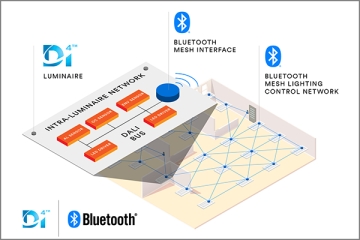
Development of a lighting system combining Bluetooth and DALI-2 becomes possible.
The Bluetooth SIG, which oversees the development of Bluetooth, an international standard for short-range wireless communication, has resolved to collaborate with the Digital Illumination Interface Alliance (DiiA) to expand the commercial lighting market. Through this integration, partners of both organizations are expected to be able to implement various IoT functions by integrating the two IoT standards into their commercial lighting products.
2020.05.28by 이수민 기자
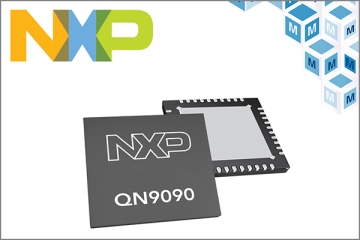
Mouser Supplies NXP NFC NTAG-Supported Bluetooth LE SoC
Mouser Electronics announced that it supplies NXP Semiconductor's QN9090 and QN9030 SoCs. The two intelligent connectivity solutions support Bluetooth 5 LE connectivity and optional NFC NTAG functionality. The QN9090 and QN9030 are equipped with an Arm Cortex-M4 processor running at up to 48MHz. With up to 640KB of flash memory and 152KB of SRAM integrated on the board, they provide storage space and flexibility for complex applications and secure OTA updates.
2020.05.28by 강정규 기자
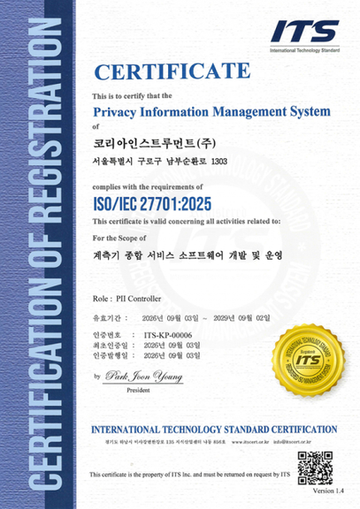
Korea Instrument, KOLAS Accredited Calibration Agency First to Simultaneously Acquire ISO/IEC 27,001·27,701
Korea Instrument has become the first among KOLAS accredited calibration agencies to simultaneously acquire ISO/IEC 27,001 and ISO/IEC 27,701 certifications. Through its proprietary platforms CWIZ Enterprise and CWIZ Partners, the company has embedded information security and personal data protection requirements across all business processes including customer information, equipment data, and calibration reports, with plans to continuously advance its management system through regular audits and security inspections.
2026.10.12by 배종인 기자

TeamViewer One, IT Incident Automation Workflow and Resolution Center Enhanced
TeamViewer has added IT incident automation capabilities and an advanced Resolution Center to its integrated digital workplace management platform 'TeamViewer ONE'. Recurrent service disruptions, configuration errors, and capacity shortages are automatically handled according to preset policies, and device status verification through script deployment can be managed in a unified interface, significantly reducing repetitive tasks for IT teams.
2026.10.12by 배종인 기자











