


5G service continues to face persistent complaints, necessitating absolute quality assurance.
 Published2020.06.02 18:32
Domestic 5G services are comprehensively ranked among the world's best.
We need to secure a solid revenue model and quality like LTE.
The number of domestic 5G subscribers surpassed 6 million just one year after commercialization. According to data released by the Ministry of Science and ICT on June 1st, the number of 5G subscribers as of April was exactly 6,339,917.
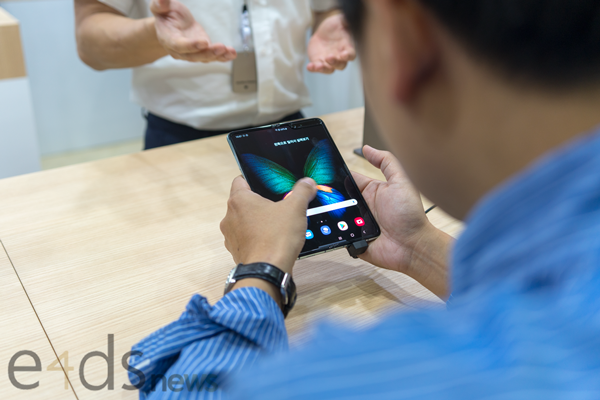
Complaints about 5G services are also on the rise. According to industry sources, on May 28th, an office worker surnamed Lim, who signed up for a KT 5G plan, received 1.3 million won in compensation from a KT agency through the Korea Communications Commission's Telecommunications Dispute Mediation Committee due to poor call quality.
KT drew the line, saying that it was personally responsible for the agency employee's failure to properly inform Mr. Lim about 5G coverage, and that there was no problem with its own 5G service. However, the fact that subscribers need to be aware of 5G coverage proves that 5G coverage is not yet complete.
However, domestic 5G services and coverage are not lagging behind global standards.
It is the world's only telecommunications company. [Source: Open Signal]
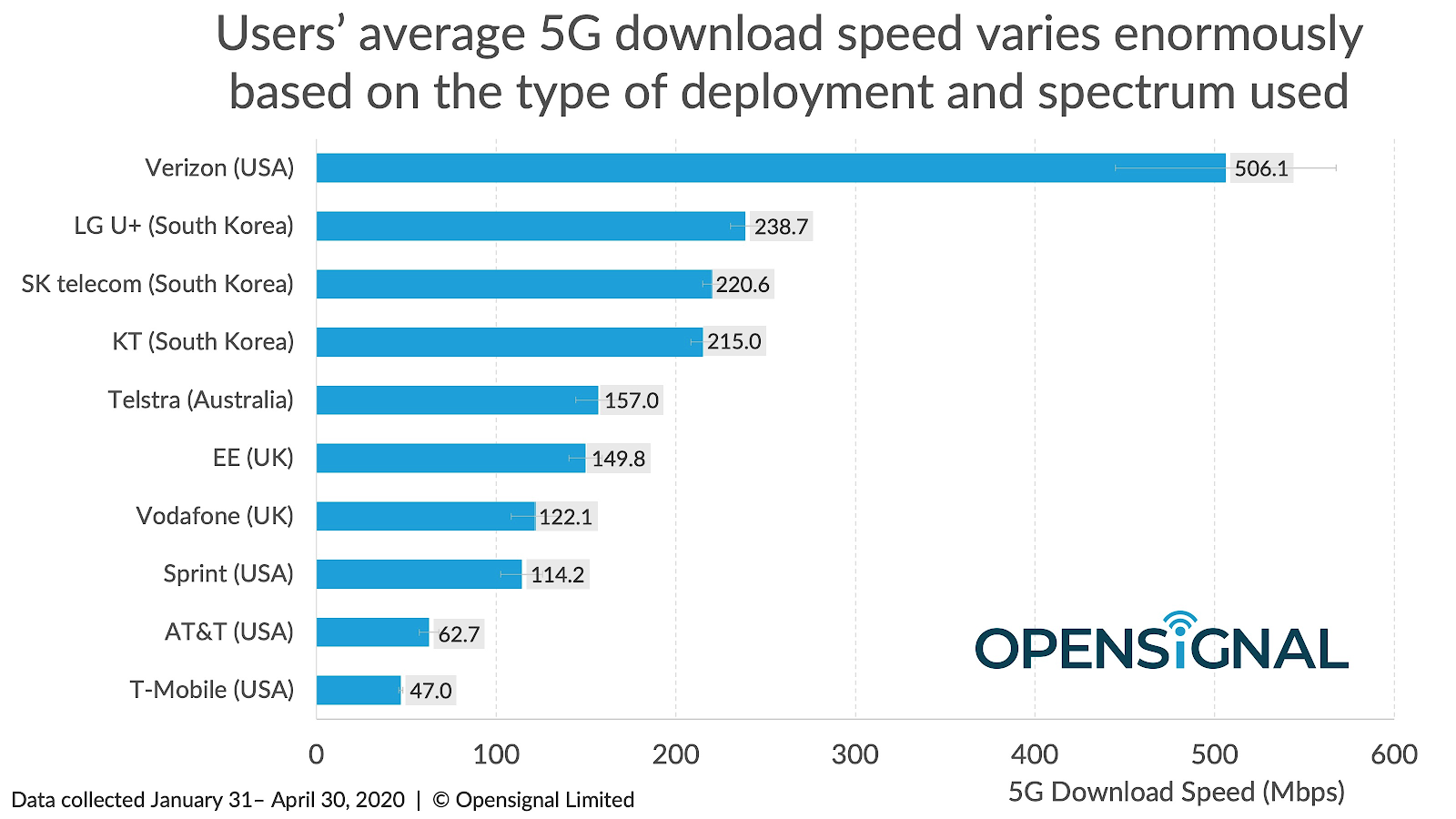
On May 20th, the UK-based OpenSignal released measurements showing that the 5G service speeds of Korea's three major mobile carriers were less than half that of Verizon in the US. From January to April of this year, OpenSignal measured the average 5G download speeds of 10 carriers in four countries with commercial 5G services: South Korea, the US, the UK, and Australia.
Verizon ranked first with 506.1 Mbps (megabits per second), followed by LG Uplus (238.7 Mbps), SK Telecom (220.6 Mbps), and KT (215.0 Mbps). Verizon uses the 28 GHz band, which is suitable for transmitting and receiving large amounts of data, while the three major domestic mobile carriers use the less-capable 3.5 GHz band.
Looking solely at download speeds, the three major domestic carriers are crushed. However, the 5G connection time is a different story. Verizon, ranked first in speed, had the lowest connection time at 0.5%, while T-Mobile, ranked tenth in speed, had the highest connection time at 19.8%. The three major domestic carriers also ranked second, third, and fourth in connection time. This is the result of the fact that 28GHz band 5G is at a disadvantage compared to 3.5GHz band 5G in terms of securing coverage.
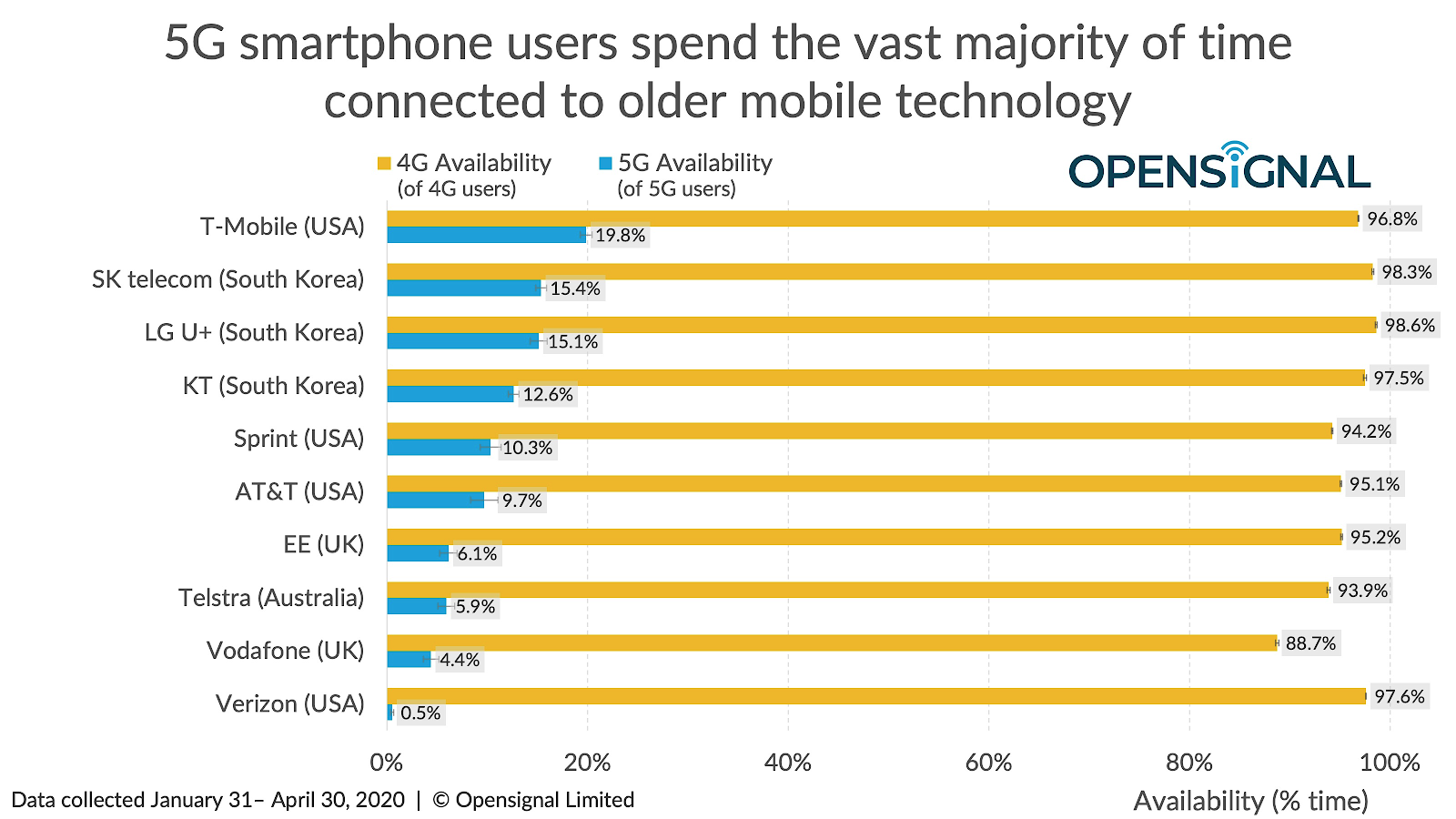
Availability recorded [Source = Open Signal]
When this was reported domestically, several media outlets raised concerns about reliability, pointing out that OpenSignal's 5G service speed and availability measurements were primarily conducted in the United States and not in Korea.
Given these results despite adverse conditions, the 5G service quality of Korea's three major mobile carriers can be considered among the highest in the world. However, this is merely a relative advantage, and unless they can improve 5G service quality to an absolute level, consumer dissatisfaction will persist.
◇ Full-scale introduction of 5G in the 28GHz band is still a long way off.
According to industry sources, the Ministry of Science and ICT is reportedly considering preemptively introducing 28GHz 5G, a full-fledged 5G band, to the public sector. This is because the three major mobile carriers and network equipment manufacturers are hesitant to commercialize the 28GHz band, citing a lack of viable revenue models.
Last March, the Ministry of Science and ICT requested the three major mobile carriers and SK Broadband to expedite their investment to preemptively block the economic downturn caused by COVID-19. In response, the four companies said they would increase their investment in the first half of the year from a tentative 2.7 trillion won to 4 trillion won.
However, contrary to the government's wishes, the situation for the three major mobile carriers is different. During its first-quarter earnings conference call, SK Telecom stated that commercialization within the year would be difficult due to the lack of a robust 5G service ecosystem in the 28 GHz band. Even if base station construction begins this year, commercialization is uncertain.
◇ 5G: The ecosystem will grow only when we instill the perception that it is a necessary service.
The 3.5GHz band 5G service ecosystem is also unable to escape this problem. The number of 5G subscribers exceeding 6 million is not due to a clear need for 5G, but rather to the fact that some of the latest smartphones are released exclusively as 5G models, and the three major mobile carriers have implemented strong subsidy policies to secure as many 5G subscribers as possible. The number of 5G subscribers for budget phones without subsidies barely exceeds 1,000.
Furthermore, the fact that 5G usage costs are higher than LTE, especially when consumers aren't convinced that 5G is superior to LTE, is also a hindrance to ecosystem expansion. The cheapest 5G plans from the three major mobile carriers are in the mid-50,000 won range, and even the cheapest plans from budget carriers are in the high 30,000 won range.
Launched in July 2011, LTE service surpassed 10 million subscribers within a year of commercialization, fueled by rapidly increasing demand for social media and OTT services. As of April 2020, the number of LTE service subscribers reached 55 million, exceeding the country's population (51.84 million).
For 5G services to escape the current discontent and uncertainty, we need to look back at the LTE example. It will become a necessary service and provide quality that satisfies consumers. Fulfilling these two propositions will be the driving force behind the growth of the 5G ecosystem. Relative advantage is merely a house of cards.
Comments 1
1 Comments:
Related news
Development and demonstration of 5G-based construction site safety solutions will be carried out.
LG Uplus and GS Engineering & Construction have signed a memorandum of understanding regarding verification and commercialization of wireless communication-based smart construction technology. The two companies will collaborate on establishing AI video analysis-based safety management systems, building construction site-specialized wireless communication infrastructure, and verification and commercialization of construction safety solutions.
2020.05.28by 이수민 기자
SKT Calls for Promising Companies for 5G/MEC-based Solutions and Services
SK Telecom announced that it will publicly recruit promising global companies with potential in developing 5G MEC services and infrastructure technologies, and non-face-to-face solutions through TEAC from June 1st to 30th. In this recruitment initiative, SK Telecom will identify promising companies with strengths in 5G, MEC, and non-face-to-face solutions, and provide support including commercial network testing, global business development, and investment facilitation.
2020.06.01by 이수민 기자
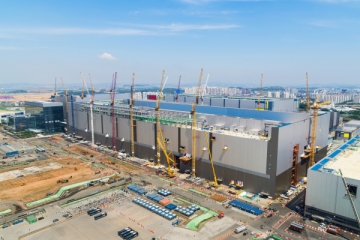
Samsung Electronics, 'Memory Super-gap', Expands NAND Flash Production Lines
Samsung Electronics announced that it is proceeding with cleanroom construction for the Pyeongtaek Line 2 NAND flash facility starting in May, with plans to begin mass production in the second half of 2021. This investment is aimed at responding to the mid-to-long-term expansion of NAND demand driven by the advent of the Fourth Industrial Revolution—including AI and IoT—and the proliferation of 5G. In particular, the recent spread of non-face-to-face culture is expected to accelerate these trends further.
2020.06.01by 이수민 기자
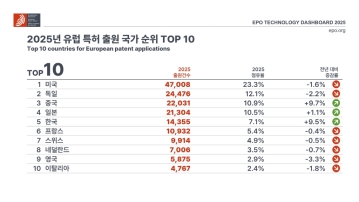
European Patent Applications Surpass 200,000 for the First Time… South Korea Maintains 5th Place, Led by Batteries and Telecommunications
According to the European Patent Office (EPO)'s 'Technology Dashboard 2025', European patent applications last year reached 201,974, surpassing 200,000 for the first time. Korean companies and inventors filed 14,355 applications, representing a 9.5% increase from the previous year and maintaining 5th place by country. Battery, digital communication, and semiconductor technologies led the growth, with Samsung ranking as the top EPO applicant for the second consecutive year and LG reaching 3rd place. The presence of major domestic cities such as Seoul, Suwon, and Yongin was also confirmed. It was also revealed that Korea's European patent strategy is expanding beyond individual technologies to span the entire industry.
2026.03.24by 명세환 기자

SK Telecom First Applies AI-Based Network Operations at Gwanghwamun K-Pop Concert
SK Telecom announced that it applied an AI-based network operation system for the first time at a large-scale K-pop concert held in the Gwanghwamun area of Seoul on March 21st, managing communication quality throughout the event. Mobile data usage during the three hours before and after the concert reached 12.15TB, approximately doubling compared to the same time slot the previous weekend. SK Telecom monitored traffic using the AI system 'A-One' in five-minute and 50-meter units to respond to potential overload situations, while also operating temporary communication facilities and on-site personnel in parallel. This case is interpreted as confirmation of the practical applicability of AI-based autonomous network operation in an environment where demand from dense events and foreign users increases simultaneously.
2026.03.23by 명세환 기자












LTE가 확실한 수익 모델이 있었나요? 기존과 동일한 수익 모델이었는데, 통신 속도가 3G와는 현격한 차이를 보였기 때문이죠. 하지만, 5G는 그렇지 않습니다.