



Intel begins pre-orders for its D445 IMU-equipped depth camera.
 Published2020.06.18 15:41
Suitable for collision avoidance, 3D scanning, volume measurement, etc.
On the 18th, Intel announced the 'Intel® RealSense™ Depth Camera D455'.
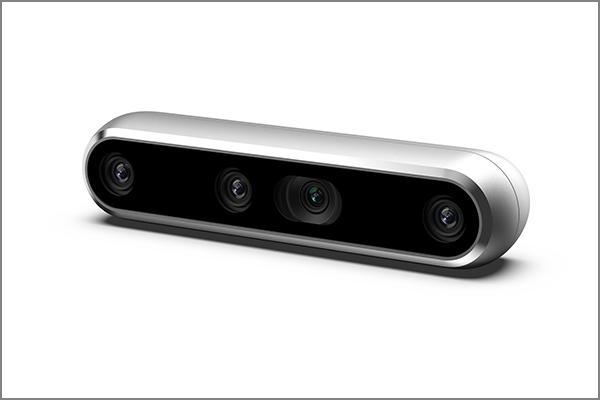
The D455 boasts a maximum shooting distance of 20m, twice that of its predecessor, the D435i/D435. The distance between the two depth sensors is 95mm, resulting in a depth error of less than 2% at a distance of 4m.
Additionally, the depth sensor and RGB sensor with global shutter are positioned at the same height and have the same 86-degree field of view, allowing for a better understanding of the correlation between depth and RGB colors than previous generations. The inertial measurement unit (IMU) is also installed, enabling fine depth recognition even when the camera moves.
Ideal for collision avoidance, 3D scanning, digital signage, and volumetric applications, the D455 is available for pre-order now and will begin shipping on August 10.

Comments
Related news
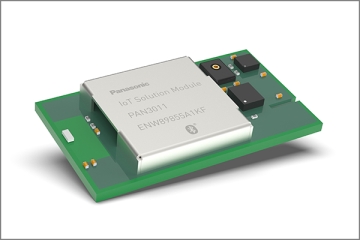
ST-Panasonic-Arrow Supplies Multi-Sensor Modules Suitable for IoT
Arrow supplies an edge intelligence multisensor module developed by Panasonic based on ST's BlueTile multisensor development kit. This ultra-compact onboard type sensor combines acceleration, gyroscope, ToF, pressure, and humidity sensors including ST's BlueNRG BLE 5.0 SoC, enabling utilization across various IoT applications.
2020.06.09by 이수민 기자
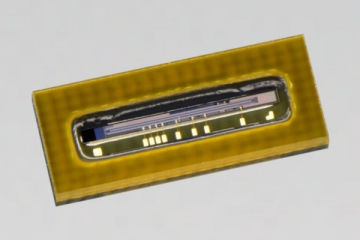
Toshiba Develops Two Types of Industrial CCD Linear Image Sensors
Toshiba has launched new products TCD1105GFG and TCD1106GFG, which are compact 1500-pixel monochrome CCD linear image sensors for industrial equipment applications. Both products support data rates up to 25MHz. With an integrated timing generator circuit and CCD driver, high-speed operation is possible without external drive circuits. An embedded sample-and-hold circuit extends the video output signal period.
2020.06.12by 강정규 기자
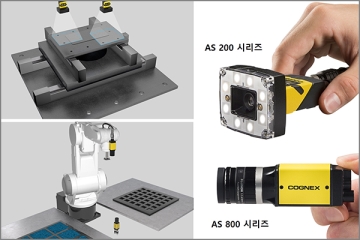
Cognex Unveils AlignSight, an All-in-One Industrial Vision Sensor
Cognex has announced the launch of the AlignSight Alignment Sensor Series, an integrated solution with the necessary features for vision-guided motion. AlignSight is a vision sensor solution for vision-guided robot and stage alignment applications, designed to enable easy and rapid setup of robot pick-and-place, machine tending, and stage motion in the electronics hardware industry.
2020.06.17by 이수민 기자
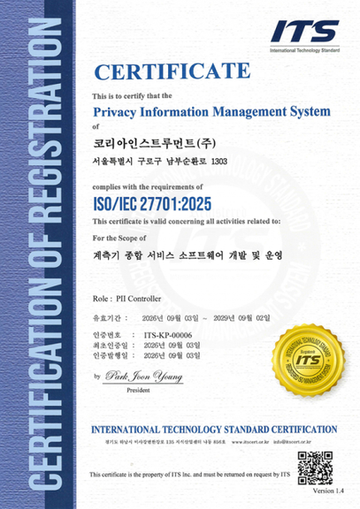
Korea Instrument, KOLAS Accredited Calibration Agency First to Simultaneously Acquire ISO/IEC 27,001·27,701
Korea Instrument has become the first among KOLAS accredited calibration agencies to simultaneously acquire ISO/IEC 27,001 and ISO/IEC 27,701 certifications. Through its proprietary platforms CWIZ Enterprise and CWIZ Partners, the company has embedded information security and personal data protection requirements across all business processes including customer information, equipment data, and calibration reports, with plans to continuously advance its management system through regular audits and security inspections.
2026.10.12by 배종인 기자
TeamViewer One, IT Incident Automation Workflow and Resolution Center Enhanced
TeamViewer has added IT incident automation capabilities and an advanced Resolution Center to its integrated digital workplace management platform 'TeamViewer ONE'. Recurrent service disruptions, configuration errors, and capacity shortages are automatically handled according to preset policies, and device status verification through script deployment can be managed in a unified interface, significantly reducing repetitive tasks for IT teams.
2026.10.12by 배종인 기자











