



Ministry of Science and ICT Announces Strategy to Revitalize Domestic Cloud Industry: "Prioritize Adoption of Domestic Cloud Services in Public Sector"
 Published2020.06.25 09:30
Up to 20 million KRW in support for SMEs adopting cloud services
Building a collaborative ecosystem centered on cloud infrastructure companies
The public sector is adopting domestic cloud services to foster the domestic cloud industry.
The Ministry of Science and ICT announced on the 24th that it deliberated and finalized the 'Cloud Industry Development Strategy to Prepare for the Data Economy and AI Era' at the 16th meeting of the 4th Industrial Revolution Committee.
With the collection, accumulation, and utilization of data designed on a cloud basis for 'data and AI activation,' one of the core tasks of the Digital New Deal, the cloud is garnering attention as a key foundation for data utilization in the AI era and for economic revitalization in the post-COVID-19 era.
The government has set the "national cloud transformation" and "strengthening the cloud industry ecosystem" as core goals and decided to formulate and implement a development strategy to revitalize the domestic cloud industry.
There are four main priority tasks of the development strategy.
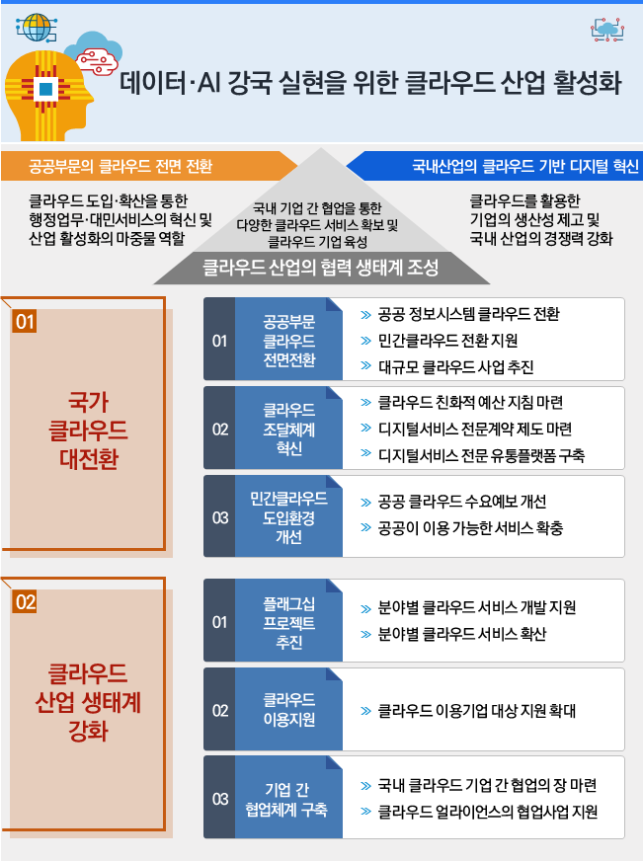
The first is the full transition to the cloud in the public sector.
The organization shall transition to the cloud in stages, starting with newly introduced systems or those whose usage period has expired, while ensuring that the latest private cloud technologies can be utilizedWe will pursue star consulting and pilot projects in parallel.
We plan to support cloud companies in participating in government-led business support projects involving big data analysis or the use of AI.
The second is the innovation of the private sector's cloud procurement system for the public sector.
In addition to existing cloud services, a concept of digital services is introduced that encompasses all services where new technologies such as AI, IoT, and blockchain are converged with the cloud.
For digital services, a 'Specialized Digital Service Contracting System' will be established to enable users to quickly search for and utilize the services they need, rather than the time-consuming public notice-bidding-contracting method.
Direct contracting without monetary limits is permitted for digital services selected by the 'Digital Service Expert Committee,' which is composed of relevant ministries responsible for digital service affairs and private sector experts.
The third is the expansion of cloud support for small and medium-sized enterprises.
The existing 'Small and Medium Enterprise Cloud Usage Fee Support Program,' which provided up to 3 million won per company, has been expanded into a 'voucher program' providing up to 20 million won per company to comprehensively support consulting, transition support, and usage fees.
The fourth is the promotion of the cloud flagship business.
Currently, global cloud companies are forming a collaborative ecosystem that provides thousands of types of services by collaborating with various cloud service providers.
Domestically as well, support is provided to enable a consortium of companies, centered around cloud infrastructure firms and composed of multiple cloud service providers, to collaborate in developing industry-specific services.
We will prioritize the selection of five sectors within this year, provide 5 billion won in support for each sector, and gradually expand the program. In addition, the goal is to form a cloud industry cooperation ecosystem centered on a group of leading enterprises.
In addition to this, the development strategy includes various measures to revitalize the cloud industry, such as improving the environment for adopting private cloud in the public sector and establishing a collaboration system among companies.
An official from the Ministry of Science and ICT expects that the implementation of this strategy will increase the number of companies with cloud sales of over 50 billion won from 5 in 2019 to 10 or more in 2023, and expand the cloud adoption rate among businesses with 10 or more employees from 22.7% to over 40%.
Comments
Related news
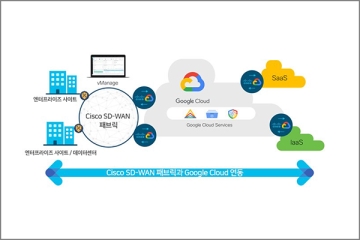
Cisco and Google to Develop App-Centric Multicloud Fabric
Cisco Systems and Google Cloud are jointly developing the industry's first application-centric multi-cloud networking fabric, "Cisco SD-WAN Cloud Hub for Google Cloud." The two companies plan to provide agility, scalability, and flexibility to enterprises adopting hybrid and multi-cloud strategies through the Cisco SD-WAN Cloud Hub.
2020.05.12by 이수민 기자

6 Security Rules to Protect Corporate Assets in the Cloud Era
As the prolonged COVID-19 pandemic drives a sharp increase in cloud adoption and utilization among enterprises, IBM X-Force Security Research has released a cloud security report introducing various forms of cloud security threats. The report cautions that when enterprises adopt cloud services without adequate prior security preparation, responsibility for cloud security can become unclear and risk response becomes difficult to manage.
2020.06.15by 이수민 기자
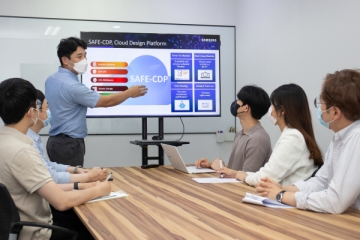
Samsung Electronics Supports Korean Fabless Companies with SAFE-CDP Chip Design Platform
Samsung Electronics announced that it will support domestic small and medium-sized fabless companies with SAFE-CDP, a platform that enables semiconductor chip design in the cloud. SAFE-CDP is a service that provides a virtual design environment allowing fabless customers to immediately begin chip design with just an idea.
2020.06.19by 이수민 기자
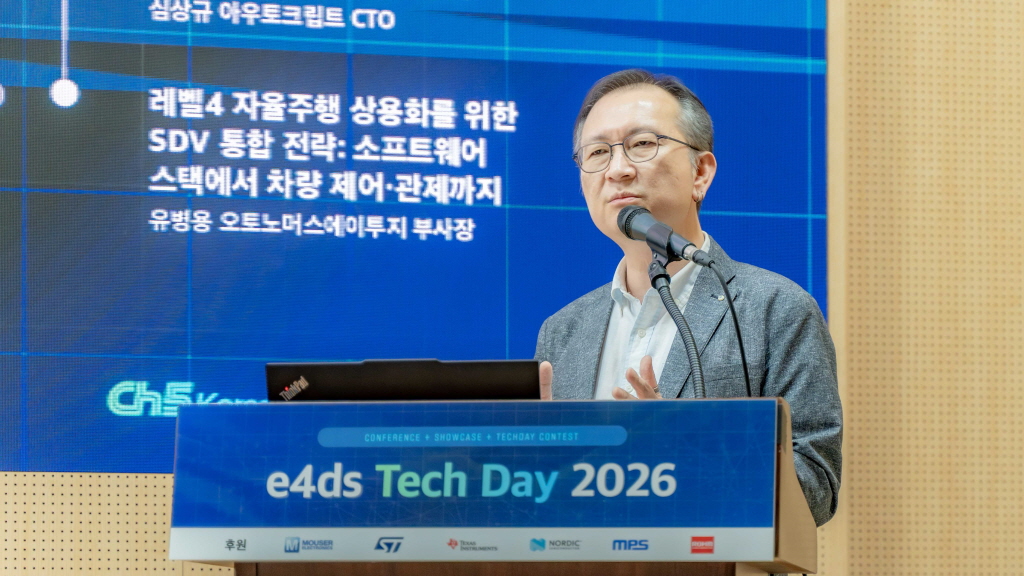
[e4ds Tech Day 2026 ⑨] Sim Sang-gyu, Autocrypt CTO: "In the Physical AI Era, Automotive Security Must Extend Beyond the Vehicle"
At e4ds Tech Day 2026, Sim Sang-gyu, CTO of Autocrypt, explained automotive cybersecurity strategies in the era of Physical AI and SDV (Software-Defined Vehicle). Automobiles are evolving as part of an ecosystem connected to AI, cloud, chargers, IoT, and robots, and he emphasized that the scope of security must expand beyond the vehicle interior to the entire connected environment. In particular, AI model tampering, adversarial attacks, OTA updates, and EV charger hacking were identified as major threats. He explained that response measures require zero trust, AI model integrity protection, intrusion detection, Security by Design and Default, and full lifecycle security management, and that proactive security system establishment beyond regulatory compliance is critical for securing future mobility competitiveness.
2026.10.12by 배종인 기자

NVIDIA to Invest $1 Billion in U.S. Science Over Next Five Years
NVIDIA has announced plans to invest $1 billion over the next five years to strengthen U.S. scientific and technological competitiveness. The company will enhance cutting-edge artificial intelligence research and development capabilities in key areas including quantum computing, healthcare, and energy security, while expanding support for higher education research institutions and cloud service providers. NVIDIA is participating as a major industry partner in the White House Office of Science and Technology Policy's Genesis Mission, and is promoting supercomputer construction in collaboration with national laboratories including Argonne and Los Alamos.
2026.10.12by 배종인 기자











