



Demonstration of a 5G AI quarantine robot capable of detecting coronaviruses, including those with nasal congestion and those with nasal congestion, has begun.
 Published2020.09.04 10:05
Analysis can be completed in 0.3 seconds for up to 10 people.
The trial will begin this month at Seoul H+ Yangji Hospital.
Quarantine robots are expected to be released to prevent incorrect mask-wearing that fuels the spread of COVID-19 and to increase quarantine management efficiency, such as 'chin mask' that wears a mask on the chin and 'lip mask' that only covers the mouth.
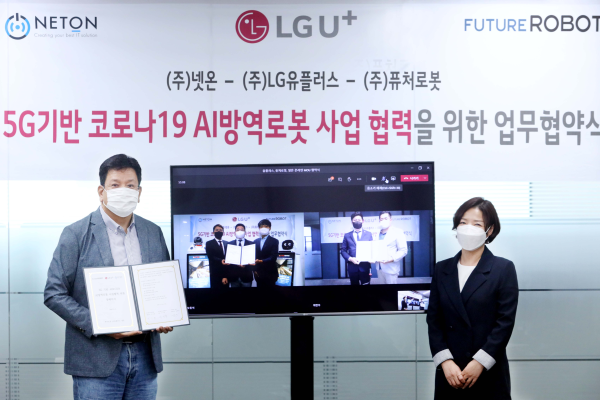
AI quarantine robot business cooperation [Photo = LG Uplus]
LG Uplus announced on the 3rd that it signed a memorandum of understanding (MOU) with autonomous driving robot developer Future Robot and facial recognition solution provider NetOn for a 5G-based AI quarantine robot business.
The 5G quarantine robot being developed by the three companies moves autonomously inside buildings, and uses facial recognition and temperature measurement to check whether people are wearing masks and their body temperature.
Multi-face recognition technology can recognize up to 10 faces simultaneously, analyzing results in less than 0.3 seconds. Deep learning-based analysis can also identify chin and lip marks.
A thermal imaging camera is also installed. It automatically measures temperature with a margin of error of ±0.3°C on average and ±0.5°C at maximum, enabling the remote identification of high-risk individuals with temperatures above 37.5°C.
The control center can remotely monitor the robot's video and control it in real time using 5G-based communication. Additionally, the control system can be used to check the history of inspections by 5G quarantine robots, such as those for not wearing masks.
Under the agreement, the three companies will conduct a demonstration to verify the technology of their 5G quarantine robots. Starting this month with a demonstration at Seoul H+ Yangji Hospital, they plan to expand the scope of application to include public institutions.
Meanwhile, LG U+ implemented an intelligent visitor management system based on video analysis at H+ Yangji Hospital in Seoul in August. This system automatically determines whether a person entering the hospital is permitted to enter.

Comments
Related news

The Role and Limitations of AI Technology in the COVID-19 Pandemic
The spread of COVID-19 shows no signs of abating. Consequently, interest is increasing in systems that enable the prevention, containment, and eradication of infectious disease transmission, as well as the advanced technologies to support such systems. AI technology has recently established itself as a foundational technology across all industrial sectors, and it holds potential for effective utilization in infectious disease environments.
2020.08.26by 이수민 기자
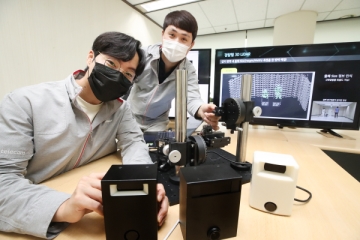
KT Develops Short-Range 3D LiDAR Prototype with High Price Competitiveness
KT announced the development of an indoor short-range 3D LiDAR. The manufacturing cost is approximately one-tenth that of existing products, and a single laser is controlled via software to generate up to 24 detection lines for identifying approaching hazards. Additionally, the detected space can be rendered in three dimensions, and AI analysis functionality distinguishes whether an approaching obstacle is a person or an object.
2020.08.31by 이수민 기자
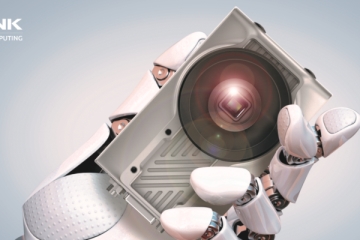
ADLINK AI Smart Camera Accelerating Machine Vision Adoption
Adlink has launched the NEON-2000-JT2 AI smart camera series to accelerate the adoption of machine vision in manufacturing environments. Powered by the NVIDIA Jetson TX2 AI module, this smart camera series features an all-in-one design, compact installation footprint, and pre-installed vision software to reduce the complexity of AI machine vision development and integration.
2020.07.21by 이수민 기자
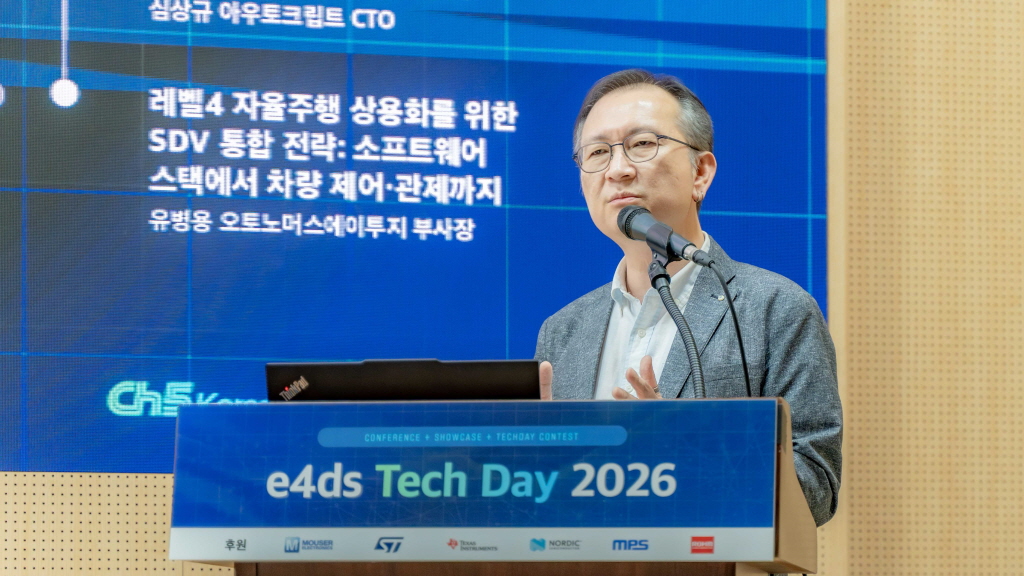
[e4ds Tech Day 2026 ⑨] Sim Sang-gyu, Autocrypt CTO: "In the Physical AI Era, Automotive Security Must Extend Beyond the Vehicle"
At e4ds Tech Day 2026, Sim Sang-gyu, CTO of Autocrypt, explained automotive cybersecurity strategies in the era of Physical AI and SDV (Software-Defined Vehicle). Automobiles are evolving as part of an ecosystem connected to AI, cloud, chargers, IoT, and robots, and he emphasized that the scope of security must expand beyond the vehicle interior to the entire connected environment. In particular, AI model tampering, adversarial attacks, OTA updates, and EV charger hacking were identified as major threats. He explained that response measures require zero trust, AI model integrity protection, intrusion detection, Security by Design and Default, and full lifecycle security management, and that proactive security system establishment beyond regulatory compliance is critical for securing future mobility competitiveness.
2026.10.12by 배종인 기자
NVIDIA to Invest $1 Billion in U.S. Science Over Next Five Years
NVIDIA has announced plans to invest $1 billion over the next five years to strengthen U.S. scientific and technological competitiveness. The company will enhance cutting-edge artificial intelligence research and development capabilities in key areas including quantum computing, healthcare, and energy security, while expanding support for higher education research institutions and cloud service providers. NVIDIA is participating as a major industry partner in the White House Office of Science and Technology Policy's Genesis Mission, and is promoting supercomputer construction in collaboration with national laboratories including Argonne and Los Alamos.
2026.10.12by 배종인 기자











