


Xilinx Announces FPGA Accelerators to Support 5G Virtualization
 Published2020.09.16 17:05
T1 Mobile Accelerator Card, O-DU and vBBU Acceleration
Offload CPU processing tasks and increase server throughput
Unlike previous generations of mobile communications where services were established simply by providing a network, 5G enables the ultra-high-speed, low-latency transmission and reception of large amounts of data, making it possible to develop and provide specialized services for specific fields or locations.
Accordingly, many mobile carriers launching commercial 5G services are expressing interest in adopting virtualization. Virtualization is a technology that implements specialized equipment functions through software on general-purpose equipment, rather than building dedicated equipment to provide specific services.
Previously, telecommunication companies had limitations in implementing their own mobile communication services because they had to use dedicated equipment developed and manufactured by telecommunication equipment manufacturers. The introduction of virtualization will resolve these vendor lock-in issues, making it easier for telecom companies to launch 5G B2B businesses.
On the 16th, Xilinx held an online press conference and unveiled the 'T1 Telco Accelerator Card' for the 'O-RAN Distributed Unit (O-DU)' and 'Virtual Baseband Unit (vBBU)' of 5G networks.
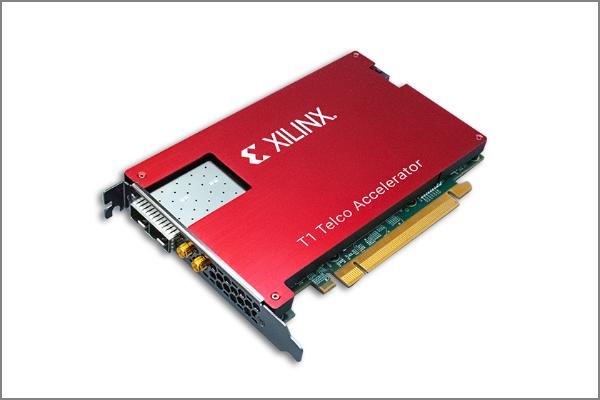
The T1 card, which features Xilinx's Zynq® UltraScale+™ RFSoC FPGA, which has already been proven in 5G equipment, performs both O-RAN fronthaul protocols and Layer 1 offload, and is a multi-functional PCIe single-slot card that can be easily plugged into x86 and non-x86 servers.
The T1 card enables virtualization by offloading line-rate and compute-intensive functions, including channel encoding/decoding, rate matching/dematching, and HARQ buffer management using hardened logic's LDPC and turbo codecs, freeing up processor cores to run other services.
Additionally, we provide turnkey solutions and pre-validated software from ecosystem partners, including O-RAN fronthaul and 5G NR layer 1 reference designs, to help operators, system integrators, and OEMs accelerate their market expansion. Helps shorten time to market and simplify 5G deployment.
Offloading coding functions for critical channels from the CPU to the T1 card can increase encoding throughput by up to 45x and decoding throughput by up to 23x compared to the same server without acceleration. Fewer CPU cores can be used, reducing system costs and overall power consumption.
Additionally, for O-RAN fronthaul termination, it can handle multiple 5G NR 4TRX sectors with 100MHz OBW with 50Gbps optical ports. Fronthaul and L1 bandwidths are scalable, and if more towers are desired, more cards can be added to the server.
“The T1 card’s advanced offload capabilities can reduce the number of CPU cores a system requires,” said Mike Wissolik, director of product planning and marketing for Xilinx’s Wired and Wireless Group, who hosted the virtual meeting. “With the T1 card, customers can implement O-DUs that can deliver high 5G performance and services while reducing overall system power consumption and cost.”
Meanwhile, Xilinx announced that it has joined the Open RAN Policy Coalition to support the development and deployment of O-RAN 5G technology. Member companies are working to ensure the adoption of O-RAN as a solution that ensures interoperability and security across multiple telecommunications equipment vendors.
Comments
Related news
Intel and VMware Partner to Accelerate 5G B2B with vRAN Software Development
Intel and VMware are collaborating on the development of an integrated software platform for virtualized radio access network (vRAN) to accelerate the adoption of virtualization in LTE and 5G networks. Through this collaboration, the two companies plan to simplify the implementation phase of feasible vRAN solutions and enable seamless integration.
2020.08.06by 강정규 기자
ETRI Sets Out to Develop 5G Edge Network and MEC Security Technologies
ETRI announced that it has developed technology capable of detecting and responding to potential security threats in 5G edge networks and multi-access edge computing. The research team plans to apply the developed technologies to smart factories and promote security demonstration of 5G MEC-based B2B convergence services as well as validation of technical effectiveness.
2020.08.20by 이수민 기자
Global Alliance Formed for Commercialization of 5G Network Virtualization
SKT, Samsung Electronics, HPE, and Intel have signed a business agreement for the commercialization of 5G network virtualization. Through this collaboration, 5G network virtualization technology, standard process establishment, and technology development utilizing virtualized networks will be comprehensively pursued, which is expected to make it easier for any global telecom operator to adopt virtualization processes in their 5G networks.
2020.09.10by 이수민 기자
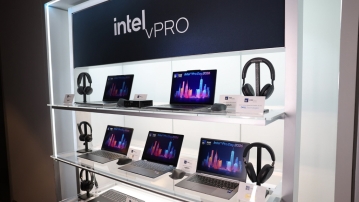
Intel Unveils Next-Generation 'Core Ultra Series 3' and vPro Platform for Enterprise PCs
Intel has officially unveiled the "Intel Core Ultra Series 3" for next-generation enterprise PCs and the latest vPro platform, addressing a wide range of demands from enterprise notebooks to high-performance workstations.
2026.03.26by 배종인 기자
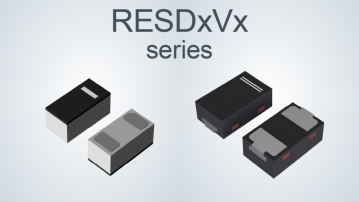
ROHM Launches ESD Protection Diode Compatible with High-Speed Interfaces of 10Gbps or Higher
Semiconductor specialist ROHM has developed the 'RESDxVx series' of ESD (electrostatic discharge) protection diodes capable of responding to next-generation high-speed data communication environments exceeding 10Gbps, simultaneously enhancing both signal quality maintenance required in high-speed interfaces and IC protection performance.
2026.03.26by 배종인 기자











