


The COVID-19 response has sparked the creation of new industries and the transformation of old ones.
 Published2020.10.06 17:05
Non-face-to-face communication is on the rise, but physical business is taking a hit.
The online economy will be revitalized, spurring the Fourth Industrial Revolution.
As of the 6th, the cumulative number of confirmed COVID-19 cases worldwide exceeded 26 million. The death toll surpassed 1 million, and the fatality rate reached 2.94%. In South Korea, the cumulative number of confirmed cases exceeded 24,239, the number of deaths exceeded 422, and the fatality rate exceeded 1.74%.
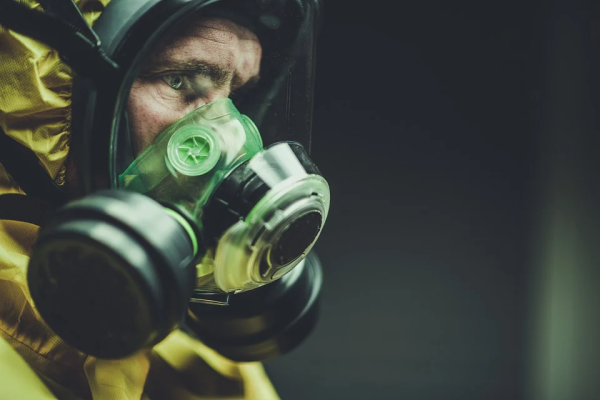
It will affect human life even after its end.
Currently, more than 200 COVID-19 vaccines are being developed at an unprecedented pace. However, even once a vaccine is developed, challenges remain, including mass production, securing vaccine and container materials, storage, and establishing vaccination procedures. The belief that a developed vaccine will completely end the COVID-19 pandemic is overly optimistic.
Kwon Jun-wook, Deputy Director of the Central Disaster and Safety Countermeasures Headquarters of the Korea Disease Control and Prevention Agency, impressed upon the public the fact that the world has completely changed when he said in April, “The world before the COVID-19 outbreak will never return.” Society and businesses are accelerating digital transformation to adapt to changing environments.
In September, the National Research Foundation of Korea (NRF) published a report titled “COVID-19 and the Acceleration of Digital Transformation,” stating that “the social atmosphere created by COVID-19 around the world has led to a decline in trust between people and countries, as well as conflict between citizens and governments.”
He analyzed that "the emergence of new national policies, corporate responses to changes in work styles, and analysis of new consumption patterns and corresponding responses by individuals" increased the acceptance of digital transformation.
COVID-19 Accelerates Digital Transformation in Industry
AI technology is being utilized to detect, diagnose, predict, and prevent viruses, as well as analyze and learn various types of information to aid the recovery of confirmed cases. Stable network infrastructure supports individuals practicing social distancing, allowing them to continue their daily lives without losing their existing connections.
Companies focused on software and IT businesses have benefited from the growing demand for online education, video, and gaming, but those providing community-based physical services have been hit hard.
Uber had to bolster its delivery service, Uber Eats, as average ridership declined by 80%. Chinese bike-sharing company Ofo lost its CEO, and Airbnb was forced to lay off 1,900 employees.
In the face of a crisis, companies are exploring ways to create new business models or transform existing ones. This phenomenon is occurring in all companies belonging to the tertiary industry, secondary industry such as manufacturing, and primary industry such as agriculture.
This is being implemented through the expansion of kiosks that respond to customers in a non-face-to-face manner, the creation of new service models that did not exist in the past, the design of disruptive and innovative business models that break stereotypes, the evolution of existing service models that expand the use of existing products to other fields, and the utilization of AI systems that quickly provide personalized services.
The Korea Institute of Science and Technology Evaluation and Planning (KISTEP) predicts a rapid shift from the offline economy to the online economy, and anticipates that the following new industries will emerge after the end of COVID-19: untact, smart factory, AI/big data, games, OTT (Over the Top), security, digital transformation, digital health, edutech, robots, and cloud computing.
Change encompasses development and evolution, but they are not synonymous. The shift from offline to online blurs the lines between life and work and threatens to disrupt traditional supply channels for goods and services, necessitating a proactive response. Furthermore, there is an urgent need to review and improve aging IT infrastructure, strengthen connectivity and security, and cultivate relevant talent.
Comments
Related news
The once ambiguous smartwatch has found its true role thanks to COVID-19.
In the first half of 2020, the global smartwatch market size expanded by 20% compared to the same period in the previous year. This is interpreted as resulting from increased interest in health due to the COVID-19 pandemic. Accordingly, smartwatch manufacturers are equipping various sensors and further strengthening the healthcare functions of smartwatches.
2020.09.08by 이수민 기자
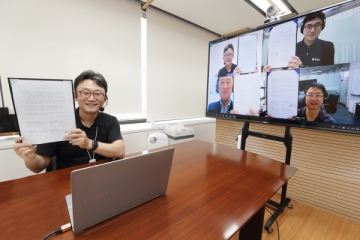
KT to Develop Remote Work Solutions with Three Leading Korean Companies
Due to the rapid spread of COVID-19, enterprises hastily established untact work environments by building individual solutions separately for security and authentication, virtualization, and video conferencing. This resulted in fragmented work environments and inefficiencies in time, cost, and productivity. In response, KT announced that it has signed business cooperation MOUs with domestic companies Madras Check, Saeah Comz, and Tilon to launch an integrated contactless work solution for enterprises.
2020.09.14by 이수민 기자
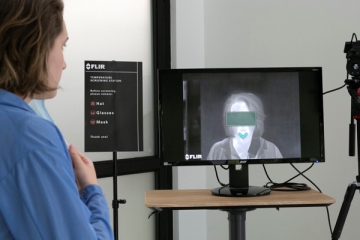
Preventing the spread of infectious diseases depends on the proper use of thermal imaging cameras.
The spread of COVID-19 shows no signs of slowing down. Disease prevention measures must continue until a fully verified vaccine is available. Crowded spaces and enclosed environments are primary venues for virus transmission. Therefore, individuals with fever must be identified as quickly and accurately as possible through non-contact methods. When using thermal imaging cameras, body temperature of the subject can be measured from a distance and displayed in an easily understandable image format, eliminating the need for direct contact or close approach to the subject.
2020.09.23by 이수민 기자
Camera for Both Humans and Machines: ST BrightSense 5MP Dual Shutter Image Sensor
Video consumed by humans and imagery analyzed by machines impose different requirements on the sensor in terms of shutter method and wavelength band. Until now, sensors had to be separated or supplemented with companion chips and high-performance processors, and this cost and complexity became a bottleneck in vision system design. The ST BrightSense next-generation 5MP image sensor (VD5943, VD1943, VB5943, VB1943) with 2.25 µm pixels supports both global and rolling shutters, and through on-chip staggered HDR (up to 100 dB), on-chip RGB-IR separation and 5MP NIR smart upscaling, and frame-by-frame context switching, absorbs both requirements internally at the sensor level. This white paper describes the rationale, choices, trade-offs, and results of each design decision based on presentation slides and technical Q&A, and specifies application boundaries. The product is scheduled for mass production in February 2026, and evaluation and sampling are currently available.
2026.10.13by 편집부
AI-based Universal Robots Automation Solution
In manufacturing environments where declining labor populations overlap with frequent production item changes, existing programming-based robot automation requires reconfiguration from weeks to several months each time product models change. This white paper takes this flexibility gap as its starting point and synthesizes, based on webinar presentation materials and technical Q&A, what collaborative robots gain and forfeit compared to industrial robots, why process automation is transitioning from rule-based to learning-based (4th generation) approaches, and how Universal Robots' hardware, software, and partner ecosystem implement this. Additionally, it clarifies the application boundaries and limitations, including that AI Accelerator is still at the development kit stage.
2026.10.13by 편집부











