



How to establish a remote work system that will remain effective even in the post-COVID era?
 Published2020.10.16 15:25
There is a need to standardize and publicize guidelines for how work is done.
Save on rent and build a diverse workforce
Many companies have adopted remote work to prevent the spread of COVID-19. Some have even announced plans to continue remote work even after the pandemic is over. In May, Facebook CEO Mark Zuckerberg predicted that "within the next 10 years, 50% of all employees will work remotely."
Even before COVID-19, many workers were already doing most of their work on computers and sharing data via the cloud, so remote work, while a temporary measure, was relatively easy to implement. Eliminating commuting and the pressure to deliver outstanding work performance improved employee efficiency.
It wasn't all sunshine and moon. The line between work and rest became blurred, and the addition of new tasks to prove that core work was still in progress became a source of stress. Small and medium-sized businesses, which had to transition to remote work without proper equipment, found themselves struggling to even maintain their existing operations.
GitLab, which was the world's largest company with a full remote workforce even before the COVID-19 outbreak, held an online press conference on the 15th to share its remote work know-how based on its experience with Korean companies. GitLab currently offers the 'GitLab' platform, which integrates the DevOps lifecycle stages into a single application.
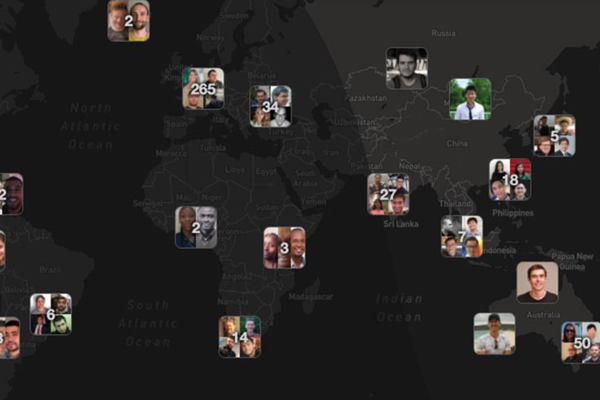
Over 100,000 companies use GitLab for software development, reaching approximately 30 million users. To support these efforts, GitLab employs over 1,300 team members across 68 countries and regions, but has no corporate offices. Since its founding in 2014, the company has encouraged employees to work remotely.
◇ Collaboration tools and work guidelines must be established.
GitLab began as a collaboration tool for software development, enabling team members to work together even when they're not in the same location. To unify the information and guidelines for how work should be done, GitLab created a documented handbook. Team members still work according to this publicly available handbook .

“Working from home is counterintuitive,” said Darren Murph, who was hired as head of remote work in 2019. “You can’t expect everyone to work from home and expect work to proceed as it would in the office.” He advised, “Through purposeful planning, you can structure your team to perform optimally in a remote work environment.”
To help companies implement this, Murph and GitLab published a comprehensive remote work guide, " The Remote Work Playbook ." Since the pandemic, the playbook has been downloaded over 70,000 times. Murph and its leadership team are consulting with companies around the world, sharing best practices for remote work.
While some jobs still require physical contact, many are being automated, particularly in telemedicine, where doctors diagnose patients online. IT companies are already familiar with tools and methods for remote work, and any industry where most work is performed via computers can adapt to a remote work system.
Many people believe collaboration requires being in the office together. However, Murph noted, "GitLab has demonstrated that, with some deliberate planning, teams can collaborate using collaboration software, video conferencing platforms like Zoom, and shared documents like Google Docs."
◇ You can escape from regional dependence on new employee recruitment.
Companies that adopt remote work in the post-COVID era will also reap several long-term benefits, including reduced real estate rental costs and the ability to recruit talent from all regions. GitLab sets compensation appropriate to local salary levels and uses a ' Compensation Calculator ' to determine fair compensation for each team member.
This approach allowed GitLab to recruit talent outside of tech-heavy cities. "We were able to provide more opportunities to individuals who might not otherwise have access to remote work, and build a more diverse workforce," Murph said.
GitLab cautions against hybrid models, where some employees work remotely and others work in the office. Murph emphasized, "Hybrid models are quite challenging," and emphasized, "If they must be implemented, leaders must ensure remote workers are not left behind."
GitLab recently launched a " Remote Work Certificate " based on a 10-question knowledge assessment for those interested in remote work training. Additionally, we have partnered with Coursera to launch a ' Remote Work Management Course ', which will soon be translated into Korean.
Lastly, Murph added that in order for Korean companies to properly implement remote work, they should: ▲ create a handbook that unifies information on how to perform work; ▲ hold an “Ask Me Anything Session” with companies that have successfully implemented remote work; ▲ conduct an employee survey to understand employees’ needs; and ▲ hire a remote work director and secure dedicated personnel.
Comments
Related news

What IoT Devices Need to Prepare for the Post-Corona Era
The world before COVID-19 will not return. Non-contact and remote-based IoT devices will continue to be necessary as long as humanity exists. To develop effective IoT devices even in the post-COVID era, device connectivity and security, data integration and management, and the construction of scalable infrastructure must be considered.
2020.06.30by 이수민 기자
GitLab Acquires CNCF Kubernetes Service Provider Certification
Recently, an increasing number of enterprises are adopting Kubernetes, and DevOps teams are leveraging Kubernetes to automate their operations. However, gaps in container management and orchestration technology capabilities still exist across enterprises. In response, GitLab has obtained certification as a Kubernetes Certified Service Provider from the CNCF and is launching full-scale support initiatives.
2020.09.11by 명세환 기자

Even after the pandemic ends, work PCs must be suitable for working from home.
Many companies are implementing or have implemented remote work, and survey results show that companies plan to purchase notebooks rather than desktops for remote work PCs going forward. Companies must now continue to build secure and efficient platforms, infrastructure, processes, and tools for seamless remote work environments, and consider how to integrate these into their corporate culture.
2020.09.10by 이수민 기자
Korea Instrument, KOLAS Accredited Calibration Agency First to Simultaneously Acquire ISO/IEC 27,001·27,701
Korea Instrument has become the first among KOLAS accredited calibration agencies to simultaneously acquire ISO/IEC 27,001 and ISO/IEC 27,701 certifications. Through its proprietary platforms CWIZ Enterprise and CWIZ Partners, the company has embedded information security and personal data protection requirements across all business processes including customer information, equipment data, and calibration reports, with plans to continuously advance its management system through regular audits and security inspections.
2026.10.12by 배종인 기자
TeamViewer One, IT Incident Automation Workflow and Resolution Center Enhanced
TeamViewer has added IT incident automation capabilities and an advanced Resolution Center to its integrated digital workplace management platform 'TeamViewer ONE'. Recurrent service disruptions, configuration errors, and capacity shortages are automatically handled according to preset policies, and device status verification through script deployment can be managed in a unified interface, significantly reducing repetitive tasks for IT teams.
2026.10.12by 배종인 기자











