


SK Hynix acquires Intel's NAND chip, breaking away from its overreliance on DRAM.
 Published2020.10.20 12:25
Intel maintains Optane business and focuses on core business.
SK Hynix announced on the 20th that it will acquire Intel's NAND memory and storage business.
The acquisition targets Intel's NAND SSD, NAND single product and wafer business, and Dalian fab in China, and the total acquisition amount is 9 billion dollars, or approximately 10.3 trillion won in Korean currency.
The acquisition does not include the Intel® Optane™ business.
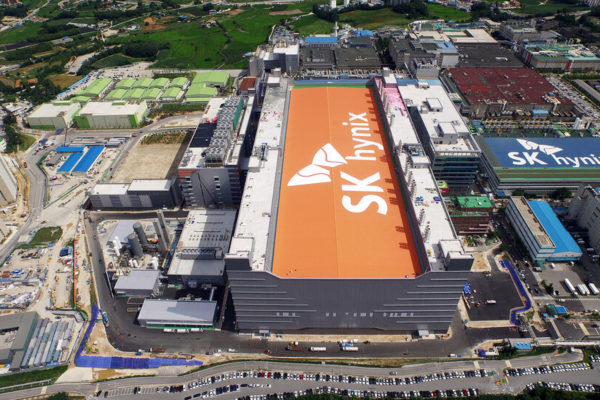
The two companies plan to seek regulatory approval in key countries by the end of 2021. Upon regulatory approval, SK Hynix will make an initial payment of $7 billion. Intel acquires NAND SSD-related IP and personnel, as well as the Dalian, China fab assets.
In March 2025, when the acquisition agreement is expected to close, SK Hynix will pay the remaining $2 billion and acquire Intel's remaining assets, including IP related to NAND flash wafer design and production, R&D personnel, and Dalian fab operation personnel.
Under the agreement, Intel will produce NAND wafers at its Dalian fab memory production facility until the final closing of the transaction, and will retain IP related to the design and production of NAND flash wafers.
◇ Future plans and prospects
SK Hynix plans to use this acquisition to strengthen its competitiveness in solutions such as enterprise SSDs in the NAND flash sector and leap forward as a global leader.
Intel possesses industry-leading NAND SSD technology and QLC (Quadruple Level Cell) NAND flash products. The NAND business within Intel's Non-volatile Memory Solutions Group (NSG) generated approximately $2.8 billion in sales and approximately $600 million in operating profit in the first half of 2020.
SK Hynix developed the world's first 96-layer 4D NAND flash based on CTF (Charge Trap Flash) in 2018 and the first 128-layer 4D NAND flash in 2019. In the future, SK Hynix plans to build a portfolio of high value-added 3D NAND solutions, including enterprise SSDs, by incorporating Intel's technology.
Intel plans to use the funds from this transaction to strengthen its product competitiveness and invest in areas that require long-term growth, such as AI, 5G networking, Intelligent Edge, and Autonomous Edge.
The two companies plan to continue to collaborate to meet the growing demand for memory-based semiconductor ecosystems, such as the recent DDR5 collaboration.
◇ Why buy and why sell
SK Hynix CEO Lee Seok-hee said, “We will optimize our business structure by securing competitiveness in the NAND sector that is no less competitive than that of DRAM.”
According to DRAMeXchange, as of the second quarter of this year, Samsung Electronics (1st, 43.5%) and SK Hynix (2nd, 30.1%) held the majority of the DRAM market share. Meanwhile, SK Hynix is a challenger in the NAND market.
According to Statista, as of the second quarter of this year, Samsung Electronics (1st, 31.4%), Kioxia (2nd, 17.2%), and Western Digital (3rd, 15.5%) accounted for half of the NAND flash market share. SK Hynix (11.7%), Intel (11.5%), and Micron (11.5%) followed.
Once this acquisition is completed, SK Hynix could surpass Kioxia to become the second-largest player in the NAND flash market.
The industry analyzed that the profitability of the global DRAM market will decline after the third quarter of this year. The interpretation is that demand companies that have secured sufficient inventory by ordering large quantities before the second quarter will no longer increase demand.
Once SK Hynix's acquisition of Intel's NAND division is completed, its sales will consist of 58.7% DRAM and 38.4% NAND, which will allow the company to prepare for future uncertainties.
Meanwhile, Intel has recently faced a fierce onslaught from AMD in the x86 CPU market. The company also lost its position as the most valuable semiconductor company in the US to Nvidia due to adverse factors such as delays in the introduction of the 7nm process and consideration of external foundries. With the restructuring of its NAND business, Intel plans to focus on strengthening its CPU competitiveness, its core strength.
Comments
Related news
SK Hynix's Q2 Earnings Higher Than Q1: "SSDs Account for Over 50% of NAND Business for the First Time"
SK Hynix announced that it recorded revenue of 8.6065 trillion won, operating profit of 1.9467 trillion won, and net profit of 1.2643 trillion won in the second quarter of this year. Despite uncertainties in the business environment due to COVID-19, a favorable pricing environment was created by strong server memory demand, and second quarter revenue and operating profit increased by 20% and 143%, respectively, compared to the previous quarter, accompanied by cost reductions including improved yields of main products.
2020.07.24by 이수민 기자
Samsung Electronics Ships First EUV Process-Applied DRAM at Pyeongtaek Line 2
Samsung Electronics announced the commencement of operations at Pyeongtaek Line 2, the world's largest semiconductor production line. The line will produce third-generation 10-nanometer-class LPDDR5 mobile DRAM with EUV process technology applied for the first time in the industry. Additionally, the company plans to manufacture next-generation V-NAND and ultra-fine-pitch foundry products starting from the second half of 2021.
2020.08.31by 이수민 기자
Intel Unveils New Security Feature Set for 3rd-Generation Xeon Platform
Intel has unveiled a new set of security features for the 3rd Generation Intel Xeon Scalable Platform (codenamed Ice Lake). Intel provides leading and certified Intel Software Guard Extensions (SGX) across the entire Ice Lake platform through its "Security First Pledge." In addition, it supports Intel Total Memory Encryption (TME), Intel Platform Firmware Resilience (PFR), and a new cryptographic accelerator.
2020.10.16by 김동우 기자
Intel Unveils Next-Generation 'Core Ultra Series 3' and vPro Platform for Enterprise PCs
Intel has officially unveiled the "Intel Core Ultra Series 3" for next-generation enterprise PCs and the latest vPro platform, addressing a wide range of demands from enterprise notebooks to high-performance workstations.
2026.03.26by 배종인 기자
ROHM Launches ESD Protection Diode Compatible with High-Speed Interfaces of 10Gbps or Higher
Semiconductor specialist ROHM has developed the 'RESDxVx series' of ESD (electrostatic discharge) protection diodes capable of responding to next-generation high-speed data communication environments exceeding 10Gbps, simultaneously enhancing both signal quality maintenance required in high-speed interfaces and IC protection performance.
2026.03.26by 배종인 기자











