



"Design of high-functioning small-sized battlefield equipment, using SBC as a solution"
 Published2020.10.27 12:20
Need for SBC with integrated power, communication, and management ICs
The days when cars were just good at running are over. Today, vehicles are equipped with numerous electronic components that perform various roles.
Drivers' desire to do the same things they do in other places while in their cars, and manufacturers' policies to accommodate this desire, are further accelerating this trend.
Ultra-high-speed communication is the most representative function required by modern vehicles. Applications installed in vehicles communicate with each other and with the outside world.
The amount of data being sent and received during communication is increasing, and many electronic components are required. However, power and space within the vehicle are limited.
Automotive application manufacturers must design their products to operate properly in the power- and space-constrained environments of a car without affecting or being affected by other products.

We met with Hyun-Kyung Noh, deputy manager in charge of automotive power technology support at Infineon Korea, and asked her what components need to be selected and tuned to accelerate the development of automotive applications.
Q. What are the current trends in automotive application design?
A. Countries around the world are strengthening regulations on automobile exhaust fumes to reduce CO2, which is considered the main culprit of global warming. Accordingly, partial networking functions that require low dark current and only wake up necessary functions are being widely used.
In addition, as the number of electronic components mounted on vehicles increases, communication between them also increases. As the development cycle becomes faster, it is also important to reduce development time. In addition, various applications in vehicles require functional safety standards, and functions that support this are required.
Q. What is the SBC that Infineon suggests to automotive application developers?
A. SBC is an abbreviation for System Basis Chip, and is an IC that combines power supply, CAN, LIN interface, and monitoring functions to the ECU's MCU. It is widely used in a wide range of automotive applications that require power supply and communication, such as the gateway and lighting control unit of the body, the transmission of the chassis, the powertrain, and the onboard charger and telematics of the infotainment.
Q. What are the advantages of adopting SBC in design?
A. Since ICs that were previously implemented separately, such as power ICs, communication ICs, and management ICs, can be implemented using a single IC, the PCB size can be reduced and the BOM can be saved. The SBC product family is compatible with each other both hardware and software.
Therefore, if you have completed software development using SBC when developing an application, you can use the previously developed software right away when developing another application using the SBC product line, which can significantly shorten the development time.
Q. Infineon has several SBC product lines. What are the criteria for differentiation?
A. Infineon's SBC product line can be divided into the following SBC product lines: Lite, Mid-range, DC/DC, and Multi-CAN Power +. Each product line is distinguished by the power supply method and communication method required by the application.
Q. What criteria should developers use to select an SBC product family?
A. First, you need to determine whether you need a product line that includes an LDO or a DC/DC converter depending on the power supply. Then, you need to decide the number of CANs and LINs depending on the communication method that the system requires. Finally, you need to decide whether you need partial networking capabilities or not, and then you can finally choose the SBC that fits the application you are developing.
Q. Is it possible for developers to tweak the functionality inside the SBC?
A. Several internal functions of the SBC can be set by pin settings in hardware or by register changes in software. For example, if a high-side switch needs to be controlled with PWM in an application, software PWM control is possible by connecting an external circuit to the high-side switch pin and issuing an SPI command.
Q. What support does Infineon provide to developers who adopt SBC products?
A. Infineon provides various design tools to shorten customers’ development period.
First, with the 'Power dissipation tool', developers can pre-calculate the required current specifications and the functions to be used to check if they are suitable for the application. With the 'Bode plot tool', the phase and gain margin of the DC/DC type can be checked.
In addition, you can use the 'PN Wizard' to generate and use partial networking configuration code. You can also use the 'Config Wizard' to connect to the demo board, test the functions directly, and generate the configured functions into code and use them.
Infineon provides designers with user manuals and frequently asked questions (FAQ) documents necessary for development practices to answer their questions. It also supports circuit review and testing, as well as fault diagnosis and analysis when starting actual work.
Q. What are Infineon's goals in the automotive applications market?
A. Infineon is committed to providing solutions that help customers reduce the complexity and time of automotive application development through various SBC product families, thereby helping them to be competitive in the market. In the future, we will continue to develop the SBC portfolio through continuous feedback from customers and the market, and provide product families that can be used in a wider range of application fields beyond vehicles.
Comments
Related news
"Automotive power design starts with understanding MOSFETs"
Vehicle electrification is not occurring only in the powertrain. With advances in autonomous driving, infotainment, and other technologies, the ratio of power semiconductor integration in vehicles is steadily increasing. Developers must now develop the ability to understand AEC-Q101 and read power component datasheets in order to avoid performance degradation, cost increases, and design errors in automobiles and automotive electrical components.
2020.07.13by 이수민 기자
Maxim Launches IC that Implements a Vehicle USB PD Hub with a Single MCU
The number of USB PD chargers built into vehicles is increasing, and the functionality of automotive multimedia hubs—such as rear-seat entertainment modules and head units—is expanding further. Accordingly, the burden on relevant design engineers regarding size, cost, and power is growing. In response, Maxim Integrated Korea has announced the launch of the MAX25430, a 100W USB PD buck-boost controller and protector.
2020.10.14by 명세환 기자
Infineon Launches MCU Family for Next-Generation Battlefield Systems
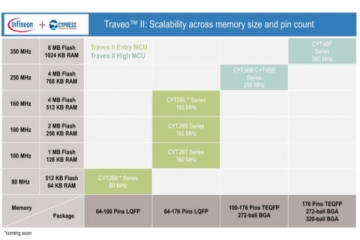
As the electrification of drivetrains and the adoption of advanced driver assistance systems (ADAS) accelerate, the number and complexity of automotive convenience functions and body control functions continue to increase. In response to this trend, Infineon Technologies announced the launch of the Traveo II Body microcontroller product family. This product family supports various automotive applications including body control modules, doors, windows, sunroofs, and seat control units, as well as in-vehicle smartphone connectors and wireless charging units.
2020.10.15by 명세환 기자

[e4ds Tech Day 2026 ⑨] Sim Sang-gyu, Autocrypt CTO: "In the Physical AI Era, Automotive Security Must Extend Beyond the Vehicle"
At e4ds Tech Day 2026, Sim Sang-gyu, CTO of Autocrypt, explained automotive cybersecurity strategies in the era of Physical AI and SDV (Software-Defined Vehicle). Automobiles are evolving as part of an ecosystem connected to AI, cloud, chargers, IoT, and robots, and he emphasized that the scope of security must expand beyond the vehicle interior to the entire connected environment. In particular, AI model tampering, adversarial attacks, OTA updates, and EV charger hacking were identified as major threats. He explained that response measures require zero trust, AI model integrity protection, intrusion detection, Security by Design and Default, and full lifecycle security management, and that proactive security system establishment beyond regulatory compliance is critical for securing future mobility competitiveness.
2026.10.12by 배종인 기자

Practical HIL Construction Strategy for Automotive and Off-Highway Controller Validation
As vehicle E/E architecture transitions to zonal structures and shifts to software-defined vehicles (SDV), the number of controllers (ECUs) requiring validation and software complexity are surging dramatically. Meanwhile, real vehicle testing cannot provide repeated verification under identical conditions and entails lead time and safety concerns. This white paper explains the principles of HIL (Hardware-in-the-Loop) validation and the structure of the NI platform composed of PXI, SLSC, and VeriStand, and through two actual implementation cases—Camera Record & Replay HIL for In-Cabin Monitoring Controller (ICMU) and Forklift Controller (VCU) HILS—describes how controller-level regression testing becomes possible. Additionally, it explicitly states application boundaries and limitations, such as lack of A2B support.
2026.10.12by 편집부











