



Xilinx and TI Develop GaN-Based 5G Small Cell 'DFE'
 Published2020.11.25 13:59
Developing a Scalable, Adaptive Digital Frontend
Provides instantaneous bandwidth to support MIMO applications
Unlike macro cells, which support wide-area coverage of several kilometers, small cells are small base stations that support coverage of 10 to several hundred meters. Due to the characteristics of 5G radio waves, which are highly straight and have low diffraction, it is attracting attention as a base station type suitable for implementing 5G services.
5G small cells must support three key 5G scenarios: enhanced Mobile Broadband (eMBB), massive Machine Type Communication (mMTC), and Ultra-Reliable Low-Latency Communication (URLLC), requiring a scalable and adaptable radio platform.
Xilinx announced on the 25th that it has developed a scalable, adaptive digital front-end (DFE) solution with Texas Instruments (TI) that reduces the number of antennas in small cells and increases energy efficiency.
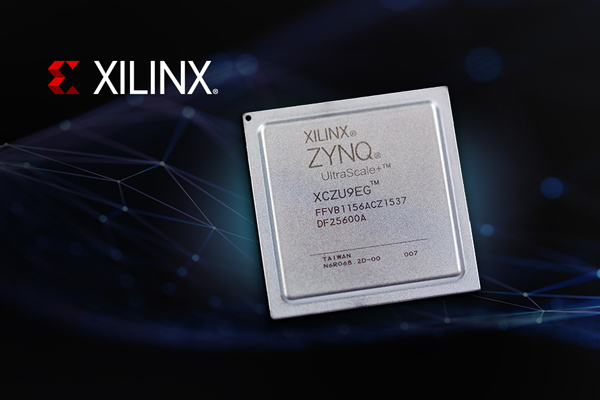
This adaptive DFE solution, which consists of Xilinx's Zynq Ultrascale+ MPSoC, adaptive RF IP, and TI's AFE7769 4-channel RF transceiver, can improve the OPEX (operating expenses) and CAPEX (capital expenditures) problems of large-scale telecommunications carriers or private networks.
Xilinx's adaptive RF IP, which includes specialized features such as Crest Factor Reduction (CFR) and Digital Pre-distortion (DPD), supports a wide range of wireless bandwidths and carrier configurations. Additionally, it is tightly integrated with the PHY processing implemented in the Zynq UltraScale+ MPSoC device, enabling it to handle increasingly complex multi-RAT and dynamic 5G waveform signals that are difficult to handle with standalone DPD implementations.
This DFE solution, jointly developed by Xilinx and TI, is based on gallium nitride (GaN), a next-generation semiconductor material, to improve the efficiency of power amplifiers (PAs) to address new requirements for wireless communications.
“A successful wireless platform hinges on the efficiency and performance of the RF PA,” said Liam Madden, senior vice president and general manager of the Wired and Wireless Group at Xilinx. “Even for low-power small cell applications, the PA consumes more than 50 percent of the power of a typical next-generation radio, making it critical to optimizing OPEX and CAPEX.”
“Spectral efficiency and linearity of the PA that delivers RF power are critical to achieving the benefits of 5G systems,” said Karthik Vasanth, vice president and general manager of TI’s Data Converters business unit. “Wideband transceivers like the AFE7769 address the nonlinearities of higher-order PAs and deliver power more efficiently.”
“This DFE solution allows designers to accommodate market demands for higher antenna counts and higher instantaneous bandwidth to support MIMO (Multiple-Input, Multiple-Output) applications,” he added, “while also providing scalability to meet system cost targets.”
Comments
Related news

IBM and AT&T to Offer Open 5G MEC Control Services
Many enterprises are pursuing hybrid cloud strategies. In particular, as 5G and edge computing technologies continue to advance, high control capabilities in remote environments have become increasingly important. IBM has announced that it will enable enterprise customers to manage applications hosted in hybrid cloud environments through AT&T networks via "IBM Cloud Satellite."
2020.11.10by 이수민 기자

TI Expands GaN Product Family with Four 600V GaN FETs
Reducing system size and weight while lowering power losses is a key challenge for automotive and industrial application designers today. Texas Instruments held an online press conference and announced the addition of four GaN FET products suitable for automotive and industrial applications to its high-voltage power management product portfolio.
2020.11.12by 이수민 기자
Xilinx Provides Deep Learning Models for AI Medical Device Development
Recent demand in the medical field is increasing for AI-based solutions that rapidly process and analyze patient data collection. The COVID-19 pandemic, where healthcare provider fatigue accumulation has become a problem, is accelerating this trend. As demand for telemedicine is also growing, devices capable of AI processing at the edge are being required. In response, Xilinx has collaborated with Spline.ai to release a medical X-ray classification deep learning model that functions perfectly on AWS and an FPGA-based Zynq UltraScale Healthcare AI Starter Kit.
2020.11.17by 이수민 기자

Intel Unveils Next-Generation 'Core Ultra Series 3' and vPro Platform for Enterprise PCs
Intel has officially unveiled the "Intel Core Ultra Series 3" for next-generation enterprise PCs and the latest vPro platform, addressing a wide range of demands from enterprise notebooks to high-performance workstations.
2026.03.26by 배종인 기자

ROHM Launches ESD Protection Diode Compatible with High-Speed Interfaces of 10Gbps or Higher
Semiconductor specialist ROHM has developed the 'RESDxVx series' of ESD (electrostatic discharge) protection diodes capable of responding to next-generation high-speed data communication environments exceeding 10Gbps, simultaneously enhancing both signal quality maintenance required in high-speed interfaces and IC protection performance.
2026.03.26by 배종인 기자











