This page was machine-translated and may differ from the original. View original
The pandemic has taught us a lesson: We must secure organizational operational resilience.

Gartner Introduces Nine Strategic Technologies for Operational Resilience
As virtualization and decentralization become increasingly important, the need for improved user experience is growing.
Hyperautomation, increasingly valuable, accelerated by the pandemic.
The COVID-19 pandemic, which began in Wuhan, Hubei Province, China, in December of last year, continues to sweep the globe. As of December, the number of confirmed cases exceeded 80 million, and the death toll surpassed 1.7 million.
Vaccines have just begun to be administered in some countries, and treatments are expected to be available in January. However, due to the extremely high demand for both vaccines and treatments, the current situation is expected to persist at least through the first half of next year. The same goes for the ICT industry, which has experienced an unexpected boom and opportunity due to the increased use of remote work and the acceleration of digitalization following travel restrictions.

Market research firm Gartner held the 'Gartner IT Symposium/XPO Americas' event last October and released the 'Top Strategic Technology Trends for 2021' for organizations to be aware of.
Brian Burke, research vice president at Gartner, said, “The COVID-19 pandemic has made the need for organizations to be more operationally resilient than ever before,” and selected promising technologies for next year with ‘people centricity,’ ‘location independence,’ and ‘resilient delivery’ in mind.
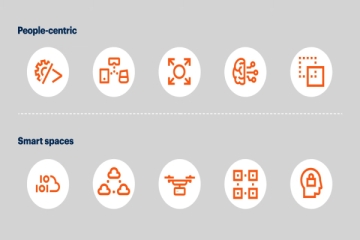
The selected strategic technologies are ▲Internet of Behaviors ▲Total Experience ▲Privacy-Enhancing Computation ▲Distributed Cloud ▲Anywhere operations ▲Cyber security mesh ▲Intelligent composable business ▲AI engineering ▲Hyperautomation, etc.
Last year's trends included hyperautomation, multiexperience, democratization of expertise, human augmentation, transparency and traceability, the empowered edge, distributed cloud, autonomous things, practical blockchain, and AI security.
1. Internet of Behaviors
Technologies that collect and utilize individuals' digital traces are evolving in various ways. The Internet of Behavior (IoB) is one such technology. The IoB combines current technologies that directly focus on individuals, such as facial recognition, location tracking, and big data, with data derived from behaviors like cash purchases and device usage.
Each company uses this data to influence human behavior. For example, to monitor how well individuals are following health care measures during a pandemic, organizations could use the Internet of Business to check whether employees are wearing masks and use thermal imaging technology to identify employees with high temperatures.

Gartner predicts that by the end of 2025, half the world's population will be affected by at least one private-public Internet of Business (IoB) technology. While IoB offers technological benefits, it also raises ethical and social concerns due to its diverse impact on human behavior.
2. Total Experience
Last year, Gartner selected 'Multiexperience' technology as a major strategic technology trend, and this year, it went one step further and selected Total Experience (TX).
TX is a strategic technology that connects customers, employees, and user experience rules. Gartner predicts that companies will compete to introduce TX technologies to gain an edge over the competition, and this competition will continue for the next three years.
Due to COVID-19, mobility has been limited in human interaction, virtualization and decentralization have become more important, and the value of TX strategies has also increased. TX is a technology that improves the experiences of various participants to produce new business outcomes.
Gartner predicts that organizations seeking to capitalize on these new forms of experience will find new opportunities as they recover from the pandemic.
3. Privacy-Enhancing Computation
As data protection legislation becomes more active worldwide, Chief Information Officers (CIOs) at each company are increasingly exposed to the risks of privacy and legal violations.
Unlike safeguards for stored data, privacy-enhancing computational technologies protect confidentiality and privacy while data is being used.
Gartner predicts that by 2025, about half of large enterprises will adopt this technology for data processing in untrusted environments and multi-user data analysis.
Additionally, the company advises that companies should evaluate their data processing activities, including transferring sensitive personal information, monetizing data, and analyzing fraud, to select the right privacy-enhancing computational technology for their business.
4. Distributed Cloud
Distributed cloud is a technology that provides public cloud services in physically different locations, while assigning responsibility for the operation, governance, and evolution of the services to the public cloud service provider.

It provides an agile data environment for enterprises that require low network latency, reduced data costs, and data residency, and allows cloud computing resources to be located close to the physical locations where business activities occur.
Gartner predicts that by 2025, most cloud service platforms will offer some form of distributed cloud service as needed.
“Distributed clouds, which can replace private clouds, have the potential to be utilized in other new cloud computing, including edge clouds,” said Vice President Burke. “They will become the technology that represents the future of cloud computing.”
5. Anywhere operations
Anywhere operating system is an IT operating model that supports customer/work support from any location and business activities across distributed infrastructure. It encompasses collaboration, productivity, secure remote access, cloud and edge infrastructure, digital experience quantification, and automation to support remote business.
Gartner predicts that by the end of 2023, 40% of enterprises will adopt anywhere operating systems to deliver optimal customer and work experiences that strike a balance between remote and in-person interactions.
6. Cyber Security Mesh
Cybersecurity Mesh is a technology that enables secure access to all digital assets, regardless of where the asset or individual resides. It separates policy enforcement and decision-making through a cloud delivery model, ensuring identity security.
Gartner predicts that by 2025, the cybersecurity mesh will handle half of all digital access protection requests. "The COVID-19 pandemic has accelerated digitalization, placing most cyber assets held by enterprises outside the traditional physical security perimeter," said Burke.
“As the Anywhere operating system evolves, cybersecurity mesh will become the most practical technology for secure access and use of cloud-based applications, distributed data on uncontrolled devices, and more,” he said.
7. Intelligent Composable Business
“Static business processes built for efficiency were incredibly fragile and shattered by the shock of the pandemic,” said Burke. “CIOs and IT leaders are reassembling the pieces and collectively recognizing the importance of businesses’ ability to adapt to changing business environments.”
Intelligent composable business technologies are innovative ways to reshape decision-making processes based on access to better information and agile responses. For example, in the future, machines will improve decision-making processes, driven by abundant data and insights.

This technology is expected to pave the way for groundbreaking changes in digital enterprises, the creation of new business models, automation of operations, and new products, services, and channels.
8. AI Engineering
According to Gartner research, only 53% of AI prototypes make it to production. CIOs and IT leaders face significant challenges in transitioning AI projects into production. This is because there is a lack of tools to develop and manage production-ready AI pipelines.
The core of AI-based production technology can be found in AI engineering.
AI engineering is the academic discipline that addresses the governance and lifecycle management of various AI and machine learning decision-making models, such as knowledge graphs. AI engineering is divided into three sub-disciplines: data operations, model operations, and development operations. A robust AI engineering strategy should enhance the performance, scalability, interpretability, and reliability of AI models and ensure the value of AI investments is delivered.
9. Hyperautomation
Business-driven hyperautomation refers to an approach that enables companies to quickly identify, validate, and automate as many approved business and IT processes as possible. While hyperautomation has gained traction over the past few years, demand has skyrocketed amid the pandemic, which has prioritized digital across all sectors.
Gartner reported that approximately 70% of companies are initiating dozens of hyperautomation initiatives driven by stakeholder demands. Vice President Burke emphasized, "Hyperautomation is now unavoidable and irreversible. Everything must and will be automated."
As virtualization and decentralization become increasingly important, the need for improved user experience is growing.
Hyperautomation, increasingly valuable, accelerated by the pandemic.
The COVID-19 pandemic, which began in Wuhan, Hubei Province, China, in December of last year, continues to sweep the globe. As of December, the number of confirmed cases exceeded 80 million, and the death toll surpassed 1.7 million.
Vaccines have just begun to be administered in some countries, and treatments are expected to be available in January. However, due to the extremely high demand for both vaccines and treatments, the current situation is expected to persist at least through the first half of next year. The same goes for the ICT industry, which has experienced an unexpected boom and opportunity due to the increased use of remote work and the acceleration of digitalization following travel restrictions.

▲ Gartner unveiled its key strategic technology trends for 2021. [Capture = Gartner]
Market research firm Gartner held the 'Gartner IT Symposium/XPO Americas' event last October and released the 'Top Strategic Technology Trends for 2021' for organizations to be aware of.
Brian Burke, research vice president at Gartner, said, “The COVID-19 pandemic has made the need for organizations to be more operationally resilient than ever before,” and selected promising technologies for next year with ‘people centricity,’ ‘location independence,’ and ‘resilient delivery’ in mind.
The selected strategic technologies are ▲Internet of Behaviors ▲Total Experience ▲Privacy-Enhancing Computation ▲Distributed Cloud ▲Anywhere operations ▲Cyber security mesh ▲Intelligent composable business ▲AI engineering ▲Hyperautomation, etc.
Last year's trends included hyperautomation, multiexperience, democratization of expertise, human augmentation, transparency and traceability, the empowered edge, distributed cloud, autonomous things, practical blockchain, and AI security.
1. Internet of Behaviors
Technologies that collect and utilize individuals' digital traces are evolving in various ways. The Internet of Behavior (IoB) is one such technology. The IoB combines current technologies that directly focus on individuals, such as facial recognition, location tracking, and big data, with data derived from behaviors like cash purchases and device usage.
Each company uses this data to influence human behavior. For example, to monitor how well individuals are following health care measures during a pandemic, organizations could use the Internet of Business to check whether employees are wearing masks and use thermal imaging technology to identify employees with high temperatures.

▲ IoB technology is important in that it affects human behavior.
This could spark future ethical debates. [Capture = Gartner]
Gartner predicts that by the end of 2025, half the world's population will be affected by at least one private-public Internet of Business (IoB) technology. While IoB offers technological benefits, it also raises ethical and social concerns due to its diverse impact on human behavior.
2. Total Experience
Last year, Gartner selected 'Multiexperience' technology as a major strategic technology trend, and this year, it went one step further and selected Total Experience (TX).
TX is a strategic technology that connects customers, employees, and user experience rules. Gartner predicts that companies will compete to introduce TX technologies to gain an edge over the competition, and this competition will continue for the next three years.
Due to COVID-19, mobility has been limited in human interaction, virtualization and decentralization have become more important, and the value of TX strategies has also increased. TX is a technology that improves the experiences of various participants to produce new business outcomes.
Gartner predicts that organizations seeking to capitalize on these new forms of experience will find new opportunities as they recover from the pandemic.
3. Privacy-Enhancing Computation
As data protection legislation becomes more active worldwide, Chief Information Officers (CIOs) at each company are increasingly exposed to the risks of privacy and legal violations.
Unlike safeguards for stored data, privacy-enhancing computational technologies protect confidentiality and privacy while data is being used.
Gartner predicts that by 2025, about half of large enterprises will adopt this technology for data processing in untrusted environments and multi-user data analysis.
Additionally, the company advises that companies should evaluate their data processing activities, including transferring sensitive personal information, monetizing data, and analyzing fraud, to select the right privacy-enhancing computational technology for their business.
4. Distributed Cloud
Distributed cloud is a technology that provides public cloud services in physically different locations, while assigning responsibility for the operation, governance, and evolution of the services to the public cloud service provider.

▲ Cloud computing is where data is produced.
Physically in the place where business activities take place
It appears that it will take place nearby [Capture = Gartner]
Physically in the place where business activities take place
It appears that it will take place nearby [Capture = Gartner]
It provides an agile data environment for enterprises that require low network latency, reduced data costs, and data residency, and allows cloud computing resources to be located close to the physical locations where business activities occur.
Gartner predicts that by 2025, most cloud service platforms will offer some form of distributed cloud service as needed.
“Distributed clouds, which can replace private clouds, have the potential to be utilized in other new cloud computing, including edge clouds,” said Vice President Burke. “They will become the technology that represents the future of cloud computing.”
5. Anywhere operations
Anywhere operating system is an IT operating model that supports customer/work support from any location and business activities across distributed infrastructure. It encompasses collaboration, productivity, secure remote access, cloud and edge infrastructure, digital experience quantification, and automation to support remote business.
Gartner predicts that by the end of 2023, 40% of enterprises will adopt anywhere operating systems to deliver optimal customer and work experiences that strike a balance between remote and in-person interactions.
6. Cyber Security Mesh
Cybersecurity Mesh is a technology that enables secure access to all digital assets, regardless of where the asset or individual resides. It separates policy enforcement and decision-making through a cloud delivery model, ensuring identity security.
Gartner predicts that by 2025, the cybersecurity mesh will handle half of all digital access protection requests. "The COVID-19 pandemic has accelerated digitalization, placing most cyber assets held by enterprises outside the traditional physical security perimeter," said Burke.
“As the Anywhere operating system evolves, cybersecurity mesh will become the most practical technology for secure access and use of cloud-based applications, distributed data on uncontrolled devices, and more,” he said.
7. Intelligent Composable Business
“Static business processes built for efficiency were incredibly fragile and shattered by the shock of the pandemic,” said Burke. “CIOs and IT leaders are reassembling the pieces and collectively recognizing the importance of businesses’ ability to adapt to changing business environments.”
Intelligent composable business technologies are innovative ways to reshape decision-making processes based on access to better information and agile responses. For example, in the future, machines will improve decision-making processes, driven by abundant data and insights.

▲ Companies analyze consumer data to develop new products or
Must be able to design and deliver services [Capture = Gartner]
This technology is expected to pave the way for groundbreaking changes in digital enterprises, the creation of new business models, automation of operations, and new products, services, and channels.
8. AI Engineering
According to Gartner research, only 53% of AI prototypes make it to production. CIOs and IT leaders face significant challenges in transitioning AI projects into production. This is because there is a lack of tools to develop and manage production-ready AI pipelines.
The core of AI-based production technology can be found in AI engineering.
AI engineering is the academic discipline that addresses the governance and lifecycle management of various AI and machine learning decision-making models, such as knowledge graphs. AI engineering is divided into three sub-disciplines: data operations, model operations, and development operations. A robust AI engineering strategy should enhance the performance, scalability, interpretability, and reliability of AI models and ensure the value of AI investments is delivered.
9. Hyperautomation
Business-driven hyperautomation refers to an approach that enables companies to quickly identify, validate, and automate as many approved business and IT processes as possible. While hyperautomation has gained traction over the past few years, demand has skyrocketed amid the pandemic, which has prioritized digital across all sectors.
Gartner reported that approximately 70% of companies are initiating dozens of hyperautomation initiatives driven by stakeholder demands. Vice President Burke emphasized, "Hyperautomation is now unavoidable and irreversible. Everything must and will be automated."
본 기사에 대한 정정·반론·추후보도 청구는 보도 청구 안내를, 그간 게재된 보도문은 정정·반론보도 모아보기를 참고해 주세요.