


Implementing Next-Generation EV Batteries Requires Attention to Everything from Materials to Software
 Published2020.12.18 16:45
Next-Generation Battery Technology Seminar Held Online and Offline
"Batteries must be well-made and used properly to be safe and efficient"
Environmental pollution is intensifying due to the indiscriminate use of resources, and extreme weather events are occurring more frequently. Countries around the world, including the United States, China, and the European Union (EU), are implementing policies to reduce exhaust emissions from vehicles in order to prevent global warming.
Diesel vehicles are already being phased out of the market, and the gradual phase-out of gasoline vehicles has also begun. Electric vehicles (EVs) are emerging as an alternative to replace internal combustion engine vehicles.
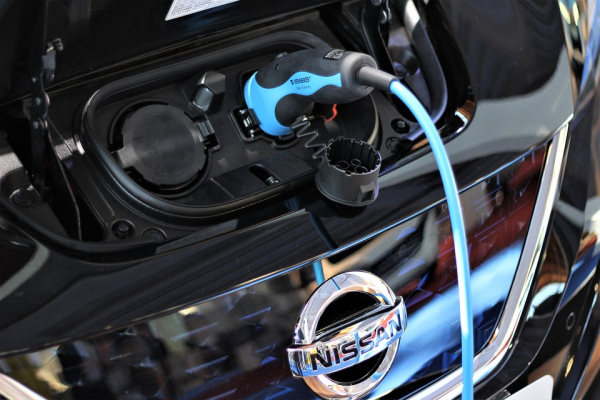
[Photo = Pixabay]
The '2020 Next-Generation Battery Latest Technology Seminar,' hosted by MICE Forum, was held on the 17th at the Creative Room on the 4th floor of the aT Center in Yangjae, Seoul. This seminar was held both online and offline to accommodate registrants who were unable to attend in person due to the spread of COVID-19.
The global electric vehicle market is expected to grow from 2.5 million units in 2020 to 30 million units in 2030. With the growth of the EV market, the demand for batteries is increasing, and over time, the demand for replacing aging batteries is also expected to rise.
To ensure the driving environment that conventional internal combustion engine vehicles provide to drivers, electric vehicle battery manufacturers are striving to develop batteries that are more efficient, cheaper, and safer than existing ones.
The primary goals of a vehicle are driver safety and ensuring sufficient driving range. The lithium-ion batteries currently most widely used in EVs are unable to meet these requirements.
Because liquid electrolytes are used, they are susceptible to external stimuli and pose a significant risk, and long-distance driving is difficult due to the difficulty in increasing capacity. This is why the demand and research for all-solid-state batteries, which use solid electrolytes instead of liquid ones, and for secondary batteries with improved charging efficiency are expanding.
At the seminar, six battery experts each led a program and shared insights with the participants. In the morning, Professor Jong-Hoon Kim of Chungnam National University discussed 'Internal condition monitoring and optimization technology based on electric vehicle BMS (Battery Management System),' and Principal Researcher Yun-Cheol Ha of the Korea Electrotechnology Research Institute (KERI) discussed 'Technical challenges and prospects for the practical application of all-solid-state batteries based on sulfide-based solid electrolytes.'
In particular, Professor Kim Jong-hoon of Chungnam National University emphasized, “Domestic battery research topics and projects are currently limited to the development of materials,” adding, “While the development of safe and efficient batteries and related materials is important, we must also pay attention to designing BMS that detects abnormal battery operation in real time using AI and other tools, as well as developing the software that runs on it.”
In the afternoon, Professor Park Chul-wan of Seojeong University presented 'Comparative Analysis of Lithium-ion Secondary Batteries vs. Other Next-Generation Batteries,' Professor Choi Won-chang of Konkuk University presented 'Issues and Technological Trends of High-Capacity High-Nickel Cathode Materials for Lithium-ion Batteries,' Professor Lee Sang-young of Ulsan National Institute of Science and Technology (UNIST) presented 'Technology Development Trends of Organic Material-Based All-Solid State Batteries,' and CEO Lee Hoo-kyung of EVALL presented 'Battery Electrical Hazards and Fire Prevention Measures.'
Comments
Related news

EV Quality Depends on Efficiency of “Battery Activation and Testing Process”
EV adoption is on track. Battery-powered vehicles are projected to account for 10% of total automotive sales in 2025. Demand for high-performance batteries is also surging rapidly. Batteries represent approximately 40% of EV prices. The activation and testing processes, which are the finishing steps in battery manufacturing, account for up to 20% of battery production costs. By achieving efficiency improvements in both processes, EV price competitiveness and quality can be secured.
2020.11.26by 이수민 기자
Hybrid Lithium-ion Battery Developed to "Charge in Seconds"
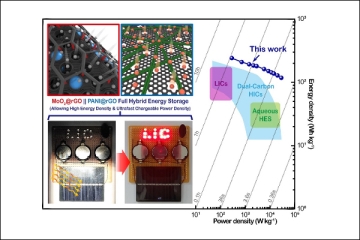
Lithium-ion batteries currently hold the highest market share among existing energy storage systems. However, due to issues such as low ionic conductivity, slow reaction rates, low power density, long charging times, and large volume, recent research has been focused on high-performance electrode materials and next-generation energy storage devices. In response, Professor Kang Jeong-gu's research team at the Department of Materials Science and Engineering at KAIST has developed a hybrid lithium-ion battery capable of rapid charging in seconds to minutes.
2020.12.04by 이수민 기자
ADI Announces 80V Buck-Boost I2C Battery Charge Controller
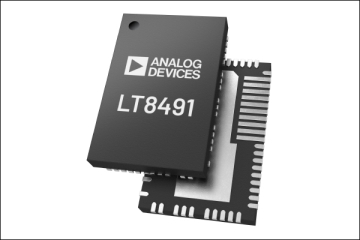
ADI has launched the LT8491 buck-boost battery charging controller that supports MPPT temperature compensation and I2C interface functionality for telemetry and control applications. It operates regardless of whether the input voltage is higher than, lower than, or equal to the regulated battery float charge voltage. It offers three selectable constant current constant voltage charging profiles, making it suitable for charging various types of chemical batteries.
2020.12.15by 강정규 기자
[e4ds Tech Day 2026 ⑨] Sim Sang-gyu, Autocrypt CTO: "In the Physical AI Era, Automotive Security Must Extend Beyond the Vehicle"
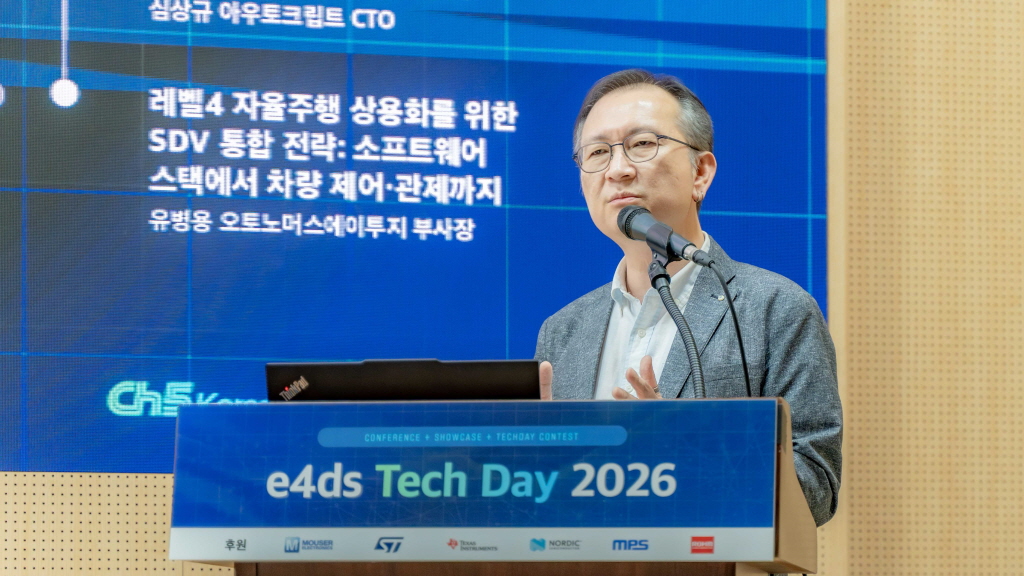
At e4ds Tech Day 2026, Sim Sang-gyu, CTO of Autocrypt, explained automotive cybersecurity strategies in the era of Physical AI and SDV (Software-Defined Vehicle). Automobiles are evolving as part of an ecosystem connected to AI, cloud, chargers, IoT, and robots, and he emphasized that the scope of security must expand beyond the vehicle interior to the entire connected environment. In particular, AI model tampering, adversarial attacks, OTA updates, and EV charger hacking were identified as major threats. He explained that response measures require zero trust, AI model integrity protection, intrusion detection, Security by Design and Default, and full lifecycle security management, and that proactive security system establishment beyond regulatory compliance is critical for securing future mobility competitiveness.
2026.10.12by 배종인 기자

Practical HIL Construction Strategy for Automotive and Off-Highway Controller Validation
As vehicle E/E architecture transitions to zonal structures and shifts to software-defined vehicles (SDV), the number of controllers (ECUs) requiring validation and software complexity are surging dramatically. Meanwhile, real vehicle testing cannot provide repeated verification under identical conditions and entails lead time and safety concerns. This white paper explains the principles of HIL (Hardware-in-the-Loop) validation and the structure of the NI platform composed of PXI, SLSC, and VeriStand, and through two actual implementation cases—Camera Record & Replay HIL for In-Cabin Monitoring Controller (ICMU) and Forklift Controller (VCU) HILS—describes how controller-level regression testing becomes possible. Additionally, it explicitly states application boundaries and limitations, such as lack of A2B support.
2026.10.12by 편집부











