


Intel Unveils 'Facial Authentication Solution' with 'Anti-Spoofing' Function
 Published2021.01.10 08:30
SoC, depth sensor with security elements
Lower false positive rate with built-in anti-spoofing technology
On the 8th, Intel unveiled 'Intel® RealSense® ID', an on-device solution for safe and accurate user recognition facial authentication.
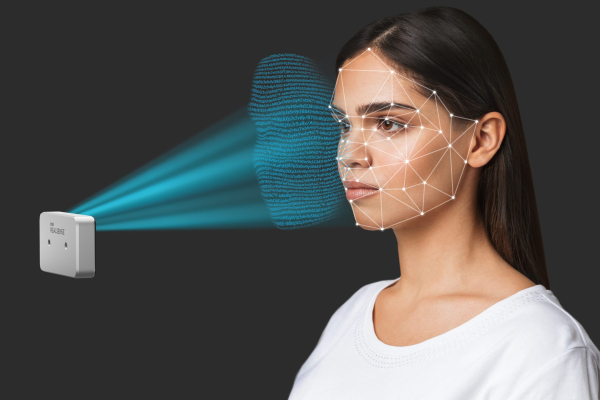
With a simple registration process and no network setup required, Intel RealSense ID combines a dedicated neural network, SoC, and embedded security elements with an active depth sensor.
Accordingly, it recognizes users by taking into account changes in physical features such as beards and glasses over time, and operates in various lighting environments to respond to various factors such as height and skin color.
Recently, companies and individuals have been paying attention to facial authentication technology as a replacement for existing authentication methods that are vulnerable to personal information theft and security breaches.
Intel RealSense ID has built-in anti-spoofing technology to block intrusion attempts using photos, videos, masks, etc., and has a false acceptance rate of one in a million.
All facial images are processed locally and all user data is encrypted. The solution is activated only through user recognition, and non-pre-registered users cannot be authenticated.
“Intel RealSense ID combines a dedicated neural network with purpose-built hardware and software to provide a secure facial authentication platform that users can trust,” said Sagi Ben Moshe, vice president and general manager of Emerging Technologies Growth and Incubation at Intel.
Comments
Related news
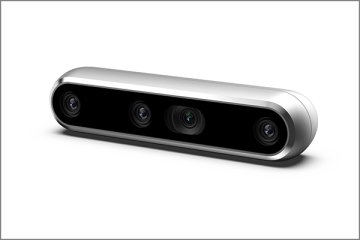
Intel begins pre-orders for its D445 IMU-equipped depth camera.
Intel has unveiled the 'Intel RealSense Depth Camera D455'. The D455 features a maximum shooting distance of 20m, which is twice as far as the previous generation D435i/D435. Suitable for collision avoidance, 3D scanning, digital signage, and volume measurement applications, the D455 is currently available for pre-order and is scheduled to begin shipping from August 10th.
2020.06.18by 명세환 기자
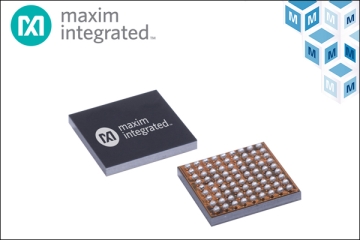
Mouser Supplies Maxim SoC with CNN Accelerator for AIoT
Mouser supplies Maxim's MAX78000 SoC, which integrates a dual-core MCU and an ultra-low-power deep neural network accelerator. The new product delivers the computing performance required for high-performance AI applications. It is ideal for applications such as machine vision, facial recognition, object detection and classification, time-series data processing, and audio processing.
2020.12.11by 이수민 기자
.jpg)
KAIST Develops AI-Based Gene Transcription Factor Prediction System
A joint research team led by KAIST Distinguished Professor Sang Yup Lee and UC San Diego Professor Bernard Palsson has developed DeepTFactor, a system that uses AI to predict transcription factors that regulate the transcription process of genetic information copying in genes. DeepTFactor employs three parallel CNNs to predict transcription factors from protein sequences. The research team predicted 332 transcription factors in E. coli using DeepTFactor, and validated the system's performance by confirming the genome-wide binding sites of three of those transcription factors.
2021.01.01by 이수민 기자
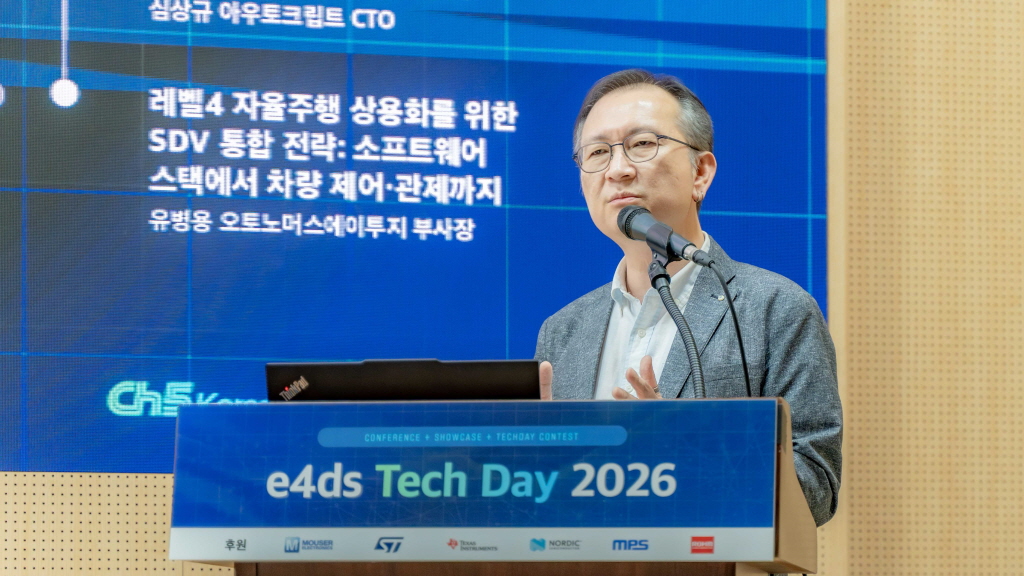
[e4ds Tech Day 2026 ⑨] Sim Sang-gyu, Autocrypt CTO: "In the Physical AI Era, Automotive Security Must Extend Beyond the Vehicle"
At e4ds Tech Day 2026, Sim Sang-gyu, CTO of Autocrypt, explained automotive cybersecurity strategies in the era of Physical AI and SDV (Software-Defined Vehicle). Automobiles are evolving as part of an ecosystem connected to AI, cloud, chargers, IoT, and robots, and he emphasized that the scope of security must expand beyond the vehicle interior to the entire connected environment. In particular, AI model tampering, adversarial attacks, OTA updates, and EV charger hacking were identified as major threats. He explained that response measures require zero trust, AI model integrity protection, intrusion detection, Security by Design and Default, and full lifecycle security management, and that proactive security system establishment beyond regulatory compliance is critical for securing future mobility competitiveness.
2026.10.12by 배종인 기자
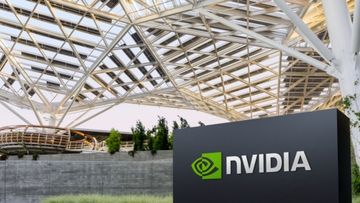
NVIDIA to Invest $1 Billion in U.S. Science Over Next Five Years
NVIDIA has announced plans to invest $1 billion over the next five years to strengthen U.S. scientific and technological competitiveness. The company will enhance cutting-edge artificial intelligence research and development capabilities in key areas including quantum computing, healthcare, and energy security, while expanding support for higher education research institutions and cloud service providers. NVIDIA is participating as a major industry partner in the White House Office of Science and Technology Policy's Genesis Mission, and is promoting supercomputer construction in collaboration with national laboratories including Argonne and Los Alamos.
2026.10.12by 배종인 기자











