



Extending drone flight range depends on optimizing hydrogen fuel cell power delivery network (PDN).
 Published2021.01.12 15:45
장시간 비행 드론, 파워팩 PDN 최적화 필요
바이코, 모듈식 레귤레이터로 PDN 설계 지원
수소 연료전지 탑재로 드론의 활용성이 더욱 높아지고 있다.
두산모빌리티이노베이션(DMI)은 2020년, 2시간 비행이 가능한 수소 연료전지 드론 ‘DS30’의 실증을 미국령 버진아일랜드, 제주도 등에서 진행했다. DMI의 수소 연료전지 기술은 확장된 비행거리와 부하 용량을 통해 모바일 로봇 개발을 가속하는 기반을 마련했다.
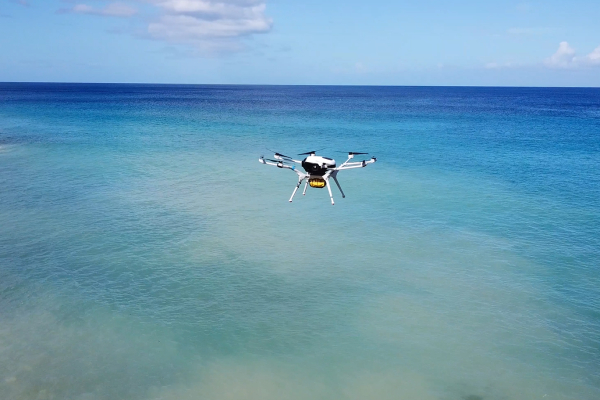
시연하는 DMI DS30 수소 연료전지 드론 [사진=DMI]
이외에도 국내 최대 규모 태양광 발전소, 해남 솔라시도에서 방대한 태양광 패널 검사를 완수하며 상업용 애플리케이션의 가능성도 확인했다. 동일 조건의 임무를 기존 배터리가 탑재된 드론으로 수행하려면 6번 이상의 배터리 교체가 필요하다.


모빌리티용 수소 연료전지를 개발하기 위해서는 소재 과학에서 시스템 레벨의 설계 최적화에 이르기까지 전반적인 기술 혁신이 필요하다. 모빌리티의 핵심은 소형화, 경량화, 그리고 효율화다. 또한, 안정적인 장시간 비행을 보장하는 높은 에너지 출력과 내구성이 요구된다.
이를 위해서는 스택 자체의 경량화는 물론, 높은 전력 밀도의 파워트레인을 구성하고, 주변 부품을 포함한 파워팩 전반의 설계를 단순화하여 시스템을 최적화해야 한다. 이러한 설계의 핵심은 시스템의 PDN(Power Delivery Network) 구현 및 아키텍처에 있다.
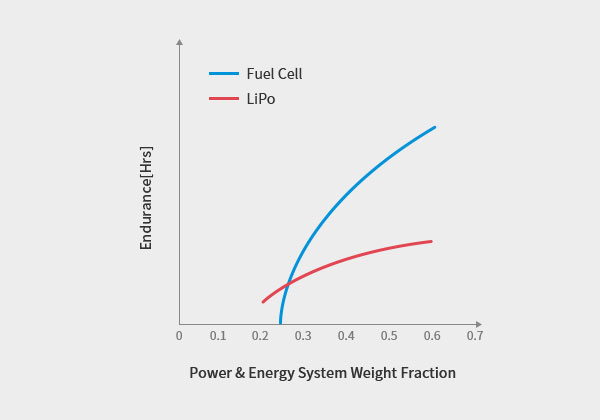
에너지 밀도 비교 [그래프=DMI]
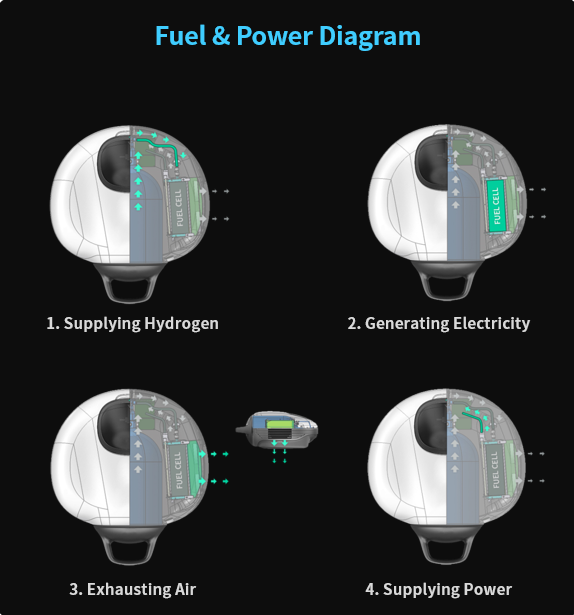
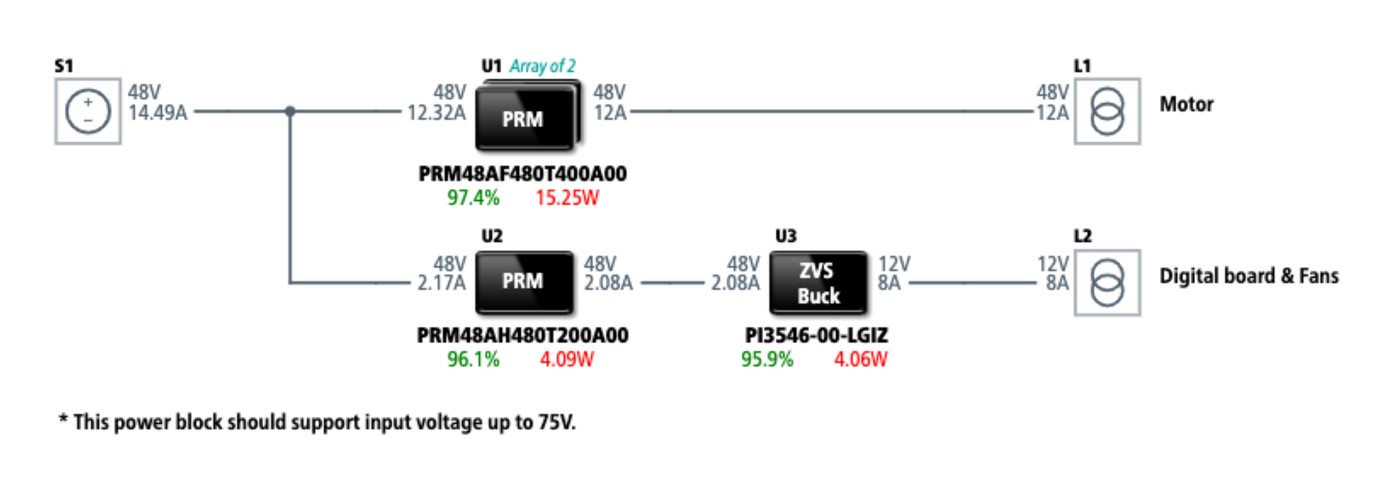
DS30 드론에 탑재되는 ‘DP30’ 파워팩은 드론의 로터와 스택 컨트롤러 보드 및 팬에 전원을 공급하는 2개의 메인 파워트레인 구조로 되어 있다. 40V에서 74V에 이르는 넓은 범위의 가변 출력전압을 기반으로 DP30 파워팩은 드론의 로터 측에 레귤레이션이 된 48V, 12A 출력을 보장하며, 스택 컨트롤러 보드와 팬으로 12V, 8A 출력이 일관되게 공급한다.
DMI는 PDN에서 고효율 및 높은 전력 밀도를 달성하기 위해 바이코의 PRM(Pre-Regulation Module) 벅부스트 레귤레이터와 ZVS(Zero-Voltage Switching) 벅 레귤레이터를 선택했다. PRM은 최대 74V까지 상승하는 수소 연료전지 스택의 OCV(Open Circuit Voltage)를 지원할 수 있으며, 48V까지 안정적인 전압 레귤레이션을 수행한다.
드론의 로터 측 PDN에는 바이코의 ‘PRM 벅부스트 레귤레이터(PRM48AF480T400A00)’ 2개를 병렬로 구성하여 로터에서 필요로 하는 12A를 공급한다. 스택 컨트롤러 보드 측 PDN에는 ‘PRM 벅부스트 레귤레이터(PRM48AH480T200A00)’와 ‘PI3546 ZVS 벅 레귤레이터(PI3546-00-LGIZ)’를 사용했다.
현재 생산 중인 2.6kW급 DP30 파워팩 외에도 DMI는 전력 용량별 제품라인을 다각화하고 있다. 올해 출시 예정인 1.5kW급 수소 연료전지 파워팩을 비롯해 10kW급에 이르는 다양한 용량의 제품을 개발하고, 각 파워팩에 적합한 새로운 구조의 드론 또한 출시할 예정이다.
DMI는 전력에 대한 바이코의 모듈식 접근방식을 활용하여 다양한 제품라인을 지원하는 확장성을 확보하고, 전력 용량 확대에 따른 스택 구조 변경이나 파워트레인 및 주변 구성부품, 방열 방식 등에 대한 엔지니어링 문제를 해결하는 데 주력할 방침이다.
Comments
Related news
Maxim Launches IC that Implements a Vehicle USB PD Hub with a Single MCU
The number of USB PD chargers built into vehicles is increasing, and the functionality of automotive multimedia hubs—such as rear-seat entertainment modules and head units—is expanding further. Accordingly, the burden on relevant design engineers regarding size, cost, and power is growing. In response, Maxim Integrated Korea has announced the launch of the MAX25430, a 100W USB PD buck-boost controller and protector.
2020.10.14by 명세환 기자
ST Unveils 'Compact High-Voltage Converter IC' That Does Not Require External Components
STMicroelectronics has unveiled VIPer31, a compact high-voltage converter IC. The VIPer31 is optimized for commonly used offline AC/DC converter topologies including isolated and non-isolated flyback, buck, and buck-boost converters. With minimal external components required, it contributes to cost-effective compact PCB designs.
2020.12.09by 강정규 기자
ADI Announces 80V Buck-Boost I2C Battery Charge Controller
ADI has launched the LT8491 buck-boost battery charging controller that supports MPPT temperature compensation and I2C interface functionality for telemetry and control applications. It operates regardless of whether the input voltage is higher than, lower than, or equal to the regulated battery float charge voltage. It offers three selectable constant current constant voltage charging profiles, making it suitable for charging various types of chemical batteries.
2020.12.15by 강정규 기자
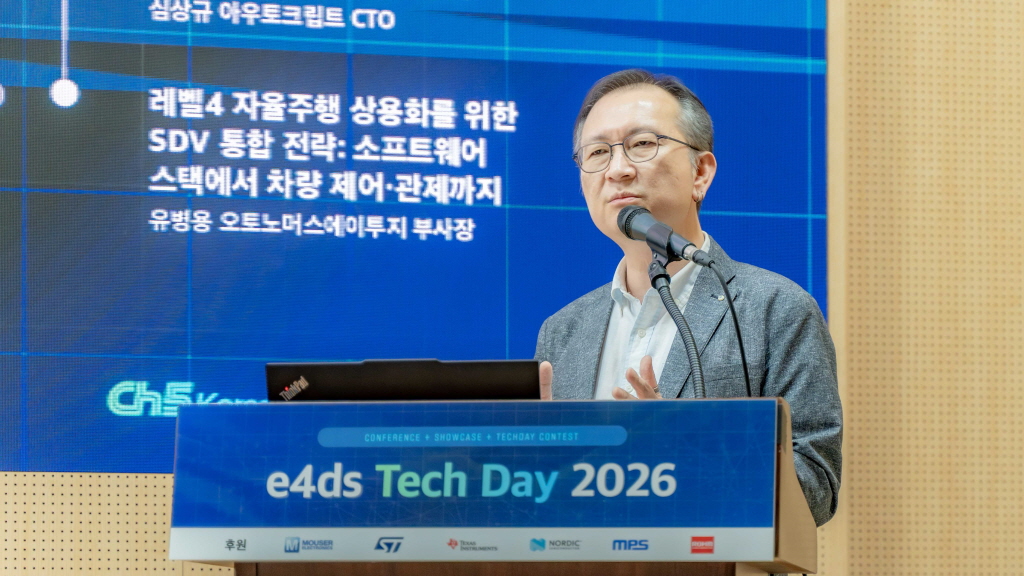
[e4ds Tech Day 2026 ⑨] Sim Sang-gyu, Autocrypt CTO: "In the Physical AI Era, Automotive Security Must Extend Beyond the Vehicle"
At e4ds Tech Day 2026, Sim Sang-gyu, CTO of Autocrypt, explained automotive cybersecurity strategies in the era of Physical AI and SDV (Software-Defined Vehicle). Automobiles are evolving as part of an ecosystem connected to AI, cloud, chargers, IoT, and robots, and he emphasized that the scope of security must expand beyond the vehicle interior to the entire connected environment. In particular, AI model tampering, adversarial attacks, OTA updates, and EV charger hacking were identified as major threats. He explained that response measures require zero trust, AI model integrity protection, intrusion detection, Security by Design and Default, and full lifecycle security management, and that proactive security system establishment beyond regulatory compliance is critical for securing future mobility competitiveness.
2026.10.12by 배종인 기자

Practical HIL Construction Strategy for Automotive and Off-Highway Controller Validation
As vehicle E/E architecture transitions to zonal structures and shifts to software-defined vehicles (SDV), the number of controllers (ECUs) requiring validation and software complexity are surging dramatically. Meanwhile, real vehicle testing cannot provide repeated verification under identical conditions and entails lead time and safety concerns. This white paper explains the principles of HIL (Hardware-in-the-Loop) validation and the structure of the NI platform composed of PXI, SLSC, and VeriStand, and through two actual implementation cases—Camera Record & Replay HIL for In-Cabin Monitoring Controller (ICMU) and Forklift Controller (VCU) HILS—describes how controller-level regression testing becomes possible. Additionally, it explicitly states application boundaries and limitations, such as lack of A2B support.
2026.10.12by 편집부











