



The ongoing debate over 28GHz 5G: "Will we be able to deploy it this year?"
 Published2021.02.22 18:05
Private 5G and shared 5G support from all three mobile carriers are needed.
45,000 28GHz base stations must be built this year.
The surge in non-face-to-face services and high-volume traffic is expected to saturate radio frequency resources.
In its 'Mobile Traffic Outlook' report released in June 2019, the Electronics and Telecommunications Research Institute (ETRI) predicted that the 5G frequencies supplied by the Ministry of Science and ICT to the three major mobile carriers in 2018 would reach saturation around 2022 or 2023.

It became necessary [Graphics = Pixabay]
The total 5G frequency band supplied to the three mobile carriers is 2,680 MHz, which is divided into the 3.5 GHz band (3,420–3,700 MHz), called the high-frequency (Sub-6 GHz) band, and the 28 GHz band (26.5–28.9 GHz), called the ultra-high frequency (mmWave) band.
The Ministry of Science and ICT plans to increase the high-frequency band frequency, currently at 280MHz, to 750MHz to improve 5G usability.
In addition to existing mobile carriers, there is a growing trend of companies and organizations building "private 5G" networks optimized for specific purposes and leveraging 5G technology for their business. Accordingly, the '5G Specialized Network Frequency Supply Plan' is scheduled to be established by March of this year.
◇ Ministry of Science and ICT seeks to revive the ultra-high frequency 5G spark
5G's ultra-high-speed characteristics presuppose its use in the 28 GHz band. Furthermore, this band is necessary because the 3.5 GHz band alone cannot meet growing demand.
On the 18th, the Ministry of Science and ICT announced the "2021 Radio Wave Promotion Implementation Plan," which outlines this year's implementation tasks for the "3rd Basic Radio Wave Promotion Plan (2019-23)" established in 2019. The plan includes preemptive stability verification of electromagnetic waves from 5G base stations in the 28 GHz ultra-high frequency band.
This measure is based on the prediction or hope that 28GHz 5G base stations will be fully deployed starting this year. In July of last year, the National Radio Research Agency (RRA) announced a simplified procedure for certification of electromagnetic field exposure levels for 28GHz ultra-high frequency band 5G terminals.
Unlike LTE devices, 5G devices have multiple antennas and utilize multiple beams, making electromagnetic wave measurements time-consuming. At the time, RRA anticipated that "commercialization of 28GHz devices scheduled for release in the second half of 2020 would accelerate."
◇ The three major telecommunications companies are outwardly active but inwardly indifferent.
Even as we pass the halfway point of the first quarter of 2021, the commercialization of 28GHz terminals remains a long way off. This is because the construction of ultra-high frequency 5G infrastructure by the three mobile carriers is still at a show-off level, and Verizon in the US, which actually built it, has achieved disappointing results.
According to a June 2020 survey by Opensignal, Verizon's 5G download speeds in the US reached an overwhelming 494.7 Mbps, beating out AT&T (60.8 Mbps), which ranked second. However, its availability, or connection time, was a mere 0.4%.
Achieving meaningful levels of availability requires a large number of base stations. 5G frequencies have low diffraction, making them less able to avoid obstacles. This is even more pronounced at higher frequencies. Therefore, more base stations are needed than before.
As of the end of last year, the number of 5G base stations in the 3.5GHz band nationwide was 166,250, with 42% located in the metropolitan area. On the 17th, People Power Party lawmaker Park Sung-joong said at a plenary session of the National Assembly Science, ICT, Broadcasting and Communications Committee, "There are only 45 28GHz base stations. It would be better to reclaim the 28GHz band and return the winning bid of 622.3 billion won to the three major mobile carriers."
This statement was made with the intention of prioritizing the completion of the nationwide 5G network by redirecting the winning bid for the 28GHz band to the cost of building 3.5GHz base stations, as developing and building 28GHz base stations is difficult. Minister of Science and ICT Choi Ki-young stated, "To avoid falling behind the United States and Japan, we will consult with the three major mobile carriers and build as many 28GHz base stations as possible within this year."
◇ 28GHz 5G service is expected to be available this year as well
In November 2020, the Ministry of Science and ICT conditionally reallocated 3G and LTE spectrum to the three major mobile carriers for 3.17 trillion won. The condition was that the three companies would integrate and build 120,000 5G base stations. The industry believes that no matter how much the government pushes, the 28GHz band 5G network will be limited to B2B due to its frequency characteristics, and will only serve as an auxiliary role to the 3.5GHz band 5G network for B2C.
Even if the 28GHz frequency band is utilized in B2B areas, such as private 5G networks or specialized 5G networks operated by the three non-mobile carriers, the three carriers' 28GHz infrastructure is essential. The operation of these private 5G networks relies on roaming to the three carriers' "public 5G" networks in emergencies. However, the three carriers are struggling even to build their own networks.
The three major mobile carriers have suffered trillions of won in losses due to 5G infrastructure construction and frequency reallocation, but have failed to deliver results commensurate with their investments. Furthermore, some analysts say the infrastructure expansion by the three companies has only benefited platform companies like Google and Netflix.
In 2020, the three major mobile carriers reduced their 5G facility investments by more than 20%, a trend expected to continue this year. In their New Year's addresses, SK Telecom CEO Park Jung-ho, KT CEO Koo Hyun-mo, and LG Uplus President Hwang Hyun-sik announced their intention to transform their business structures, declaring their shifts from telecommunications to big tech, digitalo, and B2B solutions companies, respectively.
When the Ministry of Science and ICT first allocated the 28GHz band in 2018, it set a condition that each of the three companies would build 15,000 28GHz base stations by 2021. If this is not met, we plan to consider canceling the allocation of the 28GHz frequency without returning the successful bid price.
In the public sector, 28GHz band-related demonstrations are currently underway, including △5G convergence service projects such as mobile edge computing (MEC) (KRW 120 billion, 2020-22), △government business network advancement project utilizing the 28GHz band (KRW 19 billion, 2021), and △14 projects including intelligent open small cell technology development (KRW 81 billion, 2020-22).
However, due to the conflicting dreams of the Ministry of Science and ICT and the three mobile carriers, 5G service for the private sector in the 28GHz band is expected to remain a long way off this year.
Comments
Related news
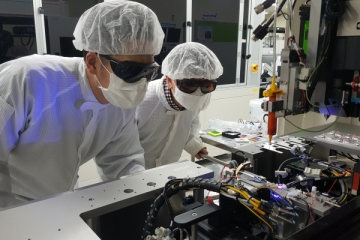
ETRI is working on localizing key optical communication components for 5G networks.
Optical communication components are drawing attention as core parts for 5G networks. However, even as domestic supply chain promotion policies are being implemented, dependence on Japan remains high. In response, the Honam Research Center of the Electronics and Telecommunications Research Institute has announced that it has successfully commercialized 11 products in collaboration with 8 optical communication component companies, achieving total sales of 2.7 billion won.
2020.12.29by 이수민 기자

The three major mobile carriers' 2021 blueprints prioritize AI and platforms over 5G and infrastructure.
Last year, the three telecom companies secured a significant number of high-priced 5G subscribers and recorded modest revenue growth in the telecommunications sector, while in the B2B segment, they achieved notable results in AI solutions and IDC business driven by accelerated digitalization. However, the core business of the three companies is not delivering returns commensurate with their investments. In response, the heads of the three telecom companies emphasized moving beyond telecommunications in their New Year's addresses and expressed their aspirations for transformation into comprehensive ICT companies.
2021.01.05by 이수민 기자
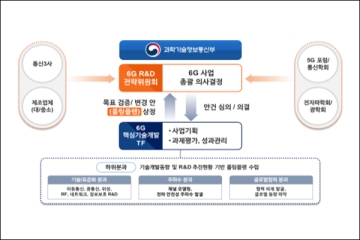
Is the Odd Generation Mobile Technology Cruel? "6G Project Takes First Steps"
Securing leadership in the global mobile communications market requires advanced technology and standards preemption. Recently, major countries around the world including the United States, China, and Europe have entered into competition to preempt 6G, the technology following 5G. The Ministry of Science and ICT announced that it will pursue a 6G core technology development project to secure leadership in future mobile communication networks and to respond to the shift toward contactless and digital environments.
2021.01.08by 이수민 기자
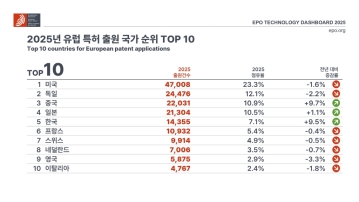
European Patent Applications Surpass 200,000 for the First Time… South Korea Maintains 5th Place, Led by Batteries and Telecommunications
According to the European Patent Office (EPO)'s 'Technology Dashboard 2025', European patent applications last year reached 201,974, surpassing 200,000 for the first time. Korean companies and inventors filed 14,355 applications, representing a 9.5% increase from the previous year and maintaining 5th place by country. Battery, digital communication, and semiconductor technologies led the growth, with Samsung ranking as the top EPO applicant for the second consecutive year and LG reaching 3rd place. The presence of major domestic cities such as Seoul, Suwon, and Yongin was also confirmed. It was also revealed that Korea's European patent strategy is expanding beyond individual technologies to span the entire industry.
2026.03.24by 명세환 기자
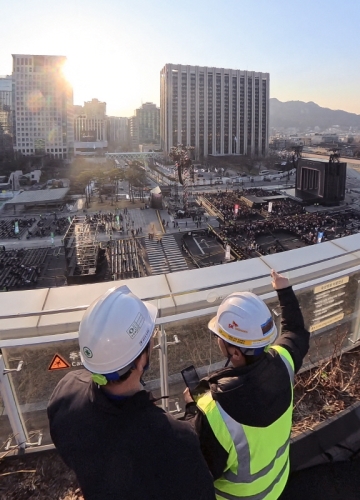
SK Telecom First Applies AI-Based Network Operations at Gwanghwamun K-Pop Concert
SK Telecom announced that it applied an AI-based network operation system for the first time at a large-scale K-pop concert held in the Gwanghwamun area of Seoul on March 21st, managing communication quality throughout the event. Mobile data usage during the three hours before and after the concert reached 12.15TB, approximately doubling compared to the same time slot the previous weekend. SK Telecom monitored traffic using the AI system 'A-One' in five-minute and 50-meter units to respond to potential overload situations, while also operating temporary communication facilities and on-site personnel in parallel. This case is interpreted as confirmation of the practical applicability of AI-based autonomous network operation in an environment where demand from dense events and foreign users increases simultaneously.
2026.03.23by 명세환 기자











