



Hydrogen for Semiconductors, a Key Material for Advanced EUV Technology, is Rising
 Published2021.04.07 11:57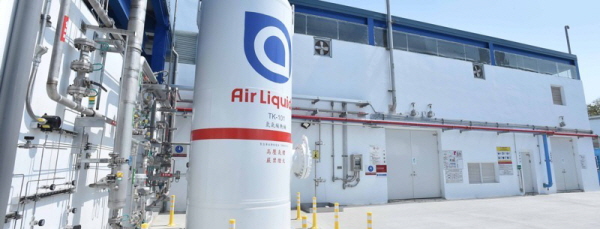
South Korea produces 7,100 N㎥/h of hydrogen for semiconductors, with additional capacity expected for EUV applications.
Hydrogen for semiconductors is rapidly emerging as a key material in advanced EUV processes, and hydrogen production facilities for advanced semiconductor companies adopting EUV processes are being built one after another.
Air Liquide recently completed construction of the first phase of a 25MW water electrolysis hydrogen plant in Tainan and Hsinchu Science Park, Taiwan.
The ultra-high-purity hydrogen produced at this plant will be used exclusively for semiconductors, including by Taiwan's TSMC. The reported hydrogen production capacity is 5,000 N㎥/h.
The plant is known as a green hydrogen production facility that produces zero carbon dioxide emissions thanks to its electrolysis facility using renewable energy. According to Air Liquide, it is expected to reduce carbon emissions by approximately 35,000 tons per year compared to typical hydrogen production facilities.
Air Liquide said it will continue construction of its hydrogen electrolyzer plants in Taiwan, from Phases 2 to 5, with a total capacity of 25 MW over the next two years.
The reason this plant is attracting particular attention is because it is expected to be used 100% for semiconductor hydrogen, and TSMC is expected to use almost all of the hydrogen produced at this plant.
According to local Taiwanese officials, in addition to the hydrogen it receives from this plant, TSMC is planning to purchase land in the Nanguosugok Industrial Park and build two hydrogen production facilities using natural gas as a raw material.
TSMC is expected to use hydrogen for semiconductors mostly in its EUV equipment.
According to the industry, in the case of EUV equipment, a large amount of hydrogen is known to be used as an atmospheric gas around the tin liquid when a CO₂ or YAG (yttrium, aluminum, garnet) laser is irradiated on the tin (Sn) liquid to generate ultra-fine EUV light.
For EUV equipment, the LPP (Laser Produced Plasma) method is used. When using an EUV exposure device, tin is melted and tin droplets are formed, and then a CO₂ laser or YAG laser is irradiated. To prevent tin from being oxidized during this process, a large amount of reducing gas is required as atmospheric gas, and the most suitable reducing gas is hydrogen.
In this case, the large amount of tin and hydrogen used is said to produce stannane (SnH₄), which is insoluble in water and flammable, and a new exhaust method is required to deal with it.
Additionally, it is known that hydrogen may be used to clean EUV exposure equipment.
Semiconductor manufacturers that have currently fully adopted and used EUV include Samsung Electronics in Korea and TSMC in Taiwan.
While most semiconductor manufacturers are sourcing hydrogen for semiconductors from external sources, Samsung Electronics in Korea exclusively receives its supply of hydrogen for semiconductors through pipelines from Linde Korea and Air Products Korea's Giheung and Pyeongtaek production facilities.
The domestic production of hydrogen exclusively for semiconductors is estimated to be approximately 7,100 N㎥/h, and the actual distribution volume is estimated to be higher.
Considering that the recently built semiconductor hydrogen production facility in Taiwan has a capacity of 5,000 N㎥/h, it is analyzed that the domestic semiconductor hydrogen consumption is higher.
In particular, as Korea currently does not have its own hydrogen production facilities for SK Hynix, if the spread of EUV increases further, it is expected that Samsung Electronics and SK Hynix will expand their own hydrogen production facilities, and hydrogen production for semiconductors will increase further and remain the largest in the world.
Meanwhile, TSMC, Taiwan's largest carbon emitter, has expressed significant interest in the water electrolysis hydrogen production facility, stating that hydrogen is key to its future transformation into an advanced semiconductor manufacturing company.

Comments
Related news
.jpg)
Government to spur next-generation power semiconductor development
The government is accelerating full-scale development of three next-generation semiconductor materials—silicon carbide (SiC), gallium nitride (GaN), and gallium oxide (Ga2O3)—which offer superior power efficiency and durability compared to silicon, while strengthening an integrated value chain that connects semiconductor devices, modules, and systems.
2021.04.01by 배종인 기자
The US, China, and Japan are accelerating their efforts to become self-sufficient in semiconductor manufacturing, catching up with South Korea and Taiwan.
In the post-COVID era, semiconductor demand has surged dramatically, increasing the importance of foundries. Amid supply instability in semiconductors caused by the COVID-19 pandemic, US-China trade disputes, natural disasters, and accidents, the United States, China, and Japan are making massive investments to secure semiconductor manufacturing capacity that has been concentrated in South Korea and Taiwan.
2021.04.05by 이수민 기자
Foundry price hikes domino effect spreads across the IT industry.
Foundries such as TSMC are intensifying price increases, which is driving up unit costs for image sensors, power semiconductors, and other components. Consequently, price hikes are expected to spread across all IT products including smartphones and cameras.
2021.04.06by 배종인 기자
Materials Research Institute Develops Ultra-thin Coating Water Electrolysis Catalyst Technology
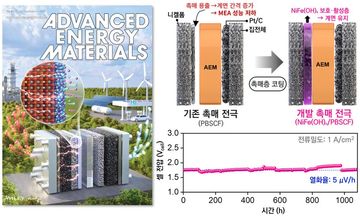
The Korea Institute of Materials Science has simultaneously resolved the performance and durability trade-off problem in water electrolysis catalysts by applying ultra-thin surface coating technology. Achieving 1.9 times higher performance compared to conventional catalysts while demonstrating 1,000-hour long-term stability, the institute has developed technology scalable to industrial water electrolysis systems through a simple process.
2026.10.07by 배종인 기자
Gigaphoton Develops Neon Gas Recycling System for ArF Excimer Lasers...Achieves 50% Recycling Rate
Gigaphoton announced that it has developed a gas recycling system for ArF excimer lasers and achieved a 50% neon gas recycling rate.
2026.10.02by 배종인 기자











