


Tektronix, “Using Dedicated Probes is Important for Power Design”
 Published2021.05.11 12:08
It was suggested that the use of dedicated probes is very important during power design, and that bandwidth should be prioritized for resolution when selecting siliconoscope equipment.
On the 11th, Tektronix's General Manager Oh-Sung Kwon gave a presentation at the e4ds EEWebinar on 'How to Use Oscilloscopes 200% for Power Design: Oscilloscope Power Solutions and Power-Dedicated Probes'.
General Manager Kwon Oh-sung explained that using the oscilloscope's power measurement solutions allows for the automatic and accurate measurement of power systems, such as switching analysis and efficiency of power supplies, even for non-power conversion experts. He also described the IsoVu probe, which enables high-side measurements of Wide Band Gap semiconductors that were previously impossible due to probe limitations, and the Power Rail probe, which allows for the accurate measurement of DC power quality.
Excellent questions and answers were presented during the Q&A session at the webinar. The key Q&A are introduced below.
Q: What improvements have been made to the power-dedicated probe compared to the standard probe?
A: This probe is designed to deliver optimal performance tailored to each power measurement situation. Using dedicated probes for each allows for more accurate measurements.
Q: There are various oscilloscope products available on the market. I would like to know what factors should be considered important when selecting an oscilloscope.
A: Basically, to accurately view the signal you are measuring, you must first consider the bandwidth. It is also important to view the signal clearly without noise. The oscilloscope's own noise is another factor to consider.
Q: In terms of cost, which is better: buying an isolation-type oscilloscope or buying an isolation probe for a standard oscilloscope?
A: Although no significant difference is expected between the two, using a separate isolation probe would be better in terms of measurement accuracy.
Q: What are the common mistakes beginners make during initial use? Is there a separate feature to prevent these?
A: The most common mistake in power measurement is connecting the ground terminal of a single-ended probe to a non-grounded location. This is something users must be careful about, and we recommend using a differential probe to prevent accidents.
Q: How does the value differ depending on the shape of the measurement probe during measurement? I noticed that with other measuring instruments, there is a significant difference depending on the probe shape.
A: As you mentioned, the probe is a critical factor in measurement accuracy. It is important to select a suitable probe.
Q: Is it possible to obtain slightly more accurate ripple measurements by adjusting the bandwidth even when using a standard passive probe? The measurement errors for uV and mV appear to be quite significant.
A: Limiting bandwidth means not displaying high-frequency noise. While passive probes and power rail probes are identical in terms of eliminating high-frequency noise, they show differences in measurement values due to differences in their own noise.
Q: What is the principle behind using 16-bit High Resolution? What are the differences compared to 12-bit?
A: 12-bit is supported by hardware, while 16-bit uses a data post-processing method.
Q: Is it possible to connect a dedicated power probe to all Tektronix oscilloscopes currently on the market? Or is it only possible to connect it to specific models?
A: The ISOVu Isolation Probe 2nd Generation is compatible only with our 4/5/6 series. The 1st Generation is compatible with all oscilloscopes using the Tek-VPI interface.
Q: If the transformer becomes BH, would it be possible to observe the effects of DC leakage as well?
A: Do you mean leakage current when you say DC leakage? It is difficult to measure current in units of n or u. In such cases, it is recommended to use a Keithley SMU.
Q: Does the resistance characteristic value inside the probe change over time? If so, how often is calibration or replacement required?
A: The manual recommends a 20-minute warm-up for the probe initially. Changes also occur over time. It is recommended to periodically use the probe's self-calibration function. While there is no fixed replacement cycle, it is advisable to have it inspected if accurate measurements are required.
Q: I understand that to measure AC power with a standard probe, the oscilloscope's power ground must be disconnected by default. I would like to know the method for measuring AC power.
A: Disconnecting the ground is a dangerous measurement method. We recommend using a differential probe for AC power measurements.
Q: Why is the High Res option measured instead of always measuring in 16-bit?
A: This is because the hardware-wise, the ADC is 12-bit. Since oscilloscopes sample at speeds of tens of gigabits, it is difficult to increase the ADC bit depth.
Q: It seems that processing speed is slow even when using an ASIC. Is there anything that can be compared between the two measurements? For example, the time difference between measuring at High Res 16-bit and 12-bit.
A: There is no separate comparative data. Rather than time issues, problems such as a decrease in the sample rate occur when set to 16-bit.

Comments
Related news
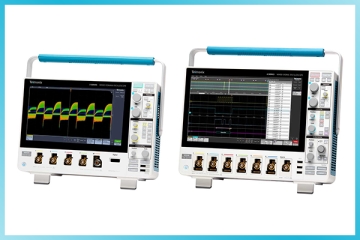
Tektronix Strengthens Next-Generation Midrange Oscilloscope Portfolio with the Launch of the 3 Series MDO and 4 Series MSO
Tektronix has launched the 3 Series MDO and 4 Series MSO, next-generation mid-range oscilloscopes. The new products incorporate the user interface that was introduced in the 5 Series MSO in 2017 and the 6 Series MSO in 2018. Therefore, with key control devices positioned close to the touchscreen and front panel, users can simply double-tap readings or measurements displayed on the screen without needing to navigate through multiple menu levels. Tektronix's latest portfolio offers a variety of application option features while providing advanced measurement and analysis capabilities and a wide range of performance options.
2019.06.04by 이수민 기자
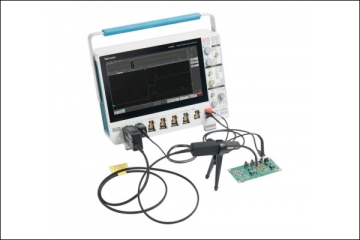
Tektronix Launches Second-Generation IsoVu Probe with '1 GHz' Isolation
Since its initial market introduction in 2016, this product has undergone significant improvements in form factor and functionality. The new second-generation IsoVu probe, like its first-generation counterpart, utilizes patented electro-optical technology to capture signals and power the probe, eliminating the need for electrical connection to the oscilloscope. Unlike conventional high-voltage differential probes, the IsoVu probe delivers high bandwidth, dynamic range, and industry-leading common mode rejection ratio (CMRR) across the probe's entire bandwidth.
2020.11.03by 김동우 기자
.jpg)
Tektronix Unveils New Optical Transceiver Test Platform
Tektronix has launched the '8 Series Sampling Oscilloscope' platform as a distributed modular measurement instrument. The 8 Series Sampling Oscilloscope features parallel acquisition capabilities that deliver up to 4 channels per mainframe and the highest measurement accuracy for PAM4 optical signals across multiple simultaneous inputs.
2020.12.09by 이수민 기자
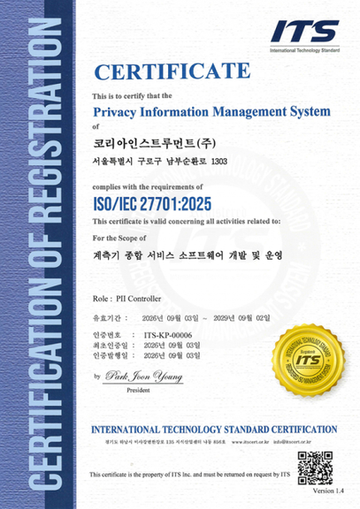
Korea Instrument, KOLAS Accredited Calibration Agency First to Simultaneously Acquire ISO/IEC 27,001·27,701
Korea Instrument has become the first among KOLAS accredited calibration agencies to simultaneously acquire ISO/IEC 27,001 and ISO/IEC 27,701 certifications. Through its proprietary platforms CWIZ Enterprise and CWIZ Partners, the company has embedded information security and personal data protection requirements across all business processes including customer information, equipment data, and calibration reports, with plans to continuously advance its management system through regular audits and security inspections.
2026.10.12by 배종인 기자

TeamViewer One, IT Incident Automation Workflow and Resolution Center Enhanced
TeamViewer has added IT incident automation capabilities and an advanced Resolution Center to its integrated digital workplace management platform 'TeamViewer ONE'. Recurrent service disruptions, configuration errors, and capacity shortages are automatically handled according to preset policies, and device status verification through script deployment can be managed in a unified interface, significantly reducing repetitive tasks for IT teams.
2026.10.12by 배종인 기자











