


"Small and medium-sized car motors require dense control solutions"
 Published2021.06.03 14:00
Suitable for small and medium-sized motors for vehicles, high-efficiency BLDC
Infineon provides SoC-integrated motor control solution
With the activation of advanced driver assistance systems (ADAS) and in-vehicle infotainment (IVI), the spread of electric vehicles, and the development of autonomous driving functions, it is said that cars are becoming like electronic products. Even the Consumer Electronics Show (CES) in the United States has been focusing on cars and electronics since the 2010s. But is this trend only recently starting?
No. Electric vehicles began to be installed in internal combustion engine vehicles in the early 20th century. The Cadillac Model 30, released in 1912, was the first vehicle to be equipped with an auxiliary electric motor, and unlike existing vehicles, the driver did not have to turn the crank to start the engine. Even vehicles that manually opened and closed car windows were considered old-fashioned in the early 2000s.
Automation and electrification of vehicles have highlighted the adoption of electric motors. The development and installation of electric motors, which began with internal combustion engine vehicles, is accelerating further with the advent of the electric vehicle era.
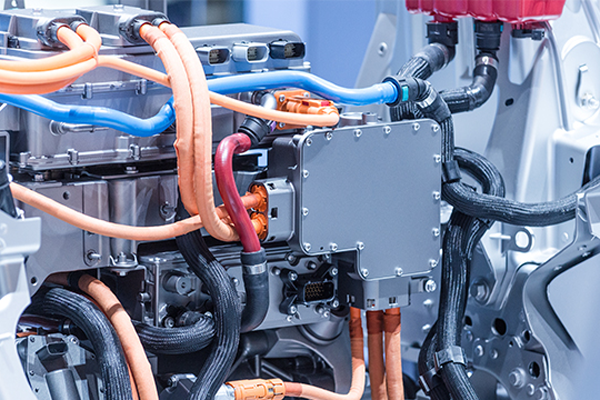
The cumulative production of electric motors for vehicles last year reached approximately 3.5 billion units. The annual demand growth rate is expected to maintain an average of 4% over the next five years. In particular, motors for medium and small-power vehicles are being adopted to improve vehicle stability and convenience.
From traditional applications such as door locks, power mirrors, seat adjustment, washer pumps, wipers, window lifts, sunroofs, and sliding doors, demand is also increasing for new applications such as head-up displays, deployable door handles, power trunk lifts, electronic shifters, and EV lock chargers. As the number of mounted motors increases, the demand for motor efficiency is also increasing. There is no reason to develop and use electric vehicles that consume a lot of power.
We met with Jaehyun Heo, Deputy Manager and Victor Camarena, Manager in charge of Motor Solution Technology Support at Infineon Korea Automotive Business Unit, and heard about the trends in motor control technology and the strengths of Infineon's motor control solutions.
.jpg)
Q. What does today’s vehicle market demand for small and medium-sized motors?
Well, there are four trends in the recent small and medium-sized vehicle motor market.
First, as exhaust gas regulations are strengthened, motors are also required to achieve maximum efficiency with minimum power, so the demand for motors that can be controlled by pulse width modulation (PWM) is increasing. Second, as the functional safety of vehicles becomes more important, the existing mechanical switching method, relays, are being replaced with electronic switching methods, MOSFETs, for high reliability.
Thirdly, the demand for smaller, high-performance motors in the 500W range is rapidly changing from DC motors to BLDC motors. Fourthly, as vehicles require a limited space to implement numerous functions, there is a growing preference for integrated motors that integrate the motor and controller to save space. Integral motors offer many advantages not only in terms of space but also in terms of cost and electromagnetic compatibility.
Q. How are small and medium-sized motors for vehicles constructed?
Oh. There are some elements that you absolutely must know for motor control. It is very similar to the human body structure, so let's look at them by section. First, the internal organs that digest food and supply energy correspond to the power supply, and the brain that can make judgments and give commands corresponds to the MCU.
The neural network that transmits the commands from the head to the muscles of the limbs corresponds to the gate driver, the ears that listen to what the other person is saying and the mouth that speaks correspond to the communication module. The nose and tongue that sense external smells and taste correspond to input/output signals, and the joints that prevent the limbs from bending in the opposite direction correspond to the reverse voltage prevention MOSFET.
Q. What is the difference between DC motors and BLDC motors, and when is it a perfect replacement?
Well, DC motors use brushes to supply electricity to the rotating coils. It's like holding a rotating disc with a gloved hand, so there is bound to be mechanical friction between the commutator and the brushes, which causes problems like noise and wear.
On the other hand, BLDC motors have the advantages of being brushless, so there is no noise or wear, they are durable, and they can be made smaller and thinner. While it is difficult to gauge the exact timing of the replacement, the market share of BLDC motors has increased from 27% to 32% over the past five years, so this trend is likely to continue.

Q. Infineon has divided its motor control solution product line based on the degree of component integration. Can you introduce the product with the most integrated components?
Big. This is an 'Embedded Power IC' product in the form of a System-on-Chip (SoC), integrating power supply, digital sensor and input/output, MPU, gate driver, charge pump, and LIN communication. Recently, SoC products are preferred for motor control purposes, so this is Infineon's product that can approach with the greatest competitiveness.
Q. How do Infineon embedded power ICs, which integrate various components, meet the increasingly demanding automotive electromagnetic requirements?
Big. Currently, automakers and electronics manufacturers are making various efforts to reduce the electromagnetic waves of automobiles. Tests are being conducted in many areas including CE, RE, and BCI, and embedded power ICs provide advanced bridge driver characteristics and adaptive gate control to help automakers and electronics manufacturers optimize electromagnetic waves.
In the past, to reduce electromagnetic waves, the switching speed of MOSFETs was controlled by adjusting the current by adding a resistor to the gate output. This required a lot of development cost and effort. However, by utilizing the advanced bridge driver characteristics of embedded power ICs, the gate current can be adjusted by software without separate hardware modification to control the switching speed of MOSFETs. This is a powerful tool to effectively reduce electromagnetic waves.
Q. What are the benefits for customers who choose Infineon motor control solutions?
Huh. Infineon is helping customers shorten their development period with a single, integrated tool chain. The 'Config Wizard' for embedded power ICs supports automatic generation of C code for low-level device (LLD) drivers in a GUI environment with just a click, which significantly reduces firmware development time.
In addition, Infineon provides example codes for various motor and sensor types, which reduces the time required to develop algorithms for motor control, helping customers drive motors quickly. In addition, it supports circuit reviews, software reviews, and fault diagnosis and analysis when starting actual work.
Q. What are Infineon's future goals with regard to motor control?
Huh. Infineon offers a variety of motor control solutions suitable for the small and medium-power vehicle sector. We are working to reduce the customer's development complexity and shorten the development cost and time so that they can be competitive in the market. Infineon will continue to understand the market trends and customer needs to develop a suitable motor control portfolio and provide a product line that can be used in various fields as well as in vehicles.
More detailed trends in small and medium-sized power motor control for vehicles, related technologies, and application plans can be found in the Infineon webinar on Tuesday the 15th at 10:30 AM.
Comments
Related news
Infineon Unveils Smart Motor Controller for Home Appliances
Infineon has launched the IMD110 smart driver smart motor controller series, which integrates the iMOTION motion control engine 2.0 three-phase gate driver. The series, based on Infineon's proprietary SOI technology, is capable of driving various MOSFETs and IGBTs used in variable-speed drives.
2021.02.24by 명세환 기자
.jpg)
Infineon Launches Driver with Built-in Bootstrap Diode
Infineon Technologies announced the launch of new EiceDRIVER 650V half-bridge and high-side/low-side gate drivers. The new products are suitable for motor control applications in SMPS, UPS, industrial drives, embedded inverters, home appliances, power tools, and fans and pumps.
2021.04.13by 이수민 기자
Maxim Launches Trinamic Servo Controller and Driver Module
Maxim Integrated has launched the TMCM-1321, a single-axis servo controller and driver module from Trinamic, which offers ultra-compact size and lowest power consumption. It enables the implementation of 2-phase bipolar stepper motors in robotics and automation equipment, optimizing axis speed and synchronization. It features Trinamic's six-point ramping technology with advanced S-curve ramping as well as linear ramping, increasing processing speed and effective transmission rate.
2021.05.20by 강정규 기자

[e4ds Tech Day 2026 ⑨] Sim Sang-gyu, Autocrypt CTO: "In the Physical AI Era, Automotive Security Must Extend Beyond the Vehicle"
At e4ds Tech Day 2026, Sim Sang-gyu, CTO of Autocrypt, explained automotive cybersecurity strategies in the era of Physical AI and SDV (Software-Defined Vehicle). Automobiles are evolving as part of an ecosystem connected to AI, cloud, chargers, IoT, and robots, and he emphasized that the scope of security must expand beyond the vehicle interior to the entire connected environment. In particular, AI model tampering, adversarial attacks, OTA updates, and EV charger hacking were identified as major threats. He explained that response measures require zero trust, AI model integrity protection, intrusion detection, Security by Design and Default, and full lifecycle security management, and that proactive security system establishment beyond regulatory compliance is critical for securing future mobility competitiveness.
2026.10.12by 배종인 기자
Practical HIL Construction Strategy for Automotive and Off-Highway Controller Validation
As vehicle E/E architecture transitions to zonal structures and shifts to software-defined vehicles (SDV), the number of controllers (ECUs) requiring validation and software complexity are surging dramatically. Meanwhile, real vehicle testing cannot provide repeated verification under identical conditions and entails lead time and safety concerns. This white paper explains the principles of HIL (Hardware-in-the-Loop) validation and the structure of the NI platform composed of PXI, SLSC, and VeriStand, and through two actual implementation cases—Camera Record & Replay HIL for In-Cabin Monitoring Controller (ICMU) and Forklift Controller (VCU) HILS—describes how controller-level regression testing becomes possible. Additionally, it explicitly states application boundaries and limitations, such as lack of A2B support.
2026.10.12by 편집부











